Powering Industries for 50+ Years
Water & Wastewater Lift Station Standby Power
Generator Sales, Service, & Rentals
Lift Station Backup Power, Sized Right the First Time
When a lift station loses power, it does not fail quietly. Wastewater keeps arriving, the wet well fills, and within minutes the station can back sewage into the collection system or overflow at the site. That is why standby power on a lift station is rarely a preference. In most systems it is a permit condition, and getting the size wrong is expensive in both directions: too small and the generator stalls on the first pump start, too large and you have paid for capacity you never use.
This page covers how lift station generators are sized, why the pump motors force the number higher than the nameplate suggests, and what to specify for fuel, controls, and compliance.
Why Lift Stations Need Dedicated Standby Power
A sanitary sewer overflow (SSO) is a reportable event. States and the EPA treat overflows as violations, and many utilities operate under consent decrees that require onsite backup power at their lift stations with a defined minimum runtime. The runtime figure varies by jurisdiction and by the agreement a utility is operating under, but a 24-hour minimum is common, and critical stations often carry more.
Beyond the permit, the math is simple. The cost of one overflow event, in cleanup, fines, and reporting, usually dwarfs the cost of the standby unit that would have prevented it. Standby power at a lift station protects the collection system, the receiving water, and the utility’s compliance record at the same time.
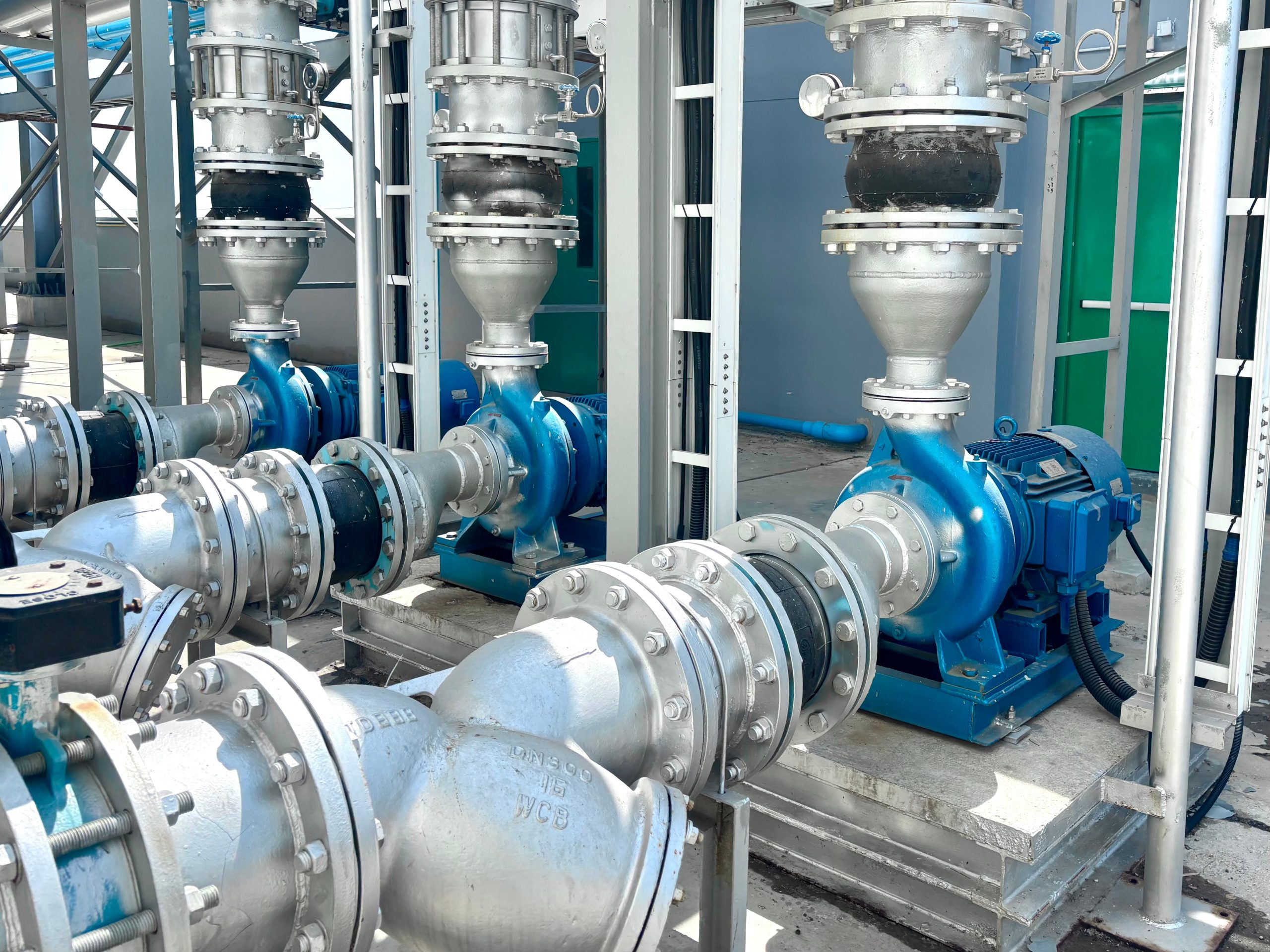
Submersible Pumps and Inrush
The single most common sizing mistake on a lift station is reading the pump nameplate and sizing the generator to match. The running load is only part of the picture. What sets the generator size is what happens at the instant a pump starts.
A submersible pump started across the line draws a large inrush current, on the order of 6 to 8 times its full-load amps, for a brief moment as the motor comes up to speed. The generator has to absorb that surge without its voltage or frequency dipping far enough to stall the motor or drop the controls. A unit sized only to the running load will sag hard on that start and can trip offline.
The working rule is to size the generator to hold the start of the largest motor, not just the sum of the running loads. For across-the-line starting, that usually lands the generator at roughly 2 to 3 times the running kW, depending on the pump size and how many motors can start together. Soft starters, variable frequency drives, and reduced-voltage starting all cut the inrush and can bring the required generator size down, which is worth evaluating on larger stations where the generator savings offset the starter cost.
Two-Pump Duplex Station
Take a common duplex station: two 40HP submersible pumps in a lead-lag arrangement, plus controls, telemetry, and site lighting.
In normal operation one pump runs at a time, so the running electrical load is one 40HP pump plus the small house load, landing near 30kW to 35kW. If that were the whole story, a 40kW generator would look adequate. It is not. Starting the 40HP pump across the line demands enough headroom that the generator needs to be sized closer to 100kW to hold voltage through the inrush without stalling.
The result: a station whose running load is about 30kW is correctly served by a 100kW standby unit. That gap between running load and required size is the whole reason lift station sizing is worth doing carefully, and it is exactly what a generic online calculator misses.
Recommended Units and Configurations
Most municipal lift stations fall in the 30kW to 150kW range, with the pump horsepower and the number of pumps setting the point within that band. A few configuration decisions follow from the site:
Fuel. Diesel is the standard choice and the simplest to permit for runtime, since fuel is stored onsite in a base or bulk tank. Natural gas is an option where a gas main reaches the site and where the utility accepts interruptible supply for standby duty.
Enclosure. Lift stations are often close to homes. A sound-attenuated enclosure keeps the unit within local noise limits and avoids complaints during testing and outages.
Sale or rental. A permanent station is a standby purchase. For pump-station rehabilitation, wet-well cleaning, or a station bypass, a towable rental unit powers the temporary pumps while the permanent equipment is offline.
Fuel, Runtime, and Onsite Storage
Runtime ties directly back to the permit. Whatever minimum the utility is required to meet, the fuel tank has to support it at the expected load.
As a planning figure, a 100kW diesel unit running at about half load burns roughly 3 to 4 gallons per hour. A 24-hour runtime requirement at that load points to a tank in the 100-gallon range with margin, and a longer requirement scales the tank up from there. Sub-base tanks integrate under the unit and keep the footprint tight, which matters on the small fenced pads most lift stations occupy.
Emissions, Permitting, and Noise
Three compliance items tend to hold up a lift station install if they are not handled early:
Engine emissions. The engine has to meet the applicable EPA Tier standard for the site and duty. Standby-rated stationary engines follow their own emissions path, which your supplier confirms against the model.
Air permit. A stationary engine at a fixed site may require a local or state air permit. The threshold and paperwork vary by jurisdiction and by engine size.
Noise. With homes nearby, the municipal noise ordinance governs. A sound-attenuated enclosure and, where needed, a critical-grade exhaust silencer keep the station within limits during exercise runs and outages.
Automatic Transfer and Controls
The generator is only half of the standby system. An automatic transfer switch (ATS) sized to the station service senses the utility failure, starts the generator, and transfers the load, then transfers back and shuts the unit down when utility power returns.
On a modern lift station the generator and ATS also tie into the station’s SCADA or telemetry, so the utility sees generator run status, fuel level, and alarms remotely. That visibility matters most on unmanned stations, where the first sign of a problem is otherwise an overflow alarm.
Frequently Asked Questions
What size generator do I need for a lift station?
It depends on the pump horsepower and the starting method, not just the running load. Most municipal stations land between 30kW and 150kW. The generator has to be large enough to start the biggest pump motor without stalling, which for across-the-line starting usually means sizing to roughly 2 to 3 times the running load. A two-pump 40HP station, for example, runs near 30kW but is typically served by a 100kW unit.
Why does the generator need to be bigger than the pump?
Because starting a pump motor draws far more current than running it, on the order of 6 to 8 times the full-load amps for a moment. The generator has to hold voltage and frequency through that surge. A unit sized only to the running load will sag on the start and can trip offline.
Should I use a diesel or natural gas generator for a lift station?
Diesel is the most common choice and the simplest to permit for a required runtime, since fuel is stored onsite. Natural gas works where a gas main reaches the site and where interruptible supply is acceptable for standby duty. Diesel is usually the default for stations with a hard runtime requirement.
What runtime does the state require for a lift station generator?
It varies by state, by utility, and by any consent decree the utility operates under. A 24-hour minimum is common, and critical stations often require more. Confirm the figure for your system, then size the fuel tank to meet it at load.
Can I rent a generator for a lift station bypass?
Yes. Towable rental units power the temporary pumps during station rehabilitation, wet-well cleaning, or a planned bypass, so the collection system keeps moving while the permanent equipment is offline.
How often should a lift station generator be tested?
Run it under load on a regular schedule, monthly is typical, and keep the records. Regular exercise confirms the unit will start and carry the pumps when it is actually needed, and a periodic load bank test verifies it under a controlled load.
Related applications
- Water treatment plant standby power for aeration, UV, and pumps
- Large motor starting and inrush load sizing
- Generator load bank testing
- Municipal service and preventive maintenance contracts
Get a lift station sizing consult
Send us the pump data and the runtime your permit requires, and we will size the unit, the tank, and the transfer equipment for the station. Sale for permanent installs, towable rental for bypass and rehab work. Serving Colorado, Texas, and Florida.
Still have questions or looking for more information?
Generator Source specializes in low-hour, used, new, and surplus generator sets. We have a wide variety of generator sizes and models to fit any project. We are not a broker, we own what we sell.
Call us today (877-866-6895) or click Contact Us to be connected with one of our experienced sales reps.
We have 350+ generators in stock and ready to ship!