
Generator Configurations
Generator sets are manufactured in various configurations to meet specific customer needs. The most common types include:
- Skid Mounted Unit
These units are located in under-roof or indoor applications, with the engine, generator, and cooling system mounted on a skid. External exhaust and fuel supply are required for this type of unit. - Canopy
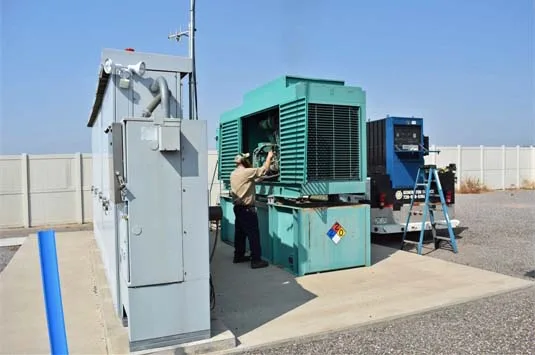
Designed for permanent installations, these units have the engine, generator, control, and cooling system housed in an enclosure, offering weather protection and reducing heat and noise. Fuel tank additions are available. - Mobile Unit
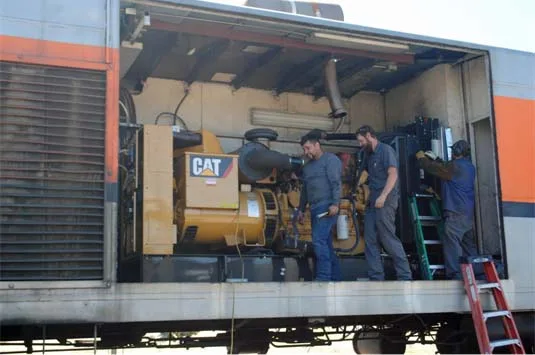
These units are mounted on a trailer, with the engine, generator, control, and cooling systems included. They are often used in construction fields where a permanent power supply has not yet been established.
Generator Set Installation
Warning
To minimize the risk of personal injury or equipment damage, always use approved lifting devices for the weight of the generator sets. When connecting a generator to an automatic transfer switch, follow proper tag-out lock-out procedures. Working on energized equipment can cause serious injury or death.
Installation Guidelines
To ensure safe and efficient operation, generator sets must be correctly installed. The general rules for each type of unit are:
- Skid Mounted Unit
The unit should be placed on a solid, level surface that can support its weight during operation. Use an approved lifting apparatus (e.g., fork truck or crane). Automatic transfer switch sizing and conductor sizing must comply with NEC standards. The fuel is supplied from a remote location (diesel or natural gas), and the exhaust must be insulated and routed outside the building. - Canopy Unit
This unit must be placed an appropriate distance from structures. The fuel tank should be close to the unit and protected during fueling operations. The unit and fuel tank must be set with an approved lifting device. Electrical cables are often run through underground conduit, and the automatic transfer switch must meet NEC standards. This unit houses the generator control panel but can have a remote panel located in the switch room. - Mobile Unit
These units must be placed on solid, level ground. Mobile units are self-contained and can be transported with fluids. Temporary cables should be kept out of high-traffic areas, and the generator can be connected to the automatic transfer switch using an approved manufacturer’s plug or by connecting individual electrical lugs to terminals.
Generator Startup
When ready for start-up, it is essential to follow the manufacturer’s recommendations. Remove all tags and locks from installed equipment. Permanent units are shipped without fluids, while mobile units may arrive with fluids.
Basic Startup Checks for Mobile Units:
- Verify that all electrical connections are secure.
- Check the fuel, oil, and coolant levels. Ensure the air filter indicator is in the green and operational.
- Start the engine and check for fuel, oil, exhaust leaks, and louver operation.
- Ensure no alarms are present for the engine or generator.
- Load the generator set and confirm that all operating parameters are correct.
Basic Startup Checks for Permanent Units:
- Ensure all electrical connections are secure.
- Fill the engine with oil, the coolant tank with coolant, and the fuel tank with fuel.
- Confirm that the fuel line is connected from the fuel tank to the engine.
- Ensure the air filter indicator is green and operational.
- Prime the fuel system if it lacks automatic priming functions.
- Start the engine, check for fuel, oil, and exhaust leaks, and ensure there are no alarms.
- For canopy units, check the louver operation.
- Run the engine until it reaches operating temperature, then shut it down.
- After the engine cools, check oil and coolant levels and add fluids if necessary.
- Load the generator set and confirm that all operating parameters are correct.
Operating and Refueling Generator Sets
Warning
Fuel vapors are highly flammable. To prevent personal injury or death, never refuel a generator while it is in operation. Always wear appropriate personal protective equipment (PPE) when inspecting a running generator.
Stand-by and Running Checks
During both stand-by and running modes, the generator should undergo the following checks:
- Monitor the generator panel for alarms and parameters.
- Check the fuel level using the tank’s sight glass.
- Inspect for fuel, coolant, oil, and exhaust leaks.
- Ensure that all louvers are open during operation.
Caution
To avoid power loss due to engine shutdown from lack of fuel, calculate refueling times and schedule fueling around power requirements. Some fuel systems may need to be manually primed, extending downtime.
Fuel Usage for Critical Emergency Power
Facilities with critical emergency power needs may use natural gas-supplied generators, which rely on utilities for fuel. All maintenance checks should be conducted when the generator is in standby and running modes.
Refueling Procedures for Canopy and Mobile Units:
- Disconnect the generator from the power grid.
- Shut down the generator and allow the engine to cool.
- Refuel the fuel tank.
- Restart the generator and load it.
Moving Mobile Generator Sets
If relocating a generator set is necessary, consider the following:
- Minimize the number of moves by positioning the generator in a location accessible by multiple users.
- Inform all users of the loss of power during the generator move.
- Disconnect from the power grid before shutting down.
- Ensure the generator is placed on solid, level ground.
- Route power cables out of high-traffic areas.
- Connect the cables to the generator and the automatic transfer switch.
- Start the generator and load it.