The Workhorse of Critical Infrastructure
In the world of industrial power, the 1,000kW (1 Megawatt) threshold is a major milestone. It marks the transition from “backup power” to “critical infrastructure.” At this scale, the engineering requirements change, the fuel logistics become significant, and the choice of engine brand can impact long-term facility reliability for decades.
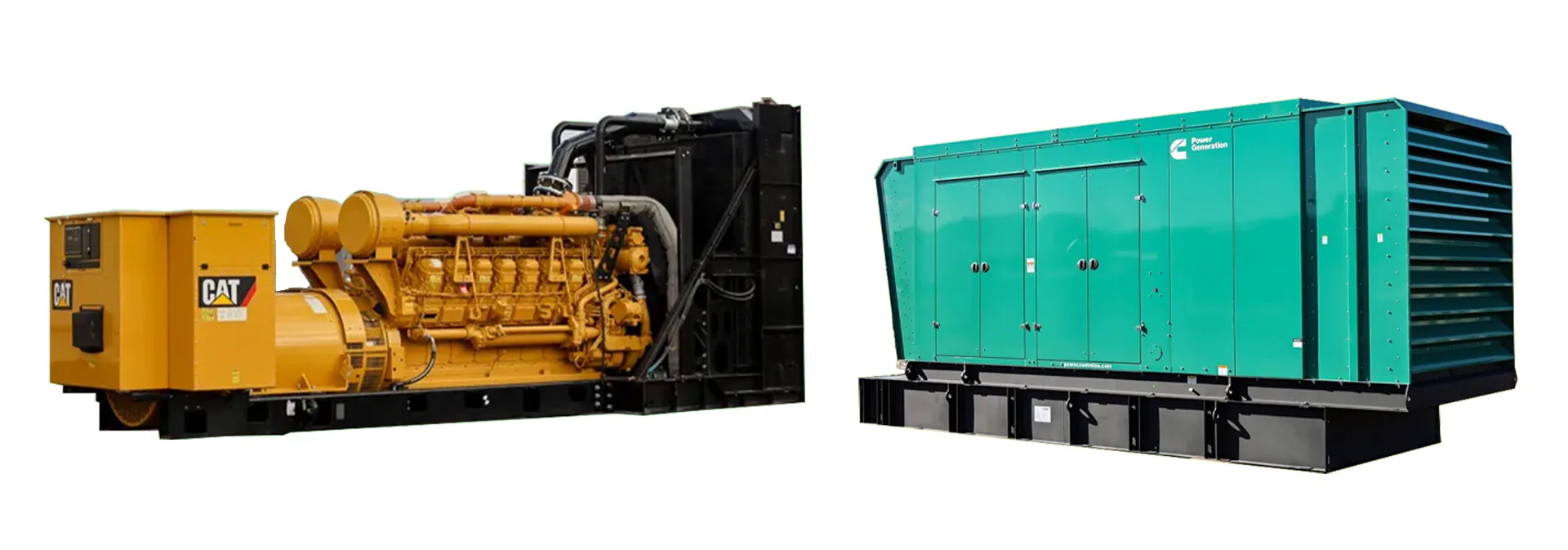
1. Defining the 1,000kW Load: What Can 1 Megawatt Do?
A 1,000kW generator doesn’t just “keep the lights on”, it runs entire systems. To put 1MW into perspective, it can simultaneously power:
- A 150-Room Hospital: Covering emergency rooms, life support, and basic HVAC.
- Large-Scale Cold Storage: Maintaining temperature for 50,000+ square feet of refrigeration.
- 200–400 Single-Family Homes: The approximate equivalent of a small neighborhood’s peak demand.
2. Technical Performance & Engineering Specs
When reviewing our inventory for 1,000kW units, pay close attention to these three performance metrics:
The 0.8 Power Factor (kVA vs. kW)
Most 1,000kW generators are rated at a 0.8 power factor, meaning their total capacity is 1,250kVA. If your facility has a high amount of inductive load (large motors), your “apparent power” (kVA) needs may be higher than your “real power” (kW).
Fuel Consumption & Storage Logistics
At 1,000kW, fuel management becomes a logistical operation. A typical diesel unit at full load will consume:
- 100% Load: ~70–75 gallons per hour (GPH).
- 75% Load: ~52–55 GPH.
- 50% Load: ~38–40 GPH.
- Requirement: To meet an NFPA 110 Class 48 (48 hours of runtime), you would need an on-site fuel capacity of at least 3,600 gallons.
Voltage and Distribution
At the 1,000kW level, you have a choice in how power is distributed. While 277/480V 3-Phase is the most common for buildings, many industrial sites opt for Medium Voltage (4,160V). Higher voltage reduces the “line loss” (wasted energy) and allows for smaller, less expensive cabling over long distances.
3. Comparing the “Big Three” 1,000kW Engines
Not all Megawatts are created equal. Here is how the leading manufacturers compare in this specific power class:
| Feature | Caterpillar (e.g., 3512 Series) | Cummins (e.g., QST30/DQFAD) | Kohler (e.g., 1000REOZMD) |
| Engine Design | Large displacement, heavy-duty “iron.” | Advanced electronic controls, compact. | High power density, rapid response. |
| Best For | Continuous heavy use & remote sites. | Data centers & high-tech facilities. | Healthcare & commercial buildings. |
| Parts Availability | Global; massive aftermarket support. | Excellent; widely serviced. | Strong; specialized dealer network. |
4. Maintenance: The “Wet Stacking” Risk
A 1,000kW generator is built to work hard. One of the biggest mistakes facilities make is running these units at “low load” (less than 30%) during testing. This leads to wet stacking, unburnt fuel and carbon buildup in the exhaust system that can degrade engine performance.
- The Solution: Annual Load Bank Testing. We recommend a 2-to-4 hour load bank test every year to “burn off” deposits and ensure the unit can actually hit 1,000kW when the grid goes down.
5. Why Choose Surplus or Re-Certified 1MW Units?
The lead time for a brand-new 1,000kW generator from an OEM can currently exceed 50–70 weeks.
- Availability: Buying from a reseller provides immediate access to 1,000kW units that are “ready to ship.”
- The “Tier” Advantage: For many Emergency Standby applications in regions like Texas or Florida, a Tier 2 or Tier 3 surplus unit is perfectly legal and avoids the complexities (and failure points) of Tier 4 Final Selective Catalytic Reduction (SCR) systems.