Skip to content

Kohler Industrial Generator: The Ultimate FAQ Guide

Kohler has been a pioneer in power systems for over 100 years. Known for their “KD Series” engines and advanced “Decision-Maker” controllers, Kohler units are engineered for the most demanding mission-critical applications.

Part 1: Engineering & The KD Series

  1. What makes the Kohler “KD Series” unique in the industrial market?
    The KD Series was engineered from the ground up specifically for the power generation market, rather than being adapted from truck or marine engines. This results in some of the highest power densities in the world, allowing a Kohler 1000kW or 2000kW unit to fit into a smaller physical footprint than many competitors.
  2. How does Kohler achieve such high power density?
    Kohler utilizes a high-pressure common-rail fuel system and advanced turbocharging. This allows the engine to produce more horsepower per liter of displacement, which is critical for equipment rooms in cities like Denver or Miami where floor space is at a premium.
  3. What is the benefit of the “G-Drive” engine architecture?
    Kohler’s G-Drive engines are designed with a modular architecture. This means many parts are shared across different engine sizes (from V12 to V20 configurations), making maintenance simpler and spare parts more accessible across your entire fleet.
  4. What is the “APM” (Advanced Power Management) system?
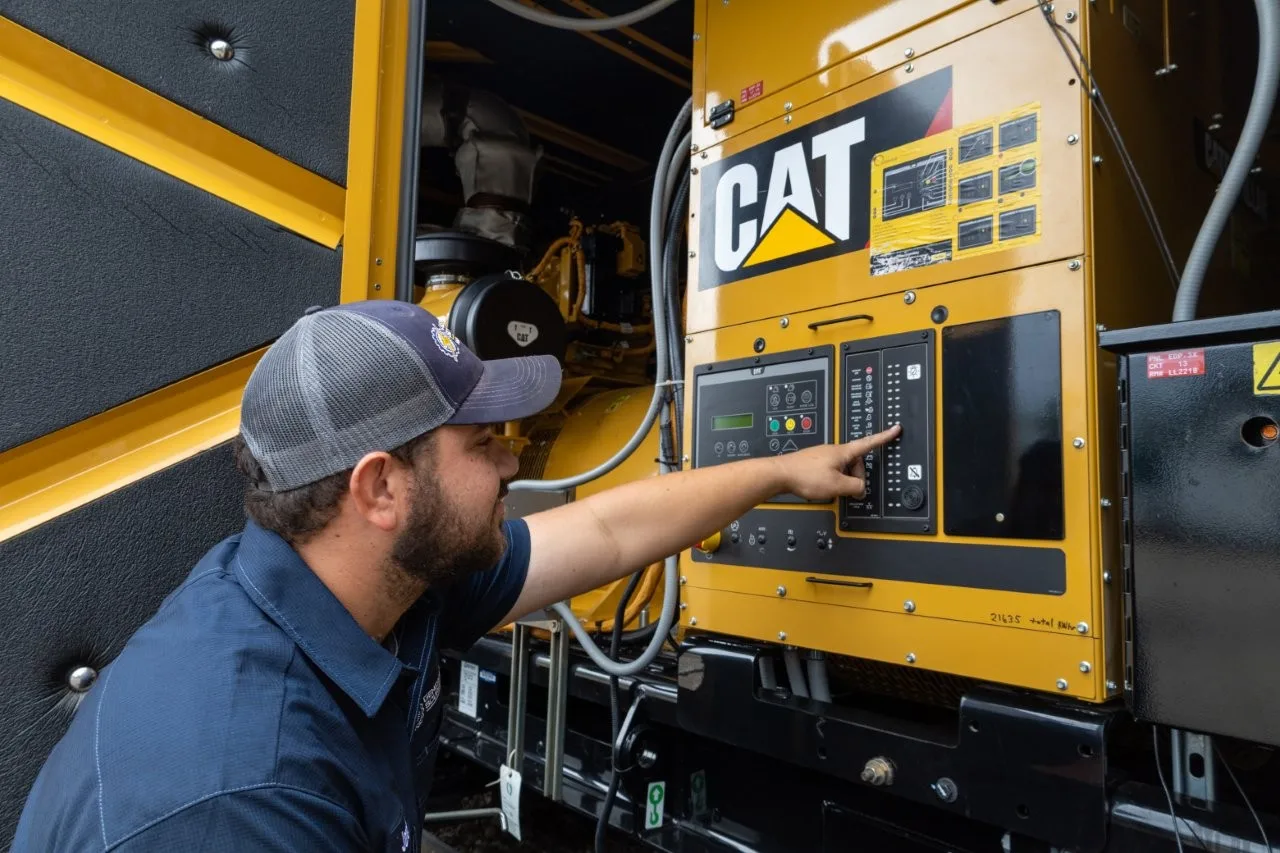
    The APM series (like the APM402 or APM603) is Kohler’s proprietary control logic. It provides high-resolution data on engine health and allows for advanced paralleling capabilities without the need for additional external hardware.
  5. Are Kohler generators rated for continuous duty?
    Yes. While most Kohler units are sold as “Standby” (for emergency use), they offer specific “Prime” and “Continuous” ratings for applications like remote mining or peak-shaving, where the unit runs for thousands of hours annually.
  6. Can Kohler generators run on HVO (Hydrotreated Vegetable Oil)?
    Yes. Kohler has officially certified their entire line of industrial diesel engines for use with HVO. This “drop-in” renewable fuel can reduce net CO2 emissions by up to 90% while maintaining the same performance as standard diesel.

Part 2: Control Systems & Integration

  1. What is the Kohler “Decision-Maker®” Controller?
    The Decision-Maker series is Kohler’s legacy of robust, user-friendly controllers. The modern versions (like the 5500 and 8000) offer a large graphical interface, deep data logging, and the ability to manage complex “load shedding” to prioritize critical circuits during an outage.
  2. How does Kohler handle “Load Shedding”?
    Through the Decision-Maker controller, Kohler generators can be programmed to drop “non-essential” loads (like hallway lighting or non-critical HVAC) if the generator approaches its capacity limit, ensuring that life-safety equipment stays powered.
  3. What is “Kohler OnCue® Plus” monitoring?
    OnCue Plus is a remote management system that allows you to view real-time status, receive text/email alerts, and even remotely start or stop your generator from a smartphone or PC.
  4. Can I parallel a Kohler generator with a different brand?
    While possible, it is most efficient to parallel Kohler units using their internal APM603 controllers. These units use a high-speed “Ethernet” communication link to synchronize frequency and voltage across up to 8 generators automatically.
  5. What is the “Master Control Panel” (MCP)?
    For very large installations (like a 4-unit 2000kW array), Kohler offers a Master Control Panel that acts as the “brain” for the entire system, managing the synchronization of the generators with the utility grid and the facility’s switchgear.
  6. Does Kohler support Modbus and SNMP protocols?
    Yes. Kohler controllers are designed for easy integration into Data Center Infrastructure Management (DCIM) and Building Management Systems (BMS) using standard industrial communication protocols.

Part 3: Compliance & Environmental Resilience

  1. What are Kohler’s seismic and wind-load certifications?
    Kohler enclosures are tested and certified to meet IBC (International Building Code) seismic requirements. Many of their enclosures are also rated for 180 MPH wind loads, making them a top choice for hurricane-prone regions in Florida and the Gulf Coast.
  2. What is the difference between Kohler “Level 1” and “Level 2” sound enclosures?
    Level 1:
    Provides standard weather protection and moderate sound dampening.
    Level 2: Includes advanced acoustic foam and baffled air intake/exhaust to meet strict urban noise ordinances, often achieving 70-72 dBA at 7 meters.
  3. Can I use a Tier 2 Kohler generator for emergency standby in 2026?
    In most of Texas, Colorado, and Florida, a surplus Tier 2 or Tier 3 Kohler unit is legally compliant for “Emergency Standby” applications. This is often preferred by facilities because it eliminates the need for Diesel Exhaust Fluid (DEF) systems.
  4. How does Kohler meet NFPA 110 Type 10 requirements?
    Kohler units are engineered for “Fast Response.” By using high-torque starting motors and advanced fuel mapping, they can consistently accept a full load within the mandatory 10-second window required for Level 1 hospitals.
  5. Does Kohler offer EPA-certified Natural Gas engines at high kW?
    Yes. Kohler is a leader in large-scale Gaseous (Natural Gas/LP) generators. Their units are EPA-certified from the factory, making them ideal for urban sites where diesel fuel storage is not permitted.
  6. What is the “Oversized Alternator” option?
    Kohler allows you to specify an oversized alternator on a standard engine. This is used in data centers or facilities with high “non-linear” loads (like VFDs) to reduce heat buildup and voltage distortion.

Part 4: Maintenance & Lifecycle

  1. What is the maintenance interval for a Kohler industrial unit?
    Standard oil and filter changes are typically required every 250 to 500 hours, or at least once per year for standby units. We recommend monthly “no-load” exercises and annual “load-bank” tests to ensure reliability.
  2. Why is “Jacket Water Heater” maintenance so important for Kohler?
    For a generator to hit its 10-second start target, the engine block must be kept warm. If the Jacket Water Heater fails, the engine may struggle to start in cold climates like Colorado, or it may suffer excessive wear during a “cold start.”
  3. How often should Kohler “Fuel Filters” be replaced?
    Because Kohler common-rail systems operate at extremely high pressures, fuel purity is critical. We recommend replacing fuel filters annually, even if the unit hasn’t run many hours, to prevent moisture-related corrosion in the injectors.
  4. What is the lifespan of a Kohler “Fast-Response” alternator?
    Kohler’s alternators are built with high-quality insulation (Class H). With regular testing and the use of anti-condensation heaters, these alternators can reliably serve a facility for 30 to 40 years.
  5. How does Kohler handle “Wet Stacking” in large KD Series units?
    Like all large diesels, KD engines should not be run at low loads. Kohler recommends an annual Load Bank Test at 75-100% capacity to burn off carbon deposits and verify the cooling system’s performance.
  6. Why is Kohler a top choice for Healthcare facilities?
    Hospitals value the Fast-Response alternator and the advanced diagnostics of the Decision-Maker controller. Kohler’s ability to meet the most stringent NFPA 99 and 110 standards with factory-tested reliability makes them a “reference name” in the medical field.