A Comprehensive Guide To Centralized Power Plants vs. Decentralized Microgrid Resiliency
The American electrical grid is currently navigating its most significant transformation since the days of Edison and Westinghouse. For decades, the nation relied on a centralized model: massive, distant power plants generating gigawatts of electricity and pushing it across thousands of miles of high-voltage transmission lines. Today, that model is under siege from aging infrastructure, extreme weather volatility, and the rapid integration of renewable energy.
As a result, the “Microgrid” has emerged not just as a niche solution for remote sites, but as a national strategic priority for hospitals, data centers, and manufacturing hubs. At the heart of this transition is the industrial generator, the “firming” backbone that makes energy independence possible. This guide provides a deep technical exploration of these two systems and why the move toward decentralized power is the only path to 100% uptime in the 21st century.
1. The Mechanics of Centralized Power
To understand why microgrids are necessary, one must first understand the engineering marvel, and the inherent vulnerabilities, of the centralized utility grid.
The Synchronous Standard
Utility-scale power plants, whether fueled by nuclear, coal, or high-capacity natural gas, rely on massive synchronous generators. These machines are engineered to operate in perfect harmony with the rest of the national interconnection. In the United States, this means maintaining a frequency of exactly 60Hz.
If a 500MW generator in the Midwest slows down by even a fraction of a percent due to a sudden load spike, it can pull the frequency of the entire region out of spec. This is where Grid Inertia comes into play. The physical mass of the massive spinning rotors in these plants acts as a kinetic battery. When the load increases, that physical momentum resists the change, providing critical milliseconds for governors to react and fuel valves to open.
The Excitation of the Giants
At the utility scale, excitation systems are incredibly complex. These generators typically use “Static Excitation” or “Brushless Excitation” systems that can push thousands of amps into the rotor field.
- Voltage Regulation: Because these plants are miles away from the end-user, they must “over-produce” voltage to account for line loss.
- The Step-Up Process: Power is generated at medium voltage (13.8kV to 24kV) and immediately passed through a step-up transformer to 345kV or 765kV for transmission.
The Vulnerability of Distance
The primary weakness of centralized power is not the generation itself, but the delivery. Approximately 90% of all power outages in the U.S. occur during the distribution and transmission phase. A single fallen tree branch in a rural corridor or a failed substation transformer can disconnect thousands of facilities from their power source, regardless of how much electricity the power plant is currently producing.
2. Defining the Microgrid
A microgrid is a localized energy system that mimics the functions of the large-scale utility grid but on a smaller, more resilient scale. It consists of three primary components: Generation (Generators, Solar, Wind), Storage (Batteries), and Control (The Microgrid Controller).
The Power of “Islanding”
The defining characteristic of a microgrid is its ability to “Island.” Under normal conditions, the microgrid remains connected to the utility, often selling excess solar power back to the grid. However, the moment a fault is detected on the utility line, the microgrid’s “Point of Common Coupling” (PCC) opens.
In this “Island Mode,” the local system becomes its own utility. It is no longer a “follower” of the grid’s frequency; it becomes the master. This is where the technical precision of your onsite equipment becomes the difference between a seamless transition and a total facility crash.
Distributed Energy Resources (DERs)
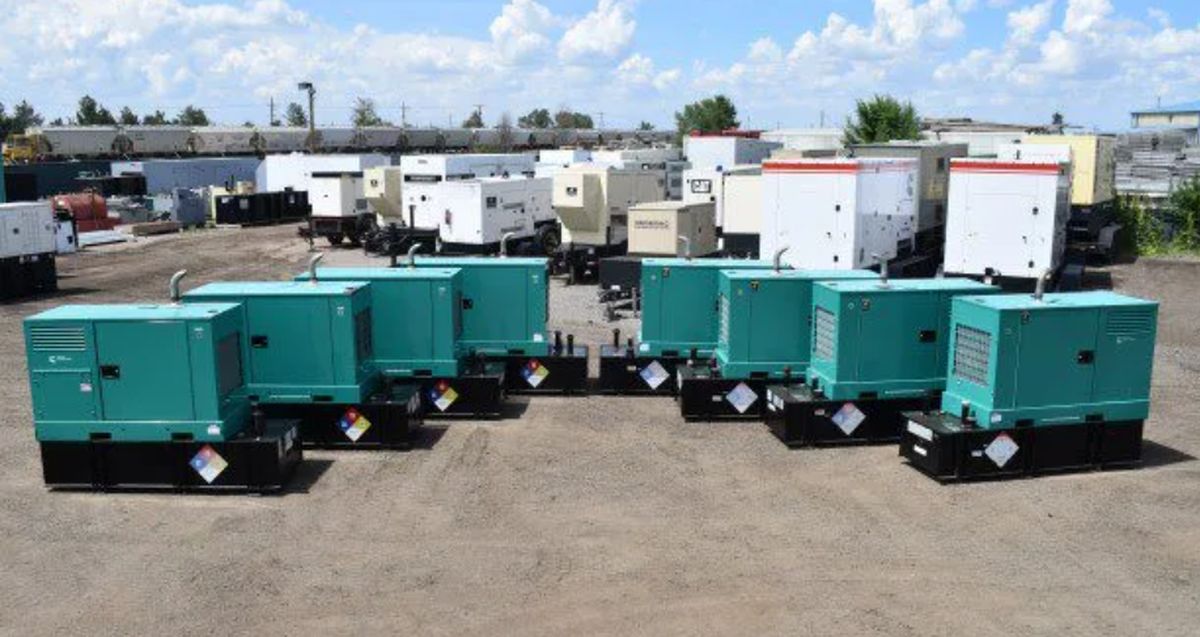
Microgrids are the primary vehicle for Distributed Energy Resources. Instead of one 500MW plant, you might have ten 1,000kW generators spread across a municipal loop. This creates “Redundancy through Distribution.” If one 1,000kW unit fails, the others can share the load, a concept known as N+1 or N+2 redundancy.
3. The Industrial Generator
There is a common misconception that microgrids are purely “green” systems powered only by solar and batteries. While those components are vital, they are “non-firm” resources, they are intermittent. To meet the rigorous standards of NFPA 110 and the National Electrical Code (NEC), a microgrid must have a firm power source.
Why 500kW+ Generators Are Essential
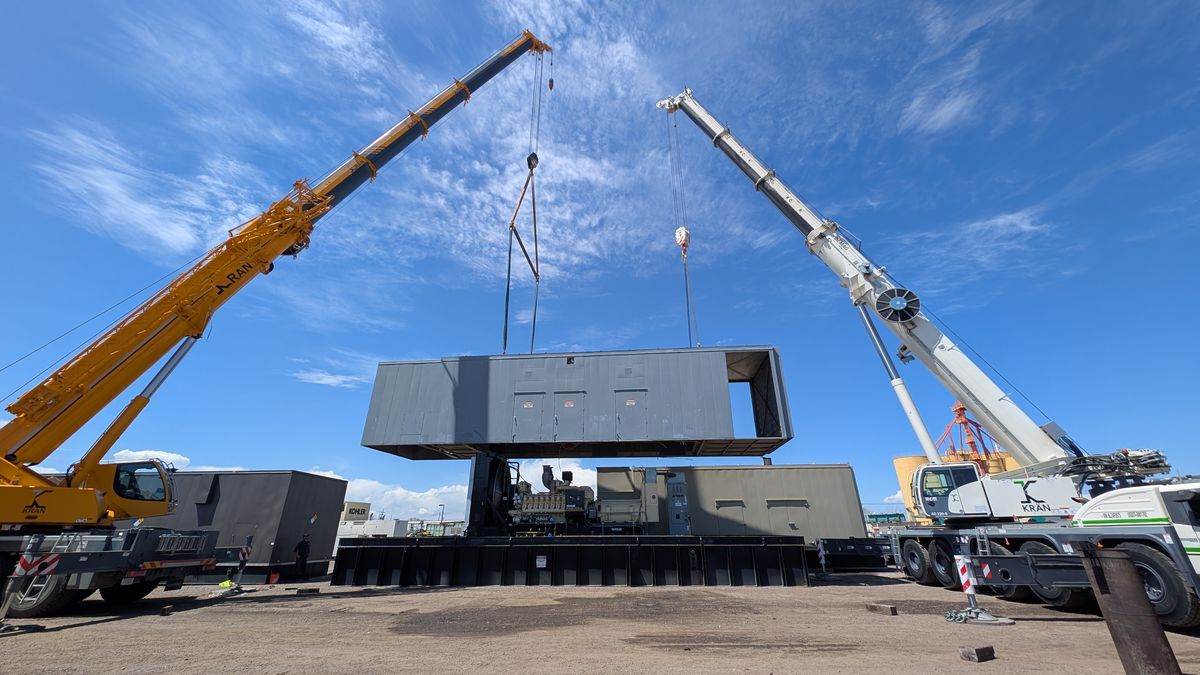
At the industrial scale (500kW to 2,000kW+), generators provide the high-density power that batteries currently cannot sustain for long durations.
- Duration: A battery system might provide 4 hours of backup. A 1,000kW diesel generator with a 3,000-gallon sub-base tank provides 48 to 72 hours of full-load power.
- Load Step Capability: When a large industrial motor or a hospital’s central chiller plant kicks on, it requires a massive “Inrush Current.” Industrial generators (especially those with PMG excitation) can handle these massive load steps without a significant voltage dip, whereas battery inverters may trip on overcurrent.
The “Black Start” Requirement
In a total grid collapse, what engineers call a “Blackout”, the system has zero voltage. Solar inverters and many battery systems require a “grid signal” to begin operating. A generator is a Black Start resource. It uses its onboard 12V or 24V batteries to crank the engine, producing the initial voltage and frequency signal that “wakes up” the rest of the microgrid. Without a generator, a dark microgrid may stay dark even if the sun is shining.
4. Excitation and Control In a Microgrid
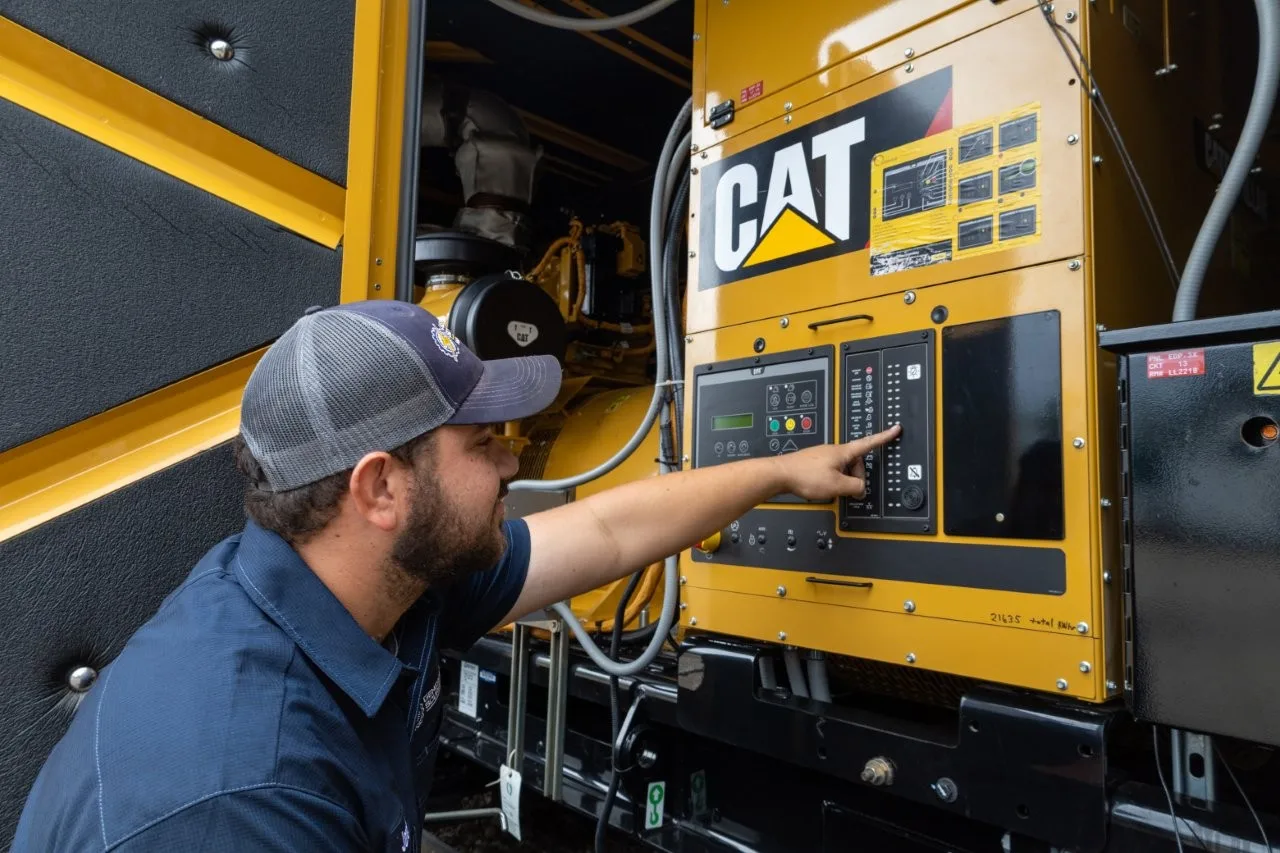
When a generator transitions to Island Mode, its excitation system and Automatic Voltage Regulator (AVR) are put to the ultimate test.
PMG Excitation In Island Mode
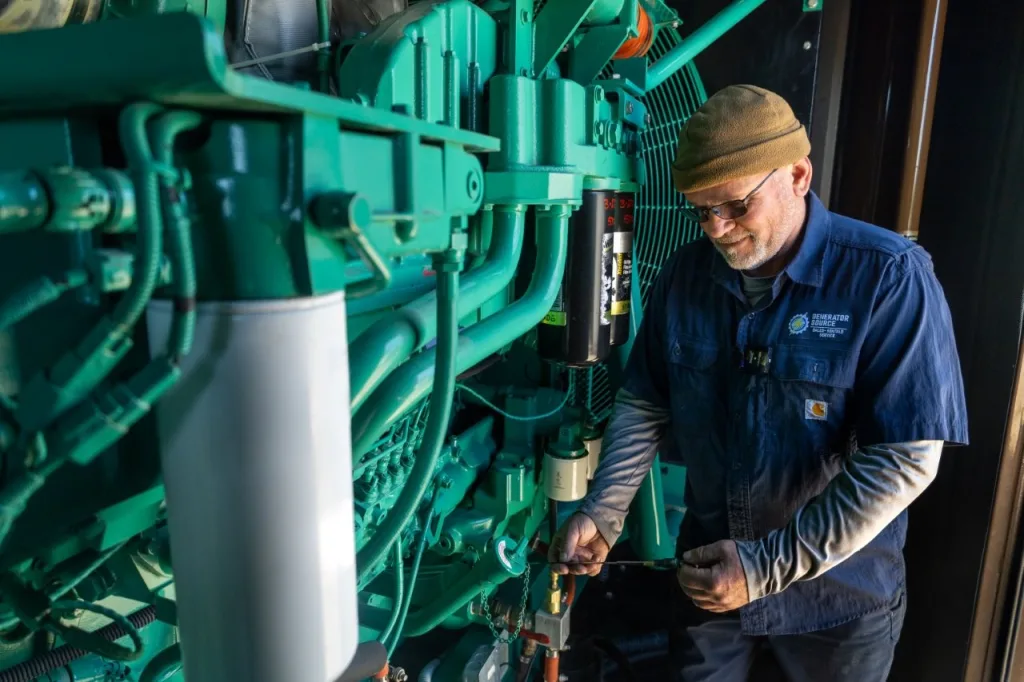
As explored in our technical breakdown of excitation methods, the Permanent Magnet Generator (PMG) is the gold standard for microgrids. In a centralized grid, the utility helps stabilize voltage. In an islanded microgrid, the generator is on its own.
- Isolation: A PMG is a separate power source on the shaft. It doesn’t care if there are “dirty” loads or short circuits on the main stator. It keeps the AVR powered, ensuring that the generator can “fight through” a fault and trip a downstream breaker rather than collapsing the entire microgrid.
Synchronizing and Paralleling
National standards (like NEC Article 705) require that any generator connecting to a microgrid must have advanced paralleling controls.
- Dead Bus Arbitration: In a microgrid with multiple units (e.g., three 1,000kW Cummins units), the controllers must “talk” to each other at micro-second speeds to decide which unit closes onto the unpowered bus first.
- Load Sharing: Once online, the units must share the “Real Power” (kW) and the “Reactive Power” (kVAR). If one unit takes too much kVAR, it will overheat; if it takes too little, it can be “motored” by the other generators.
5. National Standards, Compliance, and the EPA
Navigating the legal landscape of industrial power is a national challenge. Whether you are in a high-regulation state or a more lenient one, federal mandates apply to every microgrid and power plant.
NFPA 110
The National Fire Protection Association (NFPA) 110 standard is the “Bible” for emergency power.
- Level 1: Mandatory for facilities where power failure could result in loss of life.
- Type 10: The generator must move from a dead stop to carrying the full critical load in 10 seconds or less. This requires high-output jacket water heaters and high-cranking-amp battery systems.
NEC Article 705
This is the most critical code for microgrids. It governs how a generator, solar array, and the utility grid all connect to the same bus. It requires specialized “Relay Protection” to ensure that your generator never “backfeeds” into a dead utility line, which could be fatal for utility linemen working to restore power.
EPA Tier Emissions
The EPA’s “New Source Performance Standards” (NSPS) apply to every industrial engine.
- Standby Exception: For most national applications, if the generator is used only for emergencies, it does not need to meet the ultra-strict “Tier 4 Final” standards required for prime power plants. This allows facilities to utilize surplus Tier 2 or Tier 3 units, which are often more reliable due to their lack of complex after-treatment systems (SCR/DEF).
6. Economic Drivers: “Backup” To “Revenue”
Modern industrial generators are no longer just “insurance policies” that sit idle. In a microgrid configuration, they become financial assets.
Peak Shaving and Demand Response
Many national utility providers offer “Demand Response” programs. When the national grid is strained (such as during a nationwide heatwave), the utility will pay you to disconnect your facility and run on your own 1,000kW generator.
- ROI: Some facilities earn enough in “capacity payments” and “peak shaving” savings to pay off the cost of a re-certified generator in under five years.
Total Cost of Ownership (TCO)
When comparing centralized utility power to decentralized microgrids, the TCO must include the “Cost of a Megawatt-Hour of Downtime.” For a data center, a single hour of downtime can cost $1,000,000+. When that risk is factored in, the investment in a multi-unit 2,000kW microgrid is mathematically superior to relying on the aging centralized grid.
7. The Future of the Grid
The transition to a decentralized, microgrid-based national grid is no longer a matter of “if,” but “when.” As the “Base Load” plants (coal/nuclear) are retired, the frequency stability of the national grid will continue to decrease.
Resiliency is now a national strategic priority. From the Department of Defense to the smallest municipal water treatment plant, the mandate is clear: facilities must have the ability to generate, control, and sustain their own power.
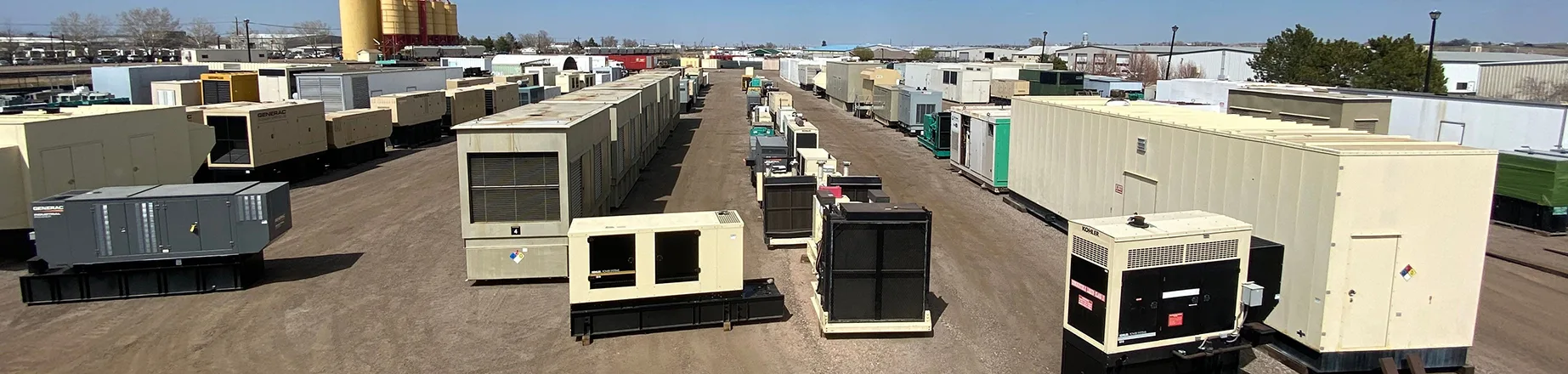
At Generator Source, we are the nation’s leader in the hardware that makes this future possible. With a massive inventory of 500kW to 2,000kW+ units from Caterpillar, Cummins, and Kohler, we provide the “firming power” that ensures America’s infrastructure remains online, regardless of the state of the grid.