What the August 11 Derecho Exposed About Commercial Power Resiliency
Steel, refining, logistics, healthcare, and data infrastructure across Chicagoland, Northwest Indiana, and Greater Cincinnati all went dark on the same afternoon. Restoration is being measured in days, not hours.
On the morning of August 11, 2026, a mesoscale convective system organized over eastern Iowa and drove east across three of the Midwest’s densest industrial corridors. The National Weather Service Storm Prediction Center preliminarily classified it as a derecho — a designation that requires a damaging wind swath at least 250 miles long — with the strongest measured gust of the event, 99 mph, recorded at Gary/Chicago International Airport in Gary, Indiana.
By midnight, more than 800,000 utility customers across Illinois, Indiana, Ohio, and Kentucky were without service, with the broader multi-state total climbing past one million. Three days later, tens of thousands of commercial, institutional, and industrial accounts are still waiting for restoration.
Where things stand
Northwest Indiana — NIPSCO. The utility is calling this the largest outage event in its history. At peak, roughly 302,000 of NIPSCO’s approximately 500,000 electric customers lost service — around 60% of its entire base. As of Thursday morning, more than 260,000 remained out. NIPSCO reported substations damaged alongside downed poles and conductor, and initially could not publish estimated restoration times at all while damage assessment continued. Roughly 1,200 mutual-assistance contractors from other states have been mobilized into the region.
Chicagoland — ComEd. More than 370,000 customers were affected across northern Illinois, with gusts to 96 mph and confirmed tornadoes in the south suburbs. Homewood, Chicago Heights, Lansing, and Joliet took the worst of it. ComEd deployed roughly 3,000 employees and contractors and projected approximately 80% restoration by midday August 13 and about 99% by late on August 15. Notably, this was the utility’s 19th major weather event of 2026 — its highest annual count in more than two decades.
Greater Cincinnati — Duke Energy. More than 180,000 customers lost power across southwest Ohio, Northern Kentucky, and southeastern Indiana. Duke restored over 171,000 in the first 24 hours, but as of 5 a.m. Thursday roughly 52,000 remained out — about 43,400 in the Cincinnati area and 9,100 in Northern Kentucky, concentrated in Hamilton and Clermont counties. More than 1,000 additional lineworkers and support personnel were routed in from outside the two states.
The industrial exposure underneath the outage map
These three regions are not interchangeable suburbs. They represent a concentrated share of the nation’s heavy industry, freight movement, and increasingly, its digital infrastructure.
Northwest Indiana carries integrated steelmaking along the Lake Michigan shoreline, the largest petroleum refinery in the Midwest at Whiting, associated petrochemical operations, the Port of Indiana-Burns Harbor, and the rail and interstate arteries that feed all of it. These are continuous-process facilities. An unplanned power loss at a refinery or a blast furnace complex is not a matter of rebooting when the lights return — it triggers controlled shutdown sequences, flaring, restart windows measured in days, and potential regulatory reporting. The region has seen this before: a 2024 power loss at the Whiting refinery forced a temporary shutdown and employee evacuation, and a separate 2026 disruption there was cited by fuel analysts as a driver behind a rapid regional run-up in gasoline prices.
The Chicago metro is the largest rail interchange in North America and a major node for food processing, cold storage, pharmaceutical distribution, hospital systems, wastewater treatment, and a growing colocation and hyperscale data center footprint. A single afternoon of distribution damage in the south suburbs touches intermodal yards, refrigerated warehousing, and municipal water and wastewater assets simultaneously.
Greater Cincinnati anchors consumer goods manufacturing, aerospace engine production, financial services, and one of the country’s most important air cargo corridors around CVG — including a major express hub and a major air freight network. It is also drawing new load: a hyperscaler has publicly floated a multibillion-dollar data center campus in the Cincinnati suburbs. Every one of those operations carries uptime obligations that a three-day utility restoration window does not respect.
The lesson is distribution, not generation
It is worth being precise about what failed here. This was not a capacity shortfall, a curtailment order, or a grid-operator emergency. Generation and transmission were largely intact. What broke was the last mile — poles, conductor, substations, and the tree canopy sitting on top of all of it.
That distinction matters operationally, because the mitigations are different:
- You cannot demand-respond your way out of this. Load-shedding programs and interruptible tariffs are irrelevant when the feeder serving your building is on the ground.
- Restoration priority is not negotiable. Utilities restore critical public safety loads and highest-count circuits first. A single-meter industrial or institutional account on a damaged lateral can sit for days regardless of its economic significance.
- Estimated restoration times may not exist. NIPSCO went more than 24 hours without publishing ETRs because damage assessment was incomplete. Continuity plans built around a known restoration window had nothing to plan against.
- Weather constrains the repair itself. Duke noted that crews cannot perform elevated bucket work once winds reach 30 mph, and follow-on storms both added outages and paused restoration.
The fuel problem nobody budgets for
The most instructive detail of this event for facilities teams was not electrical. It was logistical.
With most retail fuel stations in Lake and Porter counties dark, Indiana State Police advised motorists to fill up before entering the region and warned that stations still operating could exhaust both gasoline and diesel — explicitly citing generator demand as a driver. Long lines formed at the few stations with power.
If your standby plan assumes you can top off a diesel day tank on day two of an event, this week demonstrated the flaw. In a wide-area outage, the fuel distribution network is fighting the same power loss you are, and it is competing against every other generator in the region.
A readiness checklist for facilities in these regions
Organizations in Cook, Will, Lake (IN), Porter, LaPorte, Hamilton, Clermont, Butler, and Warren counties — and any operation carrying similar exposure — should be validating the following now, while this event is fresh:
- Confirm actual runtime, not nameplate runtime. Calculate hours available at realistic load with on-site fuel only, assuming zero resupply for 72 hours. Compare that to the restoration timelines above.
- Establish a fuel contract with priority terms. A standing agreement with defined response times is worth more than a phone number. Confirm your supplier’s own backup power and whether they prioritize by contract or by call order.
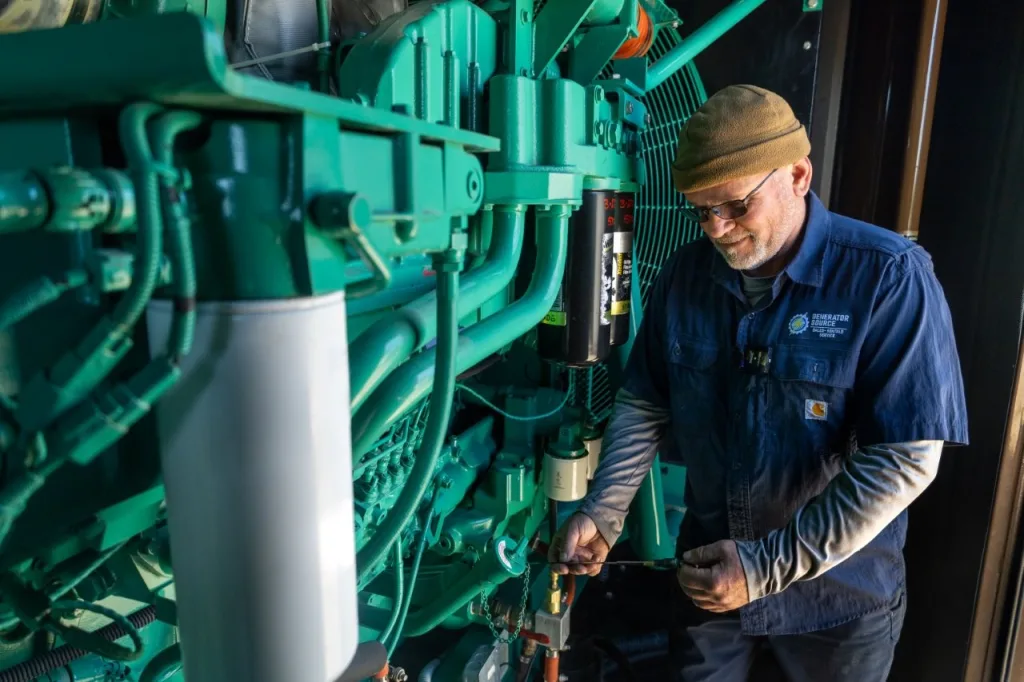
- Load bank test under real load. Monthly no-load exercise runs prove the engine starts. They do not prove the unit carries the building, and they contribute to wet stacking. Annual load bank testing to full rated capacity is what actually validates readiness.
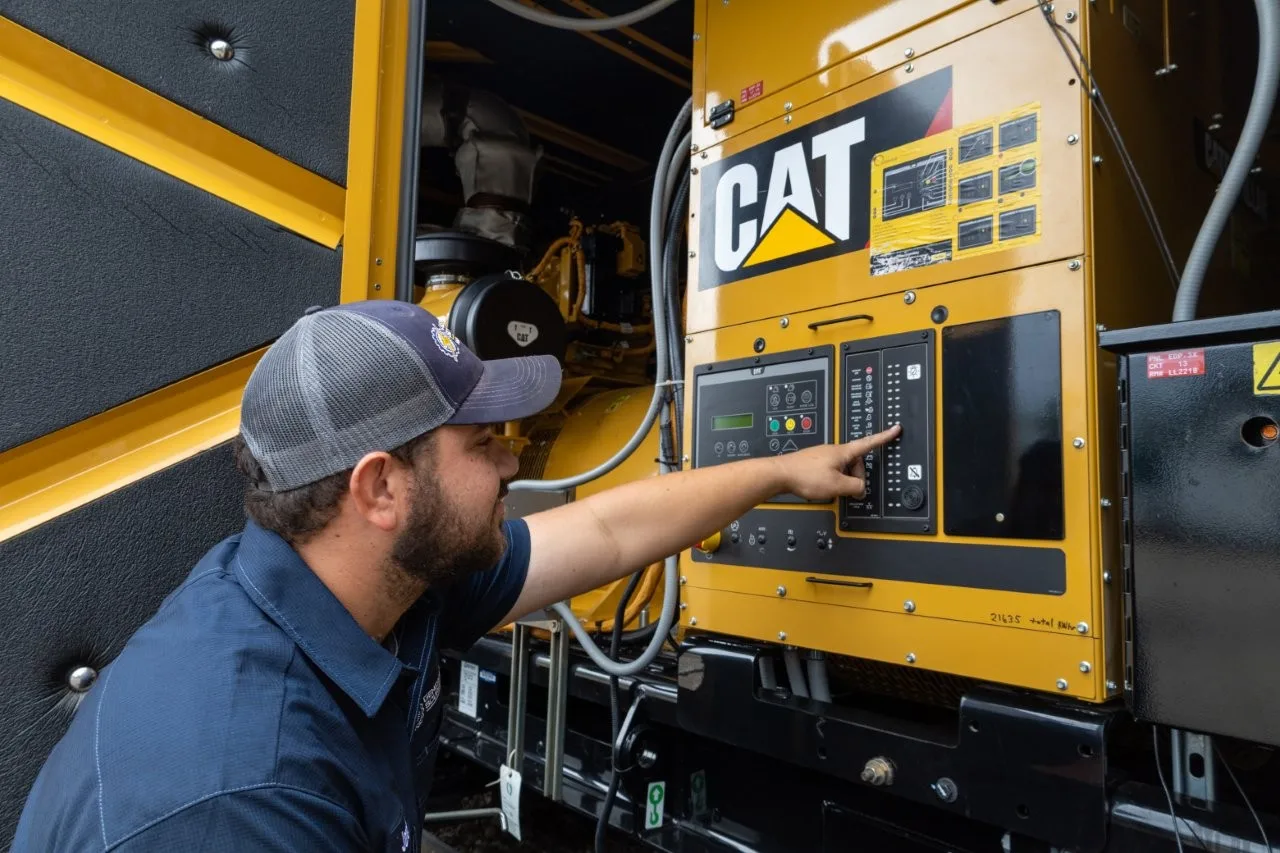
- Verify automatic transfer switch operation and exercise timers. ATS failure is a leading cause of standby systems that “worked” in testing and did not transfer in an event.
- Audit fuel quality. Diesel degrades. Water intrusion, microbial growth, and stratification in tanks that sit for months are common failure modes at exactly the moment the unit is needed.
- Re-examine what is actually on the emergency bus. Many facilities discover mid-event that process cooling, IT closets, security systems, or sump pumps were never connected. Life safety code minimums are not an operational continuity plan.
- Document the gap and size for it. If this event would have taken you down, quantify the shortfall in kW and hours — that is the specification for what you need to add, whether that is a larger permanent unit, a supplemental mobile unit, or a docking station and rental agreement.
- Plan for staffing and refueling logistics. Who fuels the unit at 3 a.m. on day three? Is site access clear of downed lines and debris? Is that person trained?
The pattern is not going away
ComEd’s own count — 19 major weather events in a single year, the most in over two decades — is the number worth carrying out of this week. Illinois has recorded more tornado activity in 2026 than any other state. NIPSCO just recorded its worst outage event ever. Duke’s Cincinnati and Northern Kentucky territory has now taken repeat multi-day restoration events in recent years.
Whatever the underlying drivers, the operating assumption for facilities in these corridors has shifted. Multi-day, wide-area distribution outages are no longer the tail risk you insure against once a decade. They are a scheduling reality.
Talk to Generator Source
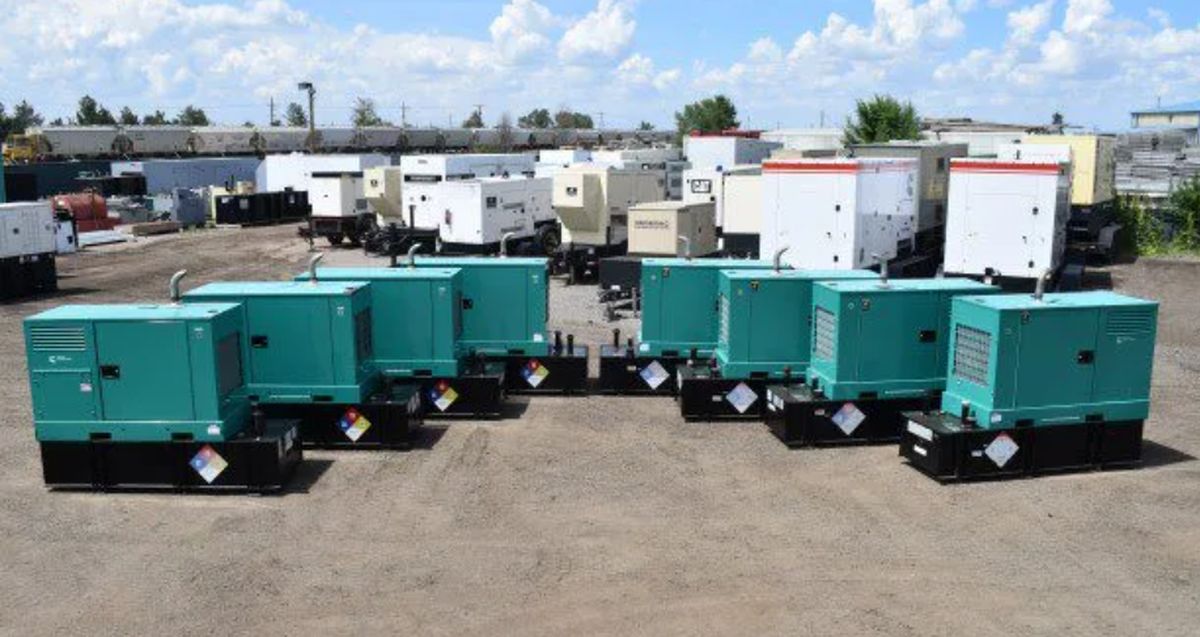
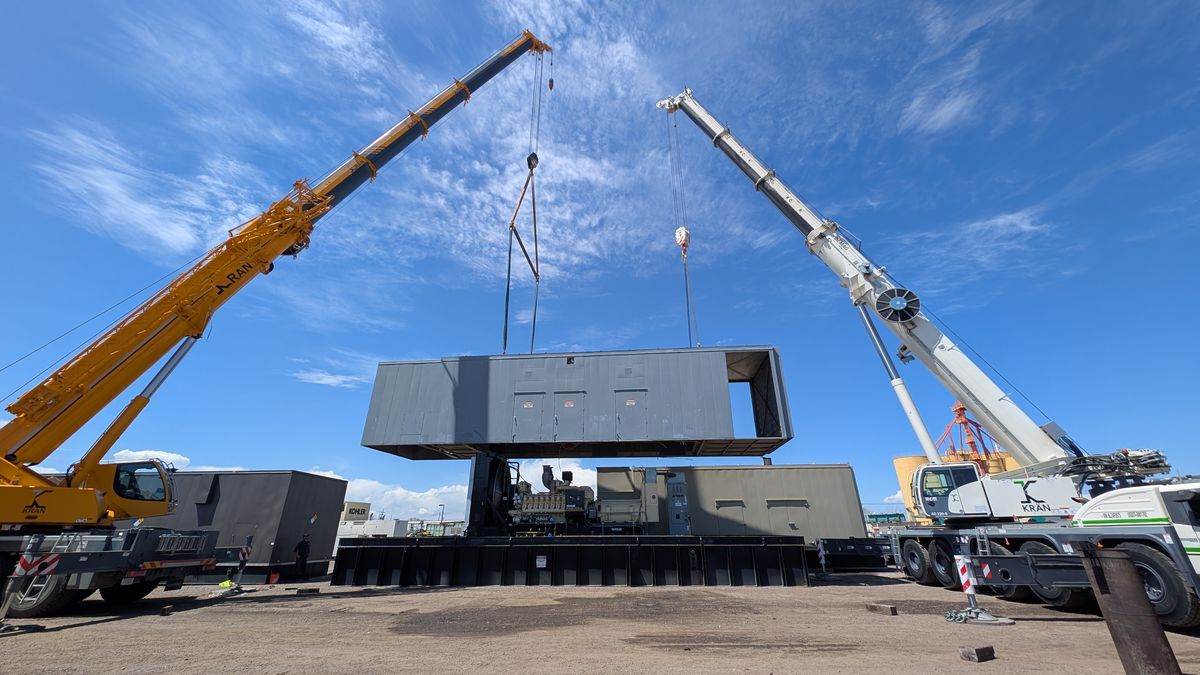
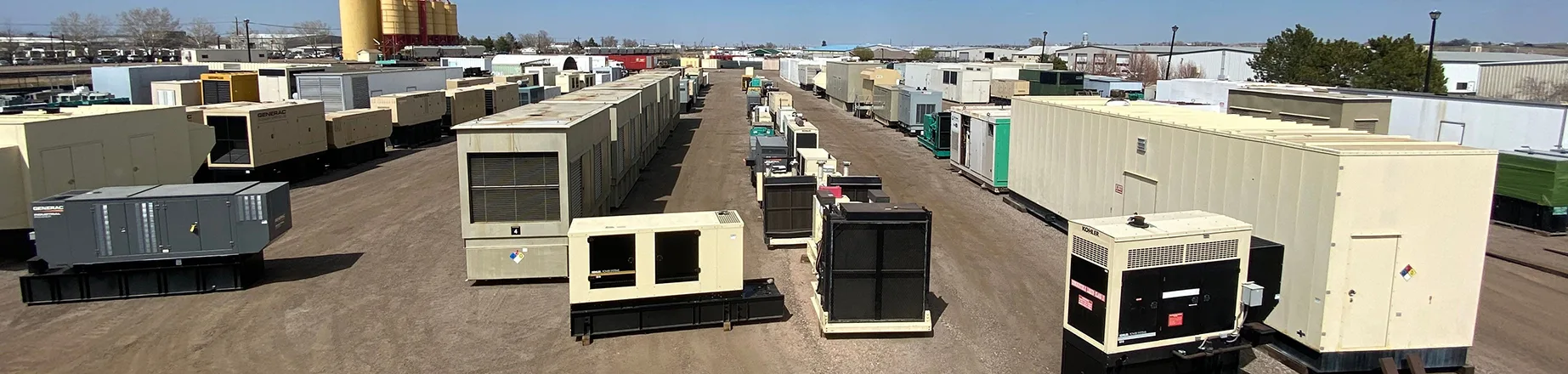
Generator Source has supplied standby and prime power generation to hospitals, data centers, utilities, water and wastewater operations, manufacturing plants, and municipal and federal agencies for decades. Our inventory of low-hour used and new diesel and natural gas generator sets — from 20 kW to over 2 MW — ships nationwide, and our team can help you size the unit, specify the transfer equipment, and plan the fuel logistics before the next event.
If this week exposed a gap in your facility’s power continuity, contact our team for a sizing consultation, or browse available inventory to see what can ship now.