Authored by Eddie Vecchiarelli
CEO, Generator Source
Growth, Structure, and the Rising Value of Recurring Service
The U.S. commercial and industrial (C&I) generator service market has entered one of the strongest growth cycles in its history. Data center construction, AI infrastructure buildout, grid reliability concerns, and record electricity demand are together driving an estimated $1.8 billion to $2.4 billion in annual service spending.
What makes this market unusual is not its size but its shape. Generator service combines recurring revenue, durable customer relationships, and a highly fragmented supplier base. Most of the work is performed by regional independents operating inside single territories, alongside manufacturer-authorized networks that concentrate on warranty and national enterprise accounts. Very few organizations serve the middle of that market at national scale.
That gap defines the opportunity. As backup power shifts from optional insurance to critical infrastructure, buyers increasingly need service partners who can deliver consistent standards across multiple sites and geographies.
Market Size
2026 U.S. C&I Generator Service Market
| Metric | Estimate |
| Total addressable market | $1.8B to $2.4B annually |
| Growth outlook | Sustained double-digit expansion |
| Revenue character | Predominantly recurring |
| Supplier landscape | Highly fragmented, regionally concentrated |
Equipment sales are transactional. Service is not. Preventative maintenance, emergency response, repairs, load bank testing, fuel system maintenance, and major overhauls create relationships measured in decades rather than quarters, and the cumulative value of that service work frequently exceeds the profitability of the original equipment sale.

Why the Market Is Growing
Data Centers
The largest single demand driver is the expansion of U.S. data center infrastructure.
| Segment | Facilities |
| Currently operational | 4,000 to 5,500 |
| Under development | 2,000 to 3,000 |
| Total current and planned | 6,000 to 8,500+ |
Facility count understates the change. The more consequential shift is in power density per site.
| Facility type | Typical power load |
| Legacy enterprise data center | 1MW to 5MW |
| Modern hyperscale facility | 50MW to 300MW+ |
| AI computing campus | 500MW to 1GW+ |
A single hyperscale campus routinely deploys 20 to more than 100 diesel generators, along with redundant backup systems, multiple fuel storage systems, and continuous preventative maintenance programs. One AI campus can carry more installed backup capacity than dozens of legacy enterprise facilities combined, and every one of those units requires scheduled service, testing, and eventual overhaul.
Across all critical facility categories, the U.S. installed base of commercial generators under active service requirements numbers in the hundreds of thousands.

Record Power Demand
U.S. electricity consumption is reaching all-time highs, driven by AI and cloud computing workloads, manufacturing reshoring, electrification of transport and heating, transmission congestion, and population growth in the Sun Belt and Mountain West.
As grid margins tighten, organizations that cannot absorb an outage are investing accordingly. Backup generation is increasingly treated as critical infrastructure with a maintenance budget to match, not as a capital purchase that sits idle until something goes wrong.
Reliability-Driven Sectors
Demand is concentrated in industries where downtime carries immediate operational, regulatory, or safety consequences:
- Data centers and colocation
- Healthcare and medical facilities
- Water and wastewater treatment
- Telecommunications
- Manufacturing and industrial processing
- Utilities
- Municipal infrastructure
- Distribution and logistics
- Food processing and cold storage
- Commercial real estate
These operators need recurring maintenance, documented inspections, emergency repair coverage, and guaranteed response times. Compliance requirements in healthcare, water, and telecom make much of that work non-discretionary.

How the Market Is Served Today
Despite its size, the generator service industry remains remarkably fragmented, and it divides into two broad groups.
Manufacturer-authorized networks
OEM service networks typically concentrate on large national contracts, warranty work, and premium enterprise accounts tied to their own installed equipment. Their strength is factory support and parts access. Their constraint is brand scope: they primarily service what they sold.
Independent regional providers
Independents perform a substantial share of the market’s day-to-day work, including preventative maintenance, emergency repairs, rental support, load bank testing, major rebuilds, fuel system work, and controls upgrades. They typically compete on responsiveness, cross-brand capability, and long-standing local relationships.
The limitation is reach. Most independents operate within a single metro or state, which leaves multi-site customers assembling coverage from a patchwork of unrelated vendors with inconsistent documentation, pricing, and standards.
The Economics of Recurring Service
Service revenue behaves differently from equipment revenue. It recurs on a schedule, it is largely insulated from the capital spending cycle, and it compounds as an installed base grows.
Over the life of a generator, cumulative service and parts revenue commonly exceeds the margin on the original equipment sale by a wide multiple.
Recurring contracts also produce second-order value:
- Predictable cash flow across economic cycles
- Higher customer retention and lifetime value
- Steady parts and consumables volume
- Visibility into rental needs during outages and overhauls
- First position on eventual equipment replacement
For well-run organizations, service becomes the economic engine that stabilizes the rest of the business.
Market Structure and Consolidation
Fragmentation of this degree is unusual in a market of this size, and it typically does not persist.
Typical regional generator service companies generate $3 million to $25 million in annual revenue. Hundreds of such firms operate across the United States, most with deep customer relationships inside a limited geography. As multi-site customers push for consistent national coverage, the economics increasingly favor operators who can standardize service delivery across territories while preserving local response capability.
Consolidation in this market is therefore likely to be driven less by cost synergy than by coverage. The organizations best positioned to lead it will be those that can combine national reach with genuine cross-brand technical depth.

Where Generator Source Fits
Generator Source enters this market from an established position in the generator value chain.
- Deep technical expertise across major generator brands
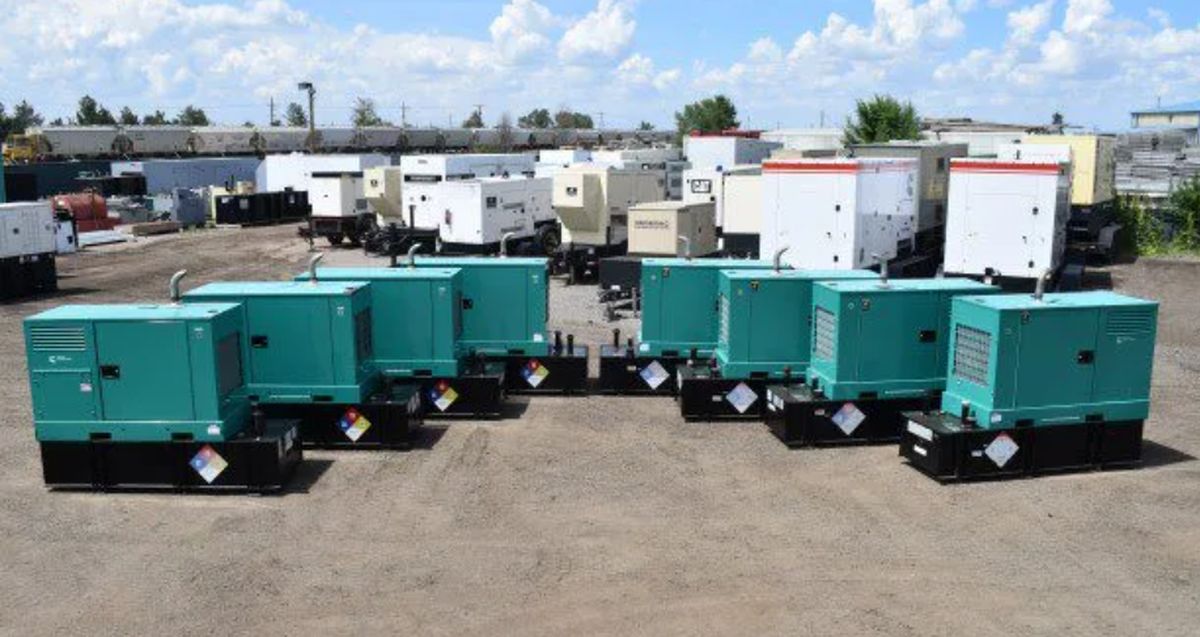
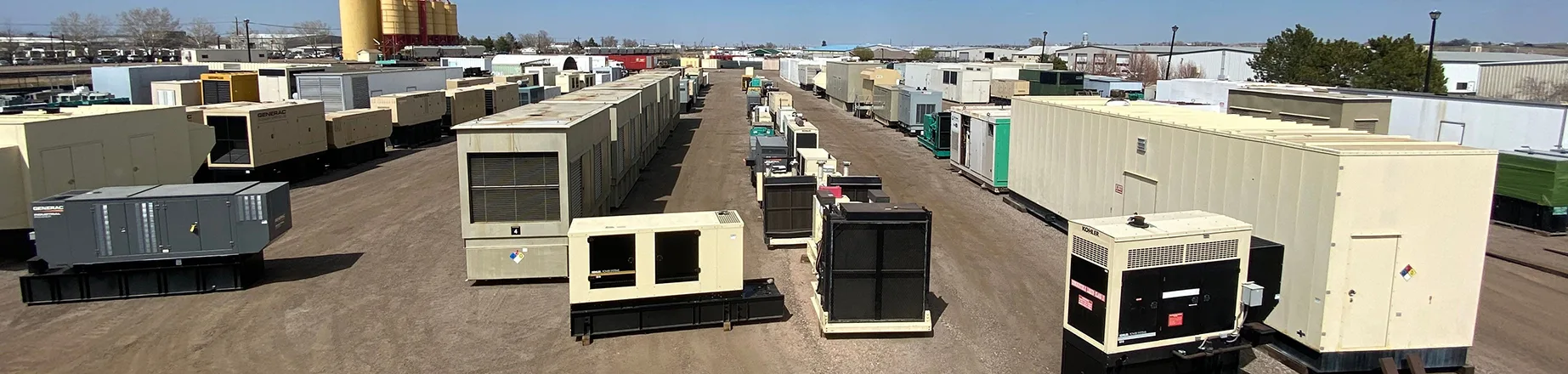
- National reputation as a buyer and seller of new and used industrial generators
- In-house refurbishment and rebuild capability
- Active rental fleet and operations
- Four branch locations spanning Colorado, Florida, and Texas
- An installed customer base across data center, healthcare, water, agriculture, manufacturing, and municipal markets
Refurbishment capability is the differentiator worth naming directly. A shop that rebuilds engines and alternators to specification can support units regardless of original manufacturer, and can keep older assets in reliable service well past the point where OEM channels lose interest. That is precisely the capability the independent middle of this market lacks at scale.
Strategic Vision
The opportunity extends beyond participating in market growth. It is to build the most efficient and customer-focused independent C&I service platform in the country, defined by:
- Consistent, documented service delivery across every location
- Standardized operating and safety procedures
- Structured technician development and retention
- Technology-enabled field operations with real-time customer visibility
- Data-driven maintenance programs that anticipate failures rather than react to them
- True national account capability with single-point accountability
Each of those is a repeatable system rather than a one-time initiative, which is what makes the model portable into new geographies.
Bottom Line
The C&I generator service industry is one of the more compelling growth stories in industrial infrastructure today:
- A total addressable market approaching or exceeding $2 billion annually
- Sustained double-digit growth
- Rapid data center and AI infrastructure expansion
- Record U.S. electricity demand against tightening grid margins
- A fragmented supplier landscape with limited national coverage
- Recurring revenue with structurally superior profitability
- Service as the highest-margin segment of the generator value chain
Generator Source intends to meet that demand with disciplined execution, standardized service quality, and a focus on the operators who cannot afford to be without power.
Still have questions or looking for more information?
Generator Source specializes in low-hour, used, new, and surplus generator sets. We have a wide variety of generator sizes and models to fit any project. We are not a broker, we own what we sell.
Call us today (877-866-6895) or click Contact Us to be connected with one of our experienced sales reps.
We have 350+ generators in stock and ready to ship!