Navigating Regulatory Compliance and Infrastructure Resiliency
The acquisition of an industrial generator is a significant capital investment, but the physical installation of that asset is where a facility’s long term resiliency is truly forged. In the current energy landscape, where the national electrical grid faces unprecedented strain from aging infrastructure and the massive power demands of AI data centers, the role of a standby power system has transitioned from a secondary backup to a primary mission critical requirement. For facility managers in high stakes sectors like healthcare, data processing, and heavy manufacturing, a successful installation is not merely a matter of placing a machine on a concrete pad. It is a complex engineering and regulatory journey that requires a deep understanding of federal emissions laws, national safety standards, and the specific physics of industrial power integration.
Moving beyond a transactional “used generator” sale to a turnkey, cradle to grave partnership is essential for maintaining 100% uptime. At Generator Source, we have spent forty years codifying the technical requirements of industrial installation into a formal standard that ensures your 20kW to 4,000kW asset is not just functional, but optimized for its specific environment.
Phase 1: Pre-Installation Engineering and Compliance
A successful installation begins months before a crane arrives on site. The first step is a technical consultation to bridge the gap between your current energy needs and your future infrastructure goals. This phase focuses on the three pillars of industrial readiness: sizing, emissions, and permitting.
Sizing for Transient Response and Inrush Current
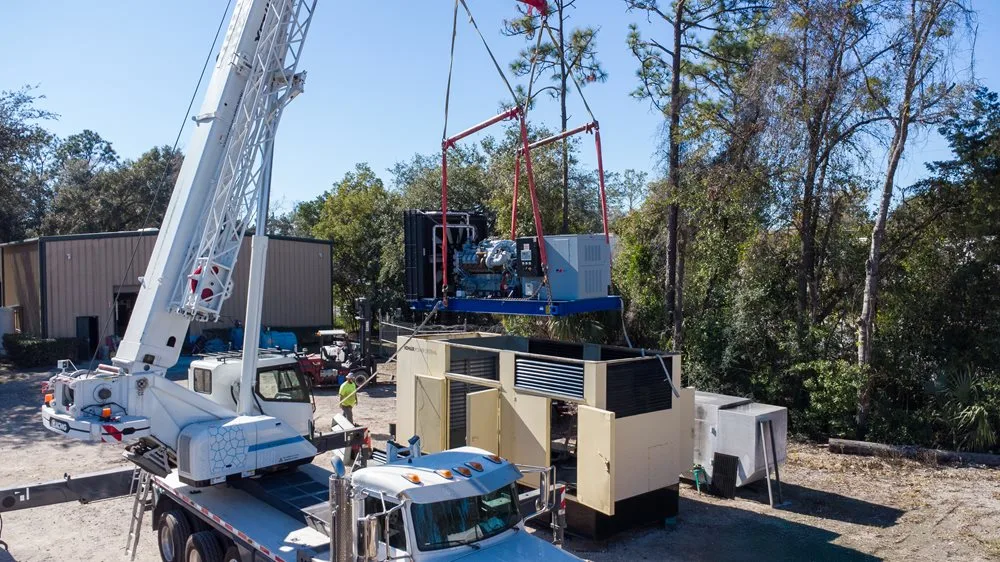
The most common point of failure in industrial installations is improper sizing. Many facilities rely on steady state load calculations, but a generator must be sized to handle “load steps” and the “inrush current” of large industrial motors or medical imaging equipment. A unit that is undersized will experience significant voltage dips that can trip sensitive electronics or damage the alternator. Conversely, a unit that is grossly oversized is prone to “wet stacking,” which is the accumulation of unburnt fuel in the exhaust system that leads to engine degradation. Our engineers evaluate your specific application to ensure the generator, whether it is a 1000kW or a 2000kW unit, is perfectly matched to your facility’s peak demand.
Read more about sizing a generator >
Navigating EPA Tier Ratings and Federal Law
Emissions compliance is a legal minefield that varies depending on whether your generator is classified as “Emergency Standby” or “Non-Emergency Prime Power”. The EPA allows for the use of re-certified Tier 2 or Tier 3 surplus units for emergency only applications, providing a cost effective and reliable path to resiliency. However, if your facility intends to participate in demand response programs or peak shaving, a Tier 4 Final unit with Selective Catalytic Reduction (SCR) and Diesel Exhaust Fluid (DEF) systems is a federal requirement. Understanding these nuances is a core part of the “Industrial Explainer” role that Generator Source provides to our national clients.
Read more about EPA Tier compliance >
Permitting and Local Code Compliance
Beyond federal law, installations must adhere to the National Electrical Code (NEC), NFPA 110 standards, and local building codes. In urban corridors like New York City or Boston, this often involves navigating strict noise ordinances and fuel storage restrictions. Our installation roadmap includes proactive coordination with local authorities to ensure that your concrete pad, electrical runs, and sound attenuated enclosures meet or exceed all regional requirements.
Read more about generator compliance >
Phase 2: Site Selection and Infrastructure Physics
The physical location of a generator is a critical engineering choice that impacts the unit’s longevity and performance. Whether the installation is an outdoor canopy unit or an indoor skid mounted system, the infrastructure must be designed to withstand the environmental realities of its region.
Concrete Pad Engineering and Vibration Isolation
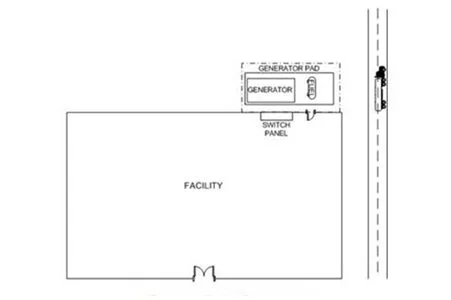
An industrial generator weighing 100,000 lbs or more requires a reinforced concrete pad designed for both static and dynamic loads. The pad must be perfectly level and thick enough to accommodate the mounting studs that secure the machine during high torque starting events. For indoor installations, specialized vibration isolators are often required to prevent the mechanical energy of the engine from resonating through the building’s structure.
Read more about vibration isolation >
High Altitude and High Heat Derating
Environment matters. In high altitude regions like Denver or Salt Lake City, the thin air reduces the oxygen available for combustion, requiring a technical “derate” calculation. This ensures that a unit sold as a 1500kW generator provides its full rated capacity at 5,000 feet of elevation. Similarly, in high heat zones like Phoenix or Houston, the cooling system must be oversized to prevent engine shutdowns during 110 degree summer heatwaves.
Read more about high altitude & derating >
Hurricane Hardening and Coastal Resiliency
For facilities in Florida, Texas, and the Gulf Coast, installation infrastructure must be “hurricane hardened.” This involves specifying enclosures rated for 180MPH wind loads and high capacity fuel systems that provide 96 hours of autonomous runtime to meet NFPA 110 Class 96 standards. Our national logistics and technical teams specialize in these regional modifications, ensuring that your asset is ready for the specific threats of its geographic location.
Read more about hurricane resiliency >
Phase 3: The Physics of Industrial Integration
Once the generator is set on its pad, the process of integrating it with the facility’s auxiliary systems begins. This phase is where the technical authority of a turnkey partner is most evident, as it involves the management of airflow, exhaust, and fuel logistics.
Airflow and Thermal Management
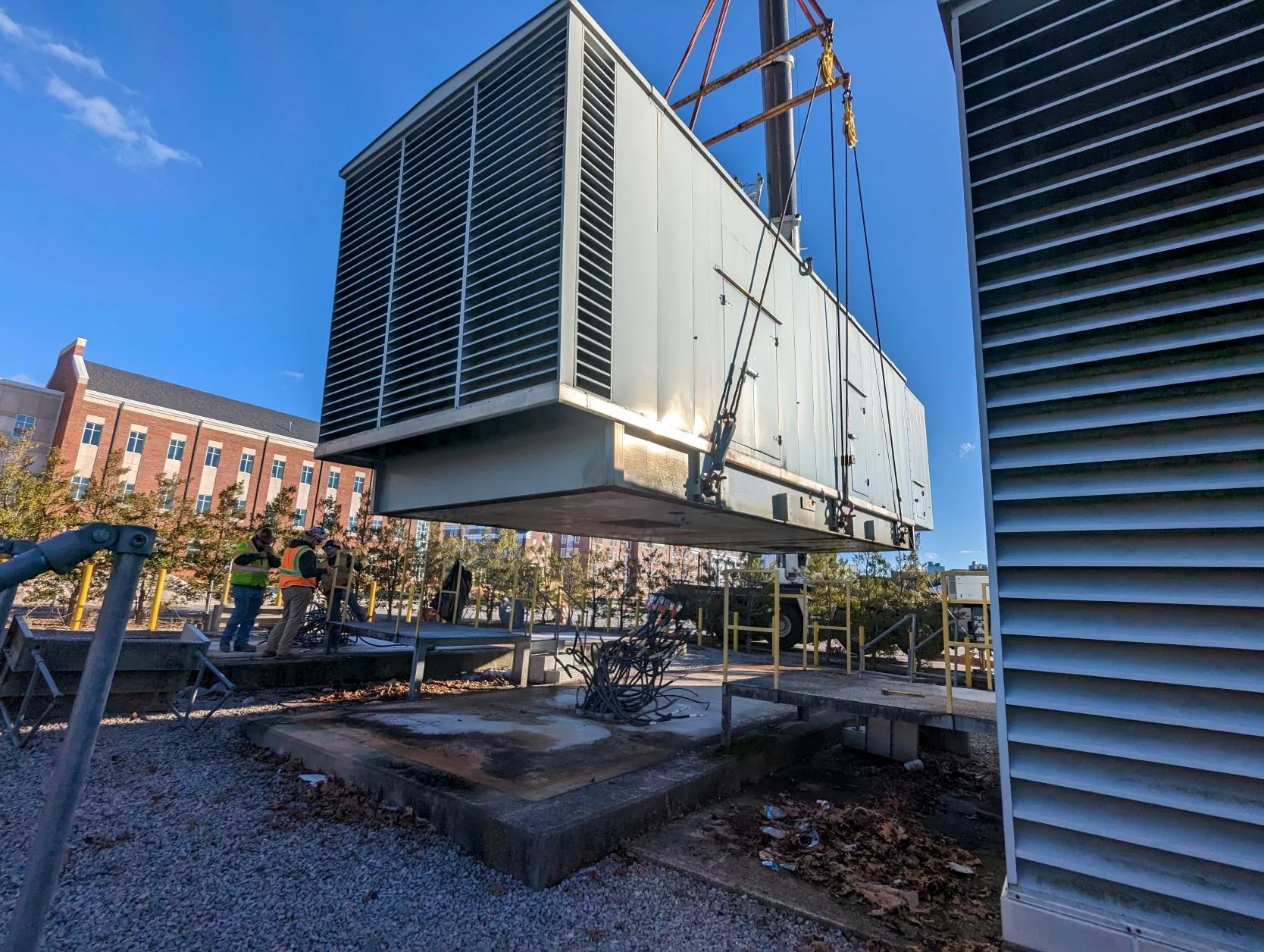
An industrial diesel engine requires a massive volume of air for both combustion and cooling. For indoor installations, this requires the engineering of intake and exhaust louvers that are synchronized with the generator’s control panel. If the airflow is restricted, the engine will quickly overheat, leading to a catastrophic shutdown during a grid failure. We ensure that your facility’s cooling air louvers are perfectly sized for the generator’s radiator and aftercooler to maintain thermal stability at 100 percent load.
Read more on generator cooling systems >
Exhaust Systems and EPA Compliance
The exhaust system must be designed to minimize backpressure, which can significantly reduce engine efficiency and increase wear. For Tier 4 Final installations, the exhaust path must also accommodate the SCR and DPF (Diesel Particulate Filter) after-treatment systems. Proper insulation of the exhaust piping is mandatory to prevent heat migration into the engine room or the surrounding structure, ensuring a safe operational environment for your maintenance team.
Read more on meeting EPA standards >
Fuel Systems and Long Term Autonomy
A generator is only as reliable as its fuel supply. For large installations, this often involves the integration of an auxiliary fuel tank and a sophisticated transfer pump system. We manage the sequence of setting these tanks and connecting them to the generator’s fuel pump, ensuring a seamless supply of diesel. To address the “Circular Economy” and sustainability goals of our clients, we also advocate for fuel polishing and maintenance programs that prevent microbial growth and moisture accumulation in the tank over long periods of inactivity.
Phase 4: Electrical Infrastructure and the Grid Interface
The electrical integration phase is the final hurdle in the installation roadmap. This is where the generator is connected to the facility’s distribution network through an Automatic Transfer Switch (ATS) or a paralleling switchgear system.
The Role of the Automatic Transfer Switch (ATS)
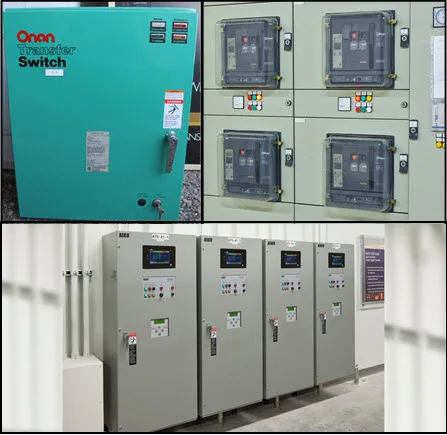
The ATS is the “brain” of the emergency power system. It constantly monitors the utility grid and, upon detecting a failure, signals the generator to start and then switches the building’s load from the grid to the generator. For mission critical applications, we often specify dual ATS setups to separate life safety loads from business critical loads, ensuring that the most vital systems are protected first.
Paralleling and N+1 Redundancy
For large scale data centers and hospitals, a single generator is often not enough. These facilities utilize paralleling systems where multiple 2000kW or 3000kW units work together to provide massive power and N+1 redundancy. If one unit fails to start, the remaining units can still carry the critical load. This level of complex electrical integration requires a partner that understands the nuances of load sharing and synchronization.
Read more on paralleling and redundancy >
Microgrid Integration and “Firming” Power
In 2026, we are seeing a national shift toward microgrids where industrial generators act as the “firming” backbone for solar and battery storage systems. During an installation, we can integrate your generator with these intermittent power sources, providing the “Black Start” capability required to re-energize the entire system when the grid and batteries are empty.
Read more on microgrid resiliency >
Phase 5: Commissioning and the “Generator Source Certified” Standard
The physical installation is complete, but the generator is not yet a “safety net.” The final and most vital phase is commissioning, where we prove the system’s reliability through the Generator Source Certified standard.
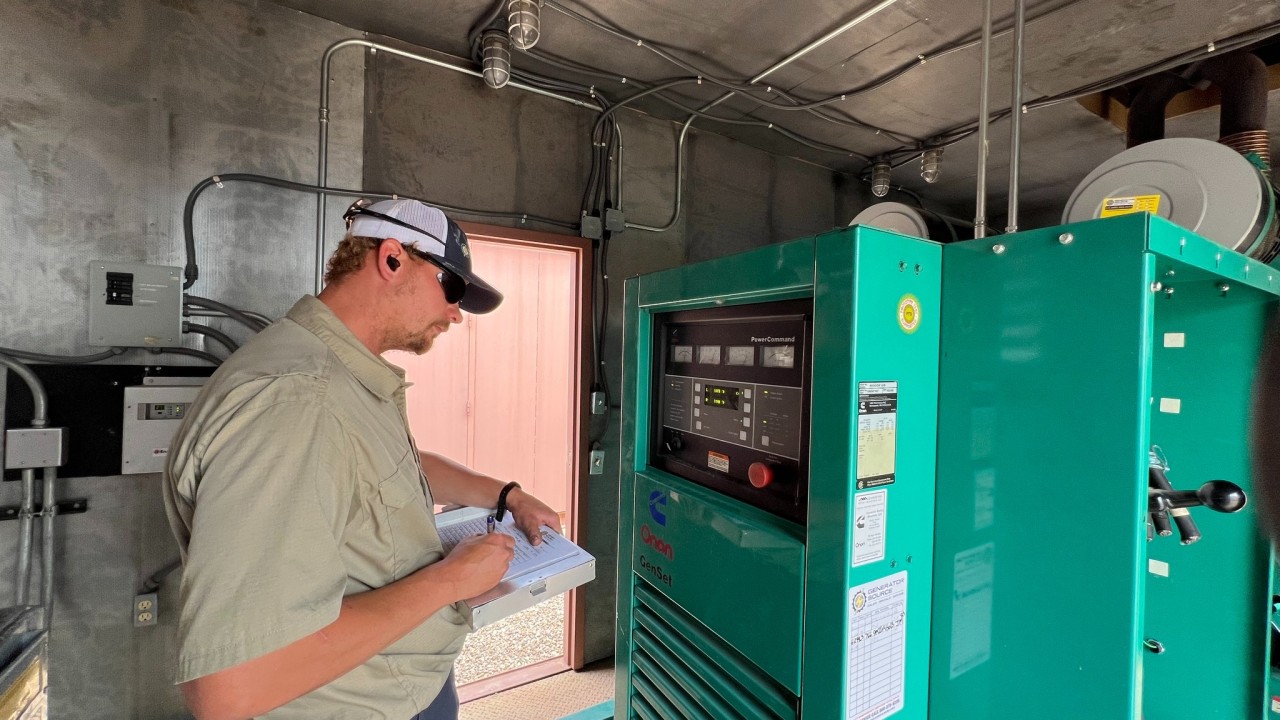
The 31-Point Commissioning Inspection
Before the system is handed over to the facility manager, our certified technicians perform a forensic 31-point inspection. We check every fluid level, inspect every electrical connection, and verify the logic of the control panel and ATS. This proactive approach identifies and rectifies the simple, preventable issues—like low battery voltage or a loose fuel line—that cause ninety percent of “fail to start” events.
Read more on the 31-point inspection >
The 4-Hour Load Bank Stress Test
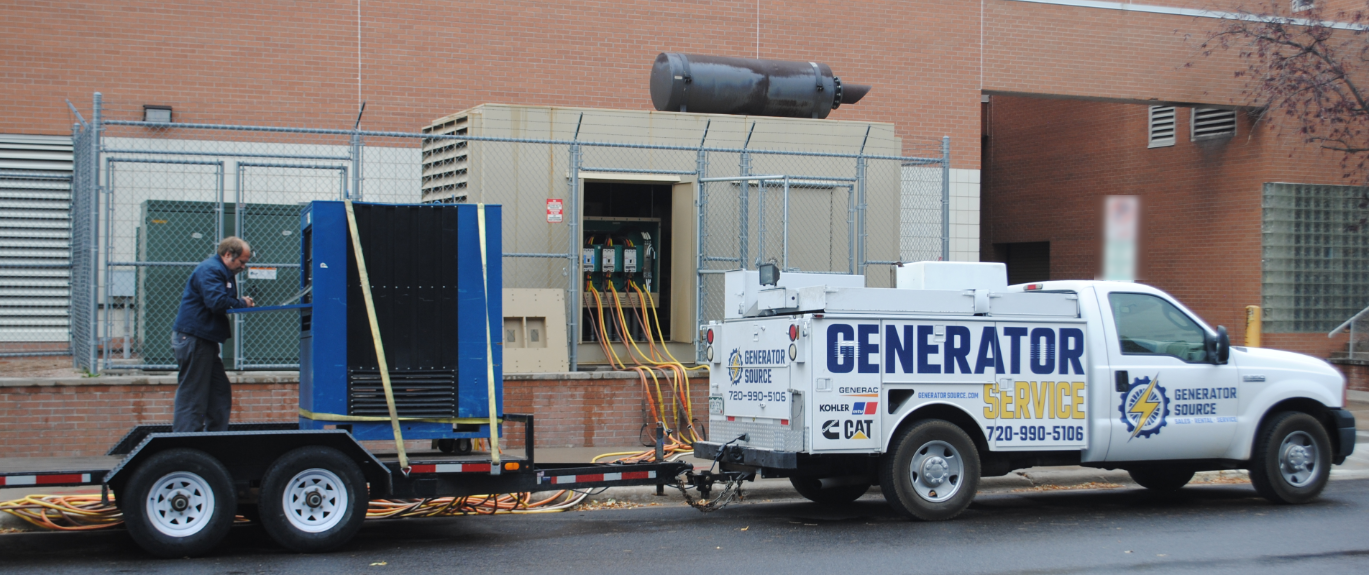
We do not just “idle” a new installation; we prove it. Every Generator Source Certified installation concludes with a four hour load bank test at 80 to 100 percent of its rated capacity. This test verifies that the alternator, cooling system, and engine can all handle their nameplate rating without overheating or frequency fluctuations. A successful load bank report is the empirical evidence that your 1,000,000 dollar investment will perform exactly as expected during a crisis.
Read more about load bank testing >
NFPA 110 Compliance Testing
For healthcare and life safety applications, we perform the specific NFPA 110 acceptance tests required by law. This includes the “10-second start” test, where the generator must start and accept its full emergency load within ten seconds of utility failure. This rigorous testing protocol is why Generator Source is perceived as a highly trusted industrial authority rather than just a vendor.
Read more on NFPA 110 compliance >
Phase 6: Long-Term Lifecycle and Asset Management
A successful installation is the beginning of a thirty to forty year relationship with a high value asset. To maximize the lifecycle economics of your “heavy iron,” we provide a comprehensive suite of post-installation services.
The Role of Telematics
To eliminate the “set it and forget it” failure trap, we offer remote monitoring and telematics for every installation. This allows our technical team to monitor your generator’s health in real time, identifying potential failures before they occur. If a battery voltage drops or a fuel sensor fails, we know about it before the next grid outage, ensuring that your facility remains in a state of constant readiness.
Sustainability and the Circular Economy
By selecting a re-certified surplus generator from our 20kW to 4,000kW inventory, your facility is participating in the industrial “Circular Economy”. Repurposing high quality heavy iron prevents the massive carbon footprint associated with new steel and engine manufacturing, allowing you to meet corporate ESG goals without sacrificing the reliability of traditional diesel power.
Read more on re-certified power >
Why a Turnkey Partner Is Mandatory for 100% Uptime
The installation of an industrial generator is a high stakes engineering project that leaves no room for “bandaid” solutions or “organized chaos.” The technical requirements of 2026, from AI data center density to the increasing volatility of the national grid, demand a partner that provides more than just hardware. You need a turnkey, cradle to grave power partner that understands the regulatory roadmap, the physical infrastructure, and the “Trust Premium” of forensic testing.
At Generator Source, we move beyond the transactional sale to provide a “Ready Inventory” of certified industrial power that can be deployed nationwide today. While others wait eighteen months for new manufacturing, our clients achieve energy independence through immediate availability and rigorous technical authority. Stop viewing your generator installation as a sunken cost and start viewing it as the strategic foundation of your business’s resiliency.