Best Generator Brands for Colorado
Colorado presents a unique set of challenges for standby and prime power systems. From the high altitude of the Front Range to the extreme temperature swings of the High Plains and the rugged requirements of the mountain mining corridors, a generator in the Centennial State has to work harder than almost anywhere else in the country. Choosing the right brand is not just a matter of price or availability; it is a matter of engineering a solution that accounts for thin air, subzero winters, and an aging electrical grid that is increasingly prone to instability.
As an industry authority with decades of experience in the Colorado market, Generator Source has identified the top brands that consistently perform under these specific conditions. This guide explores the best generator brands for Colorado facilities and the technical factors that must be considered when securing your power infrastructure in the Rockies.
The Altitude Factor – Why “Derating” Is the First Consideration
The most critical technical challenge in Colorado is altitude. As you move higher above sea level, the air becomes thinner. This means there is less oxygen available for the combustion process inside a diesel or natural gas engine. In the power generation industry, we call this “derating”.
Most generators are rated for performance at sea level. However, a unit that provides 1,000kW in a coastal city will not provide that same 1,000kW in Denver or Colorado Springs. On average, a naturally aspirated engine can lose approximately 3 percent of its power for every 1,000 feet of elevation gain once it passes a certain threshold. In a city like Denver, which sits at 5,280 feet, a generator may need to be sized 15 to 20 percent larger than the actual load to ensure it can perform as required.
When we work with clients in Colorado, our first step is always to calculate the specific derate factor for their location. If you are a facility manager in Leadville or Silverthorne, the altitude impact is even more severe. Failure to account for this can lead to a generator that stalls or fails to accept its full load during a critical outage.
Cold Weather Reliability – The Necessity of Jacket Water Heaters
Colorado winters are famous for their intensity. For an industrial generator, the primary concern is not just the snow, but the extreme cold starts. Diesel engines rely on the heat generated by compression to ignite the fuel. When the engine block is at subzero temperatures, the physical act of starting becomes a massive strain on the system.
To meet NFPA 110 Type 10 standards, which require a generator to start and accept its full life safety load within 10 seconds, a jacket water heater is non negotiable. These heaters keep the engine coolant at a consistent, warm temperature, ensuring the engine is essentially “pre heated” and ready to fire instantly.
Furthermore, the choice of battery is critical. Cold weather significantly reduces the “Cold Cranking Amps” available to the starter motor. In Colorado, we recommend high capacity battery systems and frequent testing to ensure that a weak battery does not lead to a “Fail to Start” event during a winter storm.
Top Generator Brands for Colorado Applications
Based on thousands of hours of field service and sales data, four brands stand out for their performance in the Colorado climate.
1. Caterpillar (CAT)

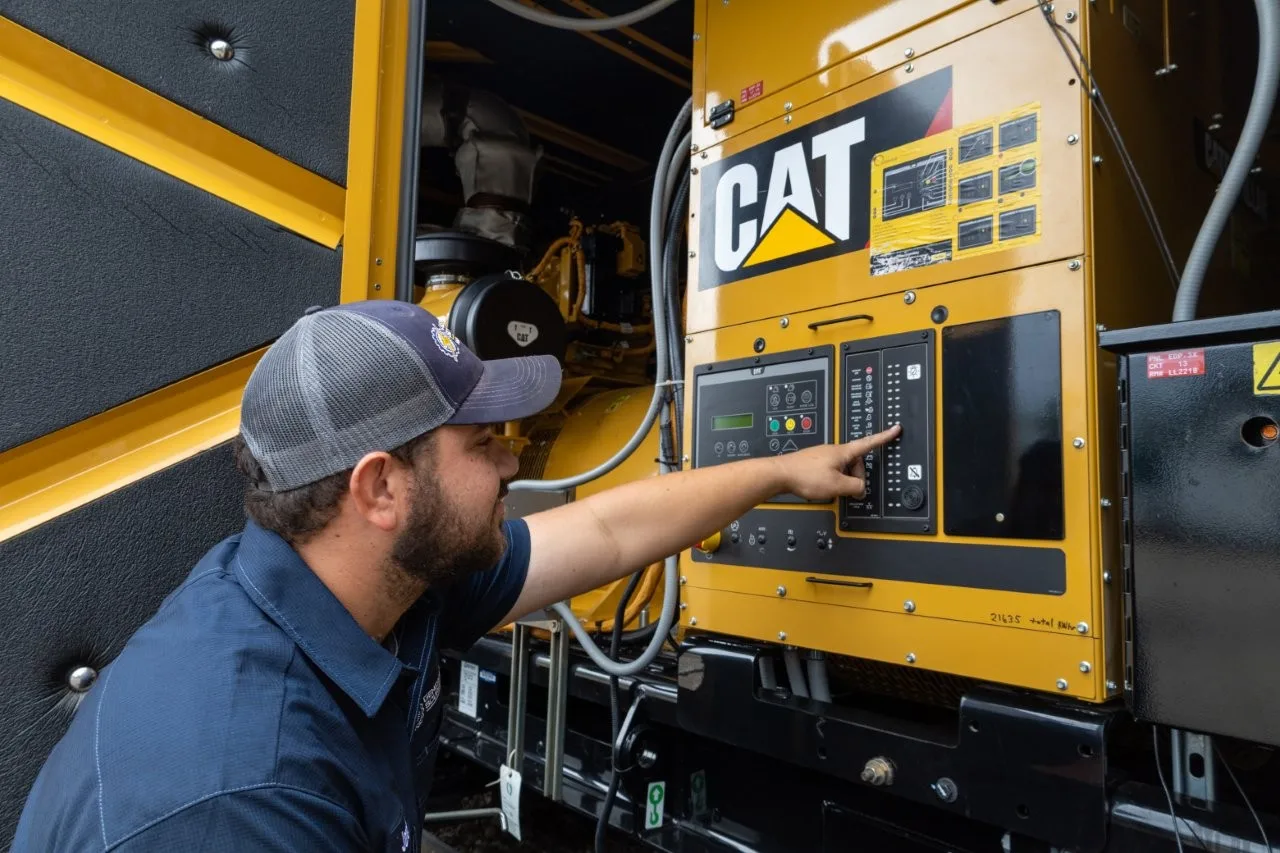
Caterpillar is the gold standard for heavy industry and mining in the Rockies. Their 3500 series engines are built with “heavy iron” that handles the stress of altitude exceptionally well. CAT units are known for their massive displacement, which provides a natural advantage when air is thin. For remote mining operations in the mountains or large scale industrial sites along the I-25 corridor, Caterpillar remains the most durable option available. Their global parts network also ensures that even in remote parts of the state, maintenance remains manageable.
2. Cummins

Cummins is often the preferred choice for Colorado’s rapidly growing data center and tech hub sectors. The brand is famous for its “The Power of One” philosophy, where every major component is designed and built by Cummins to work in total harmony. This integration leads to some of the best transient response times in the industry, which is vital for protecting the sensitive electronics found in Denver’s tech corridor. Their PowerCommand control systems are also highly capable of managing the complex start sequences required in cold weather.
3. Kohler/Rehlko

Kohler (now Rehlko) is the go to brand for healthcare facilities and urban developments where space is at a premium. Kohler’s KD series engines offer some of the highest power densities in the world. This means you can get more kilowatts out of a smaller physical footprint. For a hospital in downtown Denver or an apartment building in Boulder that needs to meet strict building codes, Kohler provides a compact yet powerful solution that does not sacrifice reliability.
4. Generac Industrial Power

While many associate Generac with residential power, their industrial division is a leader in large scale natural gas solutions. In many Colorado municipalities, diesel fuel storage is restricted or tightly regulated. Generac’s modular power systems allow facilities to utilize the state’s existing natural gas infrastructure to achieve virtually unlimited runtimes. This is an excellent option for municipal buildings and schools that serve as emergency shelters during winter weather events.
Regional Case Studies
The Boulder County Brownout Event
The necessity of on site power in Colorado was recently highlighted by a series of rolling brownouts in Boulder County. These events were not caused by a major storm, but by high demand and aging grid infrastructure.
During this event, several businesses that lacked backup power suffered massive losses. One whole food storage facility reportedly lost nearly a quarter million dollars in revenue because their inventory reached temperatures that rendered it unsellable. This event proved that in modern Colorado, a generator is no longer a luxury; it is a fundamental piece of business equipment.
Furthermore, we are hearing from clients that insurance companies are paying closer attention to these events. In some cases, insurers have informed business owners that they may be dropped from coverage if they do not take steps to protect their inventory with a generator. Because brownouts are often announced in advance, failing to prepare is increasingly seen as a failure of management rather than an unavoidable accident.
Why Service is Different In Colorado
A generator in Colorado cannot be maintained with a “set it and forget it” mentality. The environment is simply too demanding. We recommend a proactive service schedule that focuses on the unique failure points found in the Rockies.
The 32-Point Inspection
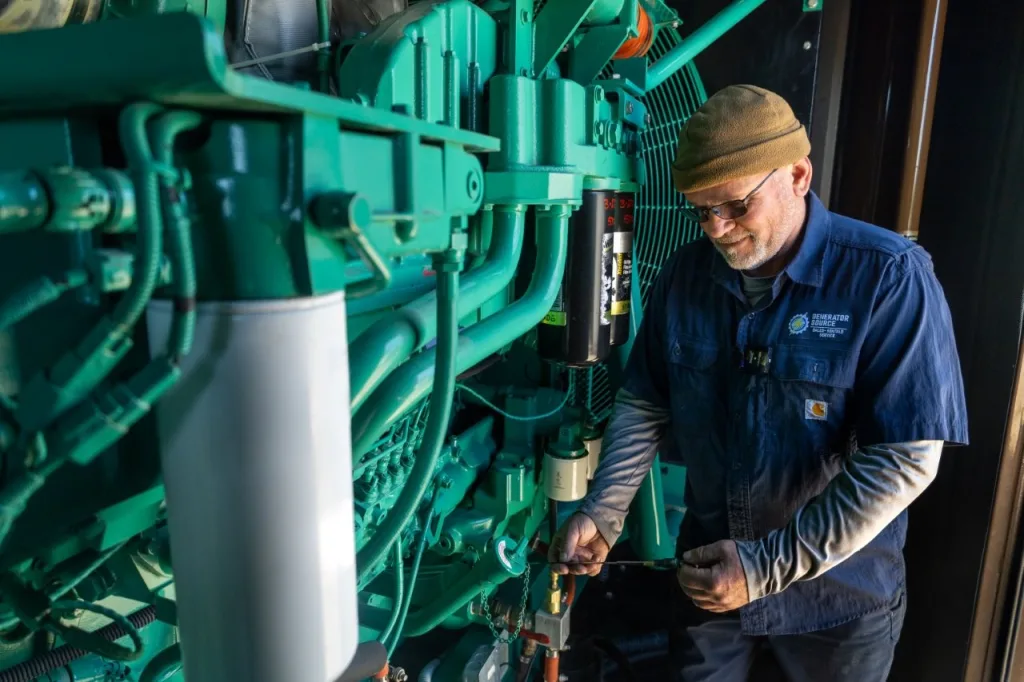
At Generator Source, every unit we deploy undergoes a rigorous 32-point inspection. This includes checking for dry or cracked hoses, which can happen quickly in Colorado’s low humidity environment. We also focus heavily on fluid health, as cold weather can cause moisture to accumulate in fuel tanks, leading to microbial growth and plugged filters.
Annual Load Bank Testing
For diesel units, annual load bank testing is mandatory for long term health. Because many generators in Colorado spend most of their lives idling or running “no load” tests, they are susceptible to “wet stacking”. This is a buildup of unburnt fuel and carbon that can eventually destroy the engine. A four hour load bank test at 80 percent capacity burns off this material and ensures the engine can actually hit its rated kilowatts when the grid fails.
Choosing the Right Partner for Colorado Power
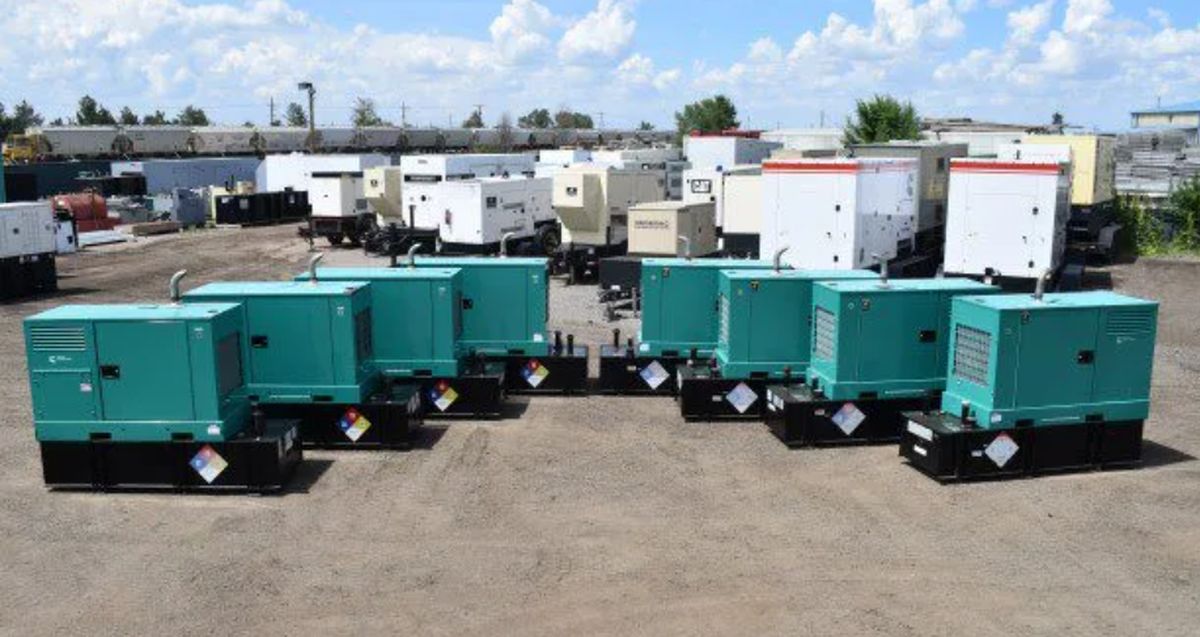
When you are securing power for a facility in Colorado, you need more than a vendor; you need a partner that understands the technical nuances of the region. Local expertise matters when calculating altitude derates, but national inventory matters when you need a unit today.
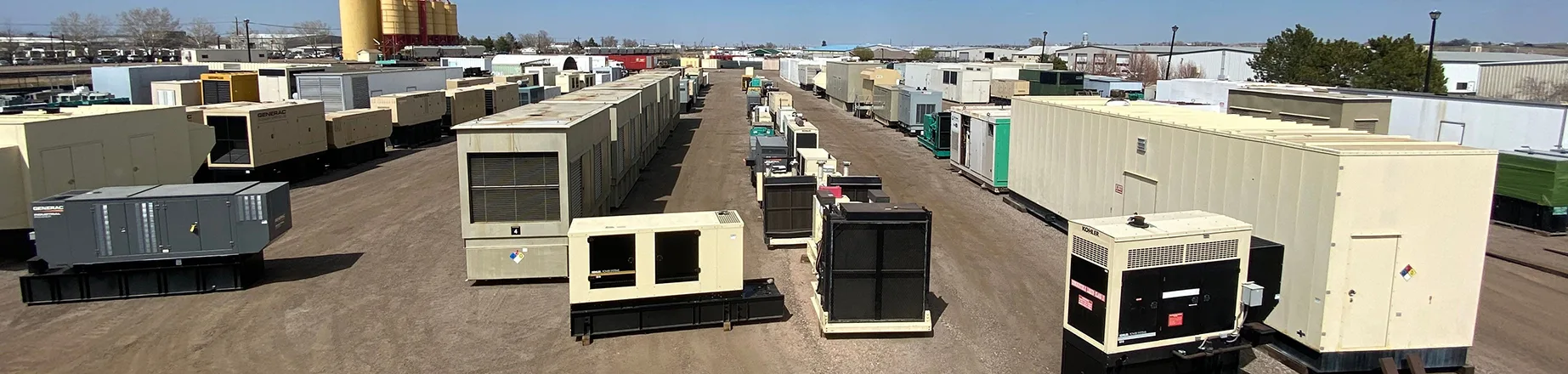
The massive growth of AI data centers has created a national bottleneck for new generators, with lead times often exceeding a year. By working with a provider that has a massive on site inventory of re-certified used and surplus units, Colorado businesses can achieve protection in weeks rather than months.
Whether you are protecting a medical clinic in Fort Collins, a data center in Aurora, or a production plant in Pueblo, the goal remains the same: peace of mind. An industrial generator is an investment in your company’s future stability and a high value asset that stays on your books for decades.
Colorado Generator Requirements
- Front Range Urban Areas: Focus on Kohler for space efficiency or Generac for natural gas availability.
- High Altitude/Mountain Regions: Prioritize Caterpillar or Cummins for their superior altitude performance and “heavy iron” durability.
- Critical Facilities (Hospitals/Data Centers): Ensure NFPA 110 compliance with advanced digital controllers and high output jacket water heaters.
- Maintenance: Stick to a biannual schedule with one minor inspection and one major service including a load bank test.
Colorado is a beautiful but demanding place to do business. By choosing the right brand and the right maintenance partner, you can ensure that your facility remains online and productive, no matter what the grid or the mountains throw your way.