
The Financial Impact of Lead Times
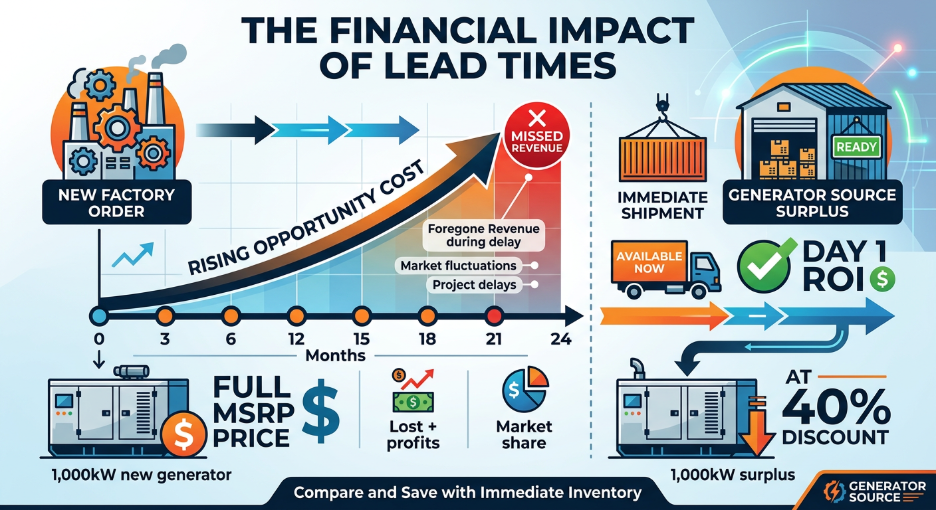
In the industrial power sector of 2026, the most expensive piece of equipment is the one that has not arrived yet. For facility managers and procurement officers, the traditional model of ordering factory new power systems has become a significant liability due to unprecedented lead times. When a project requires a 1,000kW or 2,000kW unit, waiting eighteen to twenty-four months for a manufacturing slot is not just an inconvenience. It is a direct threat to operational continuity and project ROI. This supply chain reality has shifted the strategic advantage toward the immediate acquisition of used and surplus inventory. The Cost of Waiting is a measurable financial drain that impacts everything from construction schedules to emergency readiness. At Generator Source, we focus on bridging this gap by providing fully verified assets that are ready for immediate deployment.
Total Cost of Ownership: New vs. Surplus
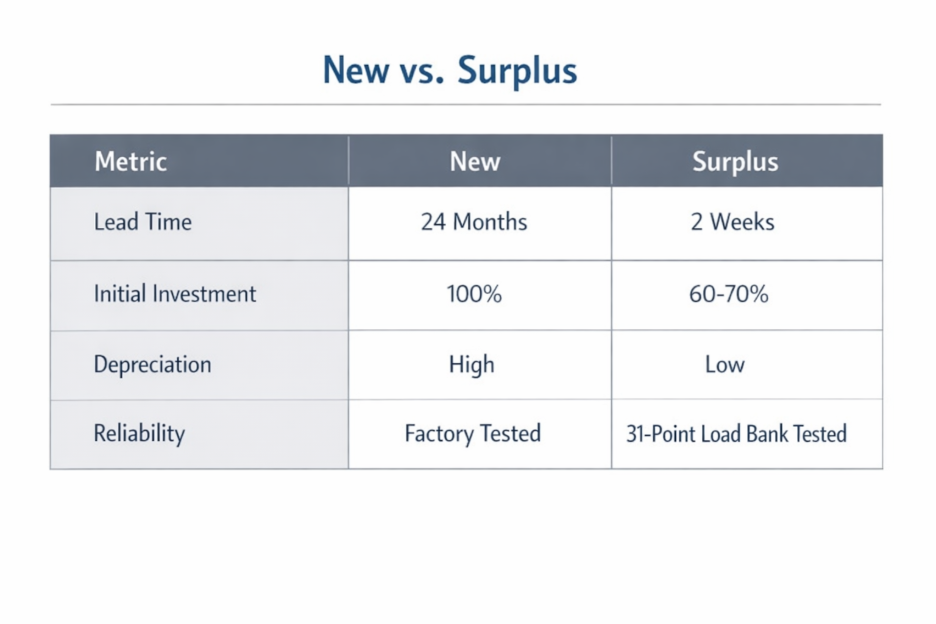
The financial disparity between new and surplus equipment is stark when viewed through the lens of total cost of ownership. A new 500kW generator carries a premium price tag and begins to depreciate the moment it is commissioned. Conversely, a surplus or low-hour used unit allows a facility to secure the same 500kW capacity at approximately sixty percent of the cost of new. These savings can then be reallocated to other critical infrastructure needs, such as paralleling switchgear or advanced fuel polishing systems. Furthermore, the immediate availability of a 300kW or 150kW unit means that a facility can begin operations and generate revenue months or years ahead of a competitor waiting on a factory backlog. In a market where interest rates and material costs continue to fluctuate, the ability to lock in a price and take delivery today is the ultimate hedge against inflation.
Reliability and Performance Verification
Reliability is often the primary concern for those transitioning from new to used equipment, yet the rigorous testing protocols of 2026 have neutralized this gap. Every asset in our inventory undergoes a comprehensive 31-point inspection and a full-scale load bank test to verify performance at one hundred percent of its rated capacity. Whether it is a 1,500kW mission-critical unit for a data center or a 150kW standby unit for a retail complex, the equipment is proven before it leaves our facility. This verification process ensures that the “used” designation refers only to the age of the unit, not its ability to perform. In many cases, surplus units are “new-old-stock” that have never seen actual emergency service, providing factory-level reliability with the benefit of immediate ship
Strategic Acquisition for Operational Resilience
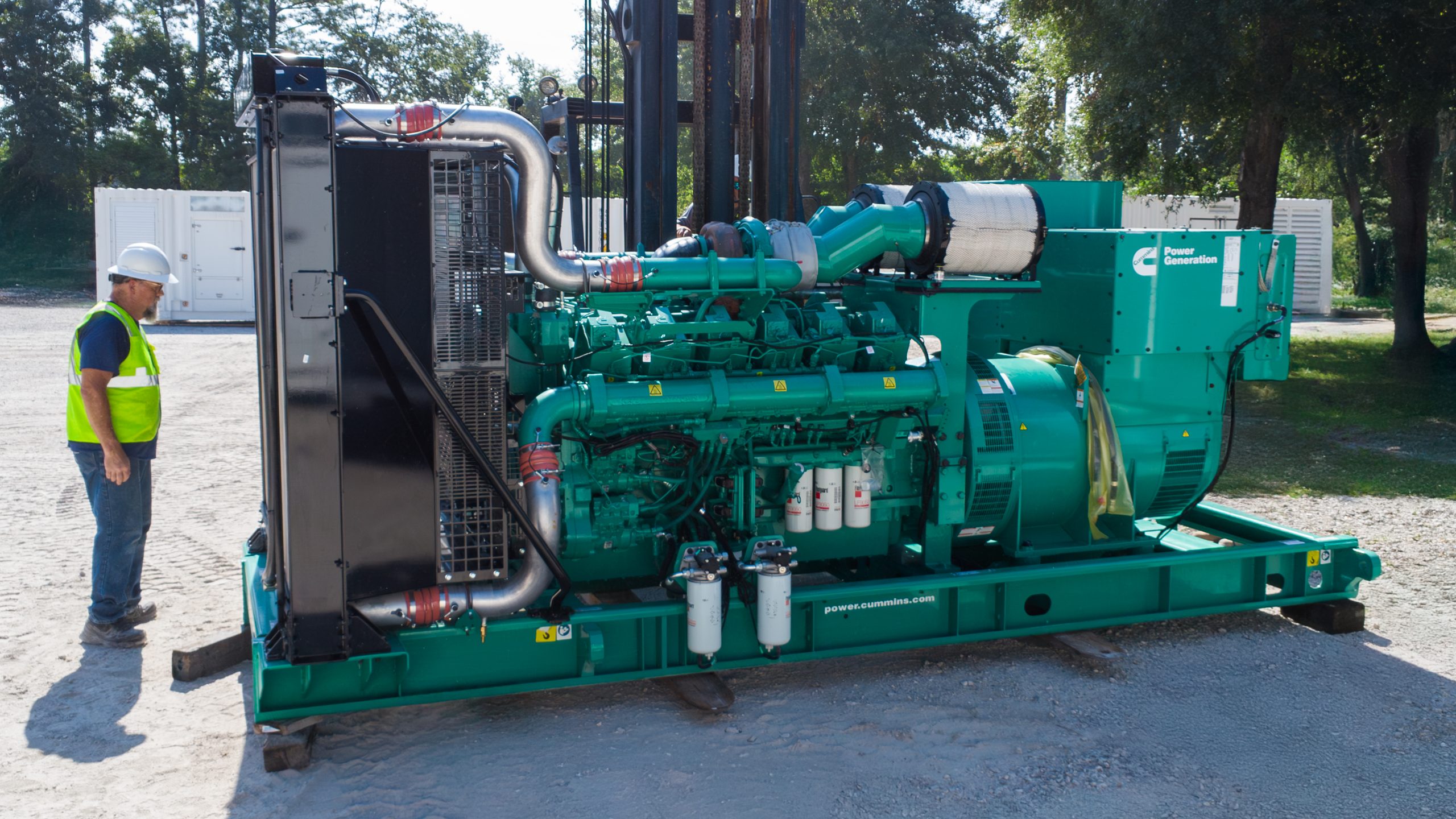
The decision to choose immediate acquisition over a lengthy manufacturing wait is a strategic one that favors the proactive. By securing a 1,000kW or 2,000kW unit from existing stock, a facility eliminates the variables of shipping delays, part shortages, and price escalations that plague the new equipment market. The goal is to move from the planning phase to the operational phase as quickly as possible. For organizations that cannot afford the risk of a two-year delay, the surplus market is not just an alternative; it is the primary solution for resilient power-to-facility infrastructure. Choosing to act now ensures that when the grid fails, your facility remains a beacon of stability while others are still waiting on a delivery date that may never arrive.
Stop Waiting and Start Powering
Don’t let your project’s success be dictated by a factory production schedule. In a competitive market, the ability to deploy power immediately is your greatest strategic advantage. Whether you need a 150kW standby unit or a 2,000kW industrial workhorse, we have the verified inventory to get you online today.
Take control of your timeline and secure your infrastructure.
Browse Our 100kW – 4,000kW Inventory | Contact a Power Expert for a Quote