
Natural Gas Generators
Overview of Natural Gas Generators
A widely used and efficient means of generating power is by using a natural gas generator. Natural gas can be used to power both emergency and portable generators and is regarded as being one of the most affordable and effective fuels among non-renewable resources for power generation. In terms of affordability, coal is perhaps the only fuel that is less expensive. However, one of the biggest disadvantages of coal is that it is a high pollutant.
Natural gas is typically obtained in a manner similar to that of drilling oil. The liquid form is then transported to various areas where it is converted into its gaseous form. Thereafter, it is made available to people through pipelines and cylinders.
A natural gas generator works in a manner similar to other generators. In fact, the most basic difference between generators is the fuel that is used to power the units. In this case the source of energy to start the generator is natural gas. Such generators are commonly used in larger cities since the supply of fuel is made readily available through pipelines. But aside from its obvious advantages, natural gas generators also have several disadvantages.
Watch our new Diesel vs. Natural Gas video on YouTube!
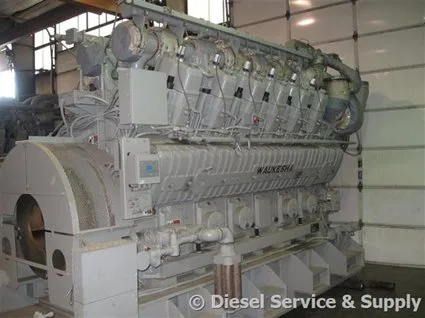
Advantages of Natural Gas Generators
- The three most obvious pros of using natural gas as a fuel to power your generators is that it is cleaner, less expensive than other non-renewable fuels, and is considerably efficient.
- In comparison to oil and coal, the emissions of sulfur, nitrogen, and carbon dioxide (a greenhouse gas) are considerably lower. Hence, natural gas is one of the cleanest fossil fuels when it burns.
- Another advantage of natural gas generators is that natural gas does not produce a pungent odor, which is fairly common in generators powered by oil or diesel.
- Natural gas generators are also effective in reducing costs when used to power homes. This is because electricity from the main utility source is a far more expensive alternative.
- Apart from being cleaner and cheaper, natural gas is also readily available in large cities since it is delivered directly through pipelines. Hence, when using natural gas powered generators, storage of fuel becomes redundant.
Disadvantages of Natural Gas Generators
- When it comes to the cons of natural gas generators, one of its advantages can also be regarded as a disadvantage. Since natural gas need not be stored as it is supplied through gas pipelines, at times of natural calamities the supply of natural gas is disrupted. You may find yourself facing a lack of fuel when you need to operate your generator the most.
- Apart from this, natural gas is extremely explosive and can be a serious fire hazard should the pipeline burst.
- In comparison to diesel generators, natural gas generators are:
- More expensive to run
- Emit more carbon dioxide, which is a greenhouse gas.
- Moreover, natural gas is a limited or non-renewable energy resource.
Diesel Generators
Overview of Diesel Generators
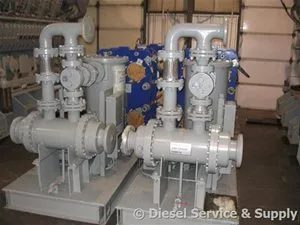
Generators that use diesel to run are known as diesel generators. These can be typically divided into two basic parts: a diesel engine and an electrical generator. Diesel generators can be used to provide power to places that are not powered by a power grid or as a backup in case of a power outage. Diesel generators are also used in ships as an energy source and also for propulsion.
Diesel generators are extremely common as back-up units for emergency power supply. Available in both single and three-phase, diesel generators can be used not only in large establishments but also for homes and small offices.
Advantages of Diesel Generators
- In present times, when it comes to making choices regarding fuel, the most important factor is price. With the constantly increasing demand and steadily decreasing supply, fuel choice has become the most debated topic in almost every sphere. The key is to find a fuel that is cost-effective as well as energy-efficient. In this regard, diesel generators score high. While they are a considerably more expensive alternative in comparison to natural gas generators, since the price of diesel is more than that of gas, diesel has a higher energy density. In other words, while you may pay more for the diesel, you will also get more energy out of the diesel than you would for the same volume of gas. Hence, fuel efficiency is by far the single most important advantage of diesel generators.
- Another big benefit of installing a diesel generator is the assurance of a steady power supply. In establishments such as hospitals, this plays a significant role because most of the machines used require constant power and one power outage could mean the difference between life and death.
- In comparison to a generator powered by gasoline, the diesel generator is far more efficient for several reasons as follows:
- Diesel engines that are presently used are much-improved versions of earlier models that were a nuisance due to high noise and heavy maintenance.
- Diesel engines are much more sturdy and reliable.
- Another big advantage over gas engines is that diesel engines do not require spark plugs or wires; this helps in reducing maintenance costs.
- The lifespan of a gas engine is much shorter than that of a diesel engine.
- Finally, being less flammable than other fuel sources, diesel generators also score high on the safety front. Moreover, again the absence of spark plugs eliminates the risk of freak fires.
Disadvantages of Diesel Generators
- One significant disadvantage of a diesel generator is that it can be considerably expensive in comparison to other generators. However, since the maintenance cost of a diesel generator is quite low, it more than makes up for the initial investment.
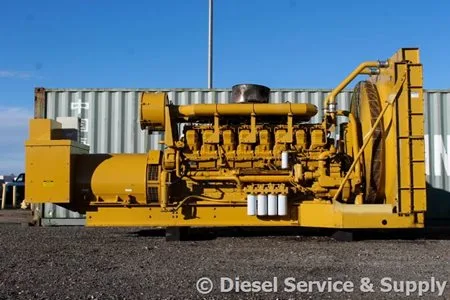
- Noise has always been an issue with regard to diesel generators. While the newer models are designed to be quieter, the older variants can still be considerably noisy. This means that if the generator is being used in areas that are heavily populated, residents may complain of noise pollution from your generator unit.
- Another drawback is that diesel generators are bulky and comprise large and heavy components. Thus, as opposed to smaller and lighter generators, diesel generators may not be the most preferred portable unit.
- Finally, given the recent trend of environmental awareness, diesel is also considered to be a major pollutant in certain areas.
Which One Will Actually Be There When I Need It?
Reliability is usually the first and most important factor in this decision. And it’s where the tank-versus-pipeline distinction matters most.
The Case for Diesel: Fuel Independence
With a diesel generator, your fuel sits on-site in a base tank. No external supply line, no dependency on a utility. In a grid outage, a natural disaster, or any emergency scenario, your generator runs as long as the tank holds out. That’s 12 to 96 hours of runtime depending on tank size and load, with the option to refuel as needed.
As Tyson Peyton, one of our sales team members, puts it:
“Virtually no matter what the emergency is, it’s not going to interrupt your fuel supply. It’s not going to interrupt your ability to back up your building.” — Tyson Peyton, Sales
This independence is the reason life-safety applications almost universally choose diesel. When we asked our service team what they see in the field, the answer was straightforward.
“Most hospitals, all that. It’s all diesel.” — Allen, Service Technician
It’s not that natural gas can’t power a hospital. It’s that the risk profile doesn’t match. When lives depend on uninterrupted power, the industry defaults to the fuel source that doesn’t rely on anything outside the property line.
The Case for Natural Gas: Continuous, Hassle-Free Supply
For operations that run their generators frequently or continuously, natural gas has a major advantage: the fuel never runs out. Pipeline supply means no scheduling fuel deliveries, no managing tank levels, no worrying about fuel degradation or contamination in storage. The gas is just there.
This makes natural gas a strong fit for manufacturing plants running production lines around the clock, data centers that need sustained power, and facilities using generators for peak shaving to reduce utility demand charges. If you’re running thousands of hours a year, eliminating fuel logistics is a real operational benefit.
“Natural gas can be really nice because they don’t have to worry about fuel supply. So there’s advantages and pros and cons.” — Tyson Peyton, Sales
The Risk You Need to Understand
Here’s the tradeoff that doesn’t get talked about enough: natural gas is still pipeline-fed, and pipelines are still part of a grid. If that grid is disrupted, your fuel supply goes with it.
Tyson put it in terms that make this instantly clear:
“Earthquake. It cracks the ground. Fuel lines are in the ground. Suddenly everybody downline of that break doesn’t have natural gas. And everybody on that side of that crack with a diesel tank sitting out, their generator’s working just fine.” — Tyson Peyton, Sales
It goes beyond catastrophic events, too. During a mass outage, every natural gas customer on the same line draws from the same supply simultaneously. Tyson describes it this way:
“It’s a vascular system. And if you have enough bleeds in a vascular system, there’s not enough pressure to power all the components.” — Tyson Peyton, Sales
This doesn’t mean natural gas is unreliable. In stable pipeline areas with normal operating conditions, it’s extremely dependable. But if your backup power plan needs to account for worst-case scenarios, that pipeline dependency is the single biggest factor to weigh.
Bottom line: Diesel gives you independence. Natural gas gives you convenience. The right choice depends on what failure scenario you’re planning for.
How Much Fuel Will I Burn?
Once you’ve settled the reliability question, the next thing most buyers want to understand is efficiency: how much fuel does each type actually consume, and what does that look like in practice?
The short answer is that diesel packs more energy into less volume. It has significantly higher energy density than natural gas, which means you get more power per unit of fuel. To put that in practical terms, here’s what diesel consumption looks like at 75% load across common commercial sizes:
A 75-100kW unit burns roughly 5-6 gallons per hour. Step up to a 150-200kW unit and you’re looking at 8-11 gallons per hour. A 500kW generator consumes around 24 gallons per hour, and a 1000kW unit runs close to 47 gallons per hour.
These numbers vary by engine manufacturer, maintenance condition, altitude, and temperature, but they give you a reliable planning baseline. For exact figures by size and load percentage, see our full fuel consumption charts.
Natural gas is less energy-dense, so it takes a higher volume to produce the same output, measured in cubic feet per hour rather than gallons. On paper, that sounds like a disadvantage. In practice, it depends entirely on how you’re using the generator.
For standby applications where the generator runs infrequently and runtime is measured in hours or days per year, diesel’s compact energy storage is hard to beat. A full base tank gives you a known, fixed runtime with no external dependencies. You fill it, you maintain it, and it’s ready when you need it.
For continuous or prime power applications where the generator runs thousands of hours per year, the equation shifts. Natural gas fuel cost per kilowatt-hour is generally lower and more price-stable than diesel, and that difference compounds quickly over extended runtimes. You’re also eliminating fuel polishing, tank maintenance, and the risk of stored diesel degrading over time.
Bottom line: Diesel excels on compact storage and high-load efficiency. Natural gas tends to come out ahead for long-haul prime power where the lower fuel price adds up over thousands of operating hours.
What About Emissions and Permitting?
This is where natural gas has a clear, measurable advantage. It burns cleaner across the board: lower nitrogen oxides (NOx), lower particulate matter, and lower carbon dioxide compared to diesel. For facilities in regions with strict air quality regulations, or organizations with ESG commitments, that difference can simplify the permitting process significantly.
“A lot of your government installations or facilities that are worried about EPA and air pollution guidelines, a lot of times they’ll explore natural gas and propane just because those are naturally cleaner burning. And it’s almost always easier to permit natural gas units because of the cleanliness of their emissions.” — Tyson Peyton, Sales
Diesel generators, on the other hand, produce more NOx and particulates. To meet current Tier 4 Final standards, modern diesel units require aftertreatment systems like selective catalytic reduction (SCR) and diesel particulate filters (DPF), along with a diesel exhaust fluid (DEF) tank. These systems work well and keep emissions low, but they add complexity, maintenance, and cost to the unit.
The Tier 4 Warning: Load Matters More Than You Think
Older diesel generators (Tier 2, Tier 3) give you some flexibility on operating load. You can run them down around 40-50% without major issues. Tier 4 Final is a different story.
Those particulate filters need heat to function properly, and heat comes from load.
“The Tier 4 Final is a whole different animal. If you’re not running a Tier 4 Final generator nice and hot, up around 85-90% of that load, then there’s a lot of particulates and issues getting through that exhaust system that those filters are catching. So those filters clog up very quickly.” — Tyson Peyton, Sales
The consequences are real. Clogged DPFs throw fault codes. The generator won’t start. You’re looking at expensive filter cleaning or replacement, plus downtime you didn’t plan for. And it won’t just derate, it can shut down entirely.
“You can’t even run it at less power. You’ll get codes. You’ll have to reset the codes. Clean up the filters.” — Tyson Peyton, Sales
The takeaway: if you’re buying a Tier 4 Final diesel unit, size it precisely to your actual load. An oversized generator running at light load will create expensive problems. Some manufacturers build in load compensation systems that help the unit run hotter at lighter loads, but that’s a specific feature to ask about, not something you can assume.
One more thing worth noting from the service side. Glen, one of our technicians, pointed out that you can actually see the emissions difference when you check the oil. On a natural gas unit, the engine oil stays visibly clean for much longer than on a comparable diesel.
Both still follow the same 250-hour or annual service interval, but the visual difference speaks to how much cleaner natural gas burns at the engine level.
Bottom line: Natural gas wins on emissions simplicity. Diesel can meet the same standards, but Tier 4 Final compliance adds real maintenance demands that buyers need to size for correctly.
What Does This Actually Cost?
This is the question everyone gets to eventually, and it’s where having real numbers from someone who sells these units daily makes a difference.
Equipment Cost: The Gap Widens With Size
At smaller commercial sizes, the price difference between diesel and natural gas isn’t dramatic. Tyson breaks it down:
“When you have a small unit, 35kW, 40, 50 kilowatt, a lot of times those prices are pretty comparable between a diesel and a natural gas. But as you get larger, the gap between natural gas and diesel gets much, much bigger when it comes to purchasing the equipment.” — Tyson Peyton, Sales
The reason is physics. Natural gas engines need to be physically larger to produce the same power output as diesel, because the fuel is less energy-dense. That means more engine, more material, and more cost.
“Where a unit could be 6 or 700,000 in diesel, it might be in the millions, 1.2 million in a natural gas.” — Tyson Peyton, Sales
That’s for the same output. The equipment alone can cost nearly double at larger capacities.
Installation: Diesel Is Simpler
Beyond the equipment price, installation tells two different stories. A diesel generator needs a concrete pad and a fuel fill. That’s essentially it. You set the unit, fill the tank, and you’re operational.
“With a diesel, anywhere you set the pad and you set the generator, just fill it up with fuel. That’s all you need. You don’t need to run fuel lines to that.” — Tyson Peyton, Sales
Natural gas adds layers. You need a pipeline connection, a pressure regulator, and gas lines run from the meter to the unit. Those lines need to be pressure tested, and the plumbing itself can be a significant expense depending on distance and site conditions.
And here’s something that catches buyers off guard: just having a natural gas line to your property doesn’t mean you have enough supply to run a generator.
“Just having natural gas doesn’t mean you have enough natural gas to run the equipment. Sometimes you actually have to get upgrades to your system to be able to facilitate that generator running.” — Tyson Peyton, Sales
Pipe diameter, available pressure, and total site demand all factor in. Tyson recommends pulling the engine’s specific fuel consumption specs and calling your gas provider to confirm capacity before committing. If you have other natural gas equipment on site, that existing draw counts against your available supply.
The Long-Term Crossover
Here’s where it gets interesting. Natural gas costs more upfront, but the fuel itself is generally cheaper and more price-stable than diesel. Over time, especially for high-runtime applications, that fuel savings can offset the higher purchase and installation cost.
“There’s kind of this crossover point where a lot of times a gas unit is more expensive to purchase and install, but the cost over time will trend down because of the difference in fuel costs.” — Tyson Peyton, Sales
For standby generators that run a few dozen hours a year, diesel almost always wins on total cost of ownership. The lower equipment cost, simpler installation, and minimal fuel consumption make it hard to justify the nat gas premium.
For prime or continuous power applications running thousands of hours annually, the math shifts. Lower fuel cost per kilowatt-hour, no fuel delivery logistics, and no tank maintenance start compounding in natural gas’s favor.
Bottom line: Diesel is cheaper to buy and simpler to install. Natural gas is cheaper to run. Which one saves you more money depends entirely on how many hours your generator operates per year and what fuel costs look like in your area.
FAQ: Diesel vs. Natural Gas Generators
Is a natural gas generator cheaper than diesel?
At smaller sizes (35-50kW), pricing is comparable. As capacity increases, diesel equipment cost is typically lower, sometimes significantly. A unit that costs $600-700K in diesel might run $1.2 million in natural gas at the same output. However, natural gas fuel cost is generally lower, so total cost of ownership can favor natural gas for high-runtime applications over time.
Why do hospitals use diesel generators?
Fuel independence. Diesel generators store fuel on site, so they’re not dependent on any external utility or pipeline. In an emergency, the generator runs as long as the tank holds out. For life-safety applications where uninterrupted power is non-negotiable, that independence is the deciding factor.
What is Tier 4 Final and why does it matter?
Tier 4 Final is the current EPA emissions standard for diesel generators. Units meeting this standard use diesel particulate filters (DPF) and selective catalytic reduction (SCR) systems to reduce emissions. The important thing for buyers to know is that these units need to run at 85-90% load to function properly. Running a Tier 4 Final generator at light load clogs the particulate filters, triggers fault codes, and can shut the unit down.
Can I run a natural gas generator during a power outage?
Yes, as long as the gas pipeline is functioning. Natural gas supply is independent of the electrical grid. However, pipeline infrastructure can be disrupted by natural disasters, ground damage, or extreme demand during mass outages. If your backup power plan needs to account for those scenarios, diesel’s on-site fuel storage provides more certainty.
How much fuel does a diesel generator use per hour?
It varies by size and load. At 75% load, a 100kW diesel unit burns roughly 5-6 gallons per hour. A 500kW unit runs about 24 gallons per hour. A 1000kW unit burns close to 47 gallons per hour. See our full fuel consumption charts for detailed breakdowns by size and load percentage.
Do diesel and natural gas generators require different maintenance?
Both follow the same 250-hour or annual service interval. The tasks are different. Diesel requires fuel system maintenance including polishing, filter changes, and tank monitoring. Tier 4 units add DPF and DEF system upkeep. Natural gas maintenance focuses on spark
plugs, ignition systems, and gas train components. Neither is inherently harder, they just require different attention.
Conclusion
When it comes to choosing between diesel and natural gas generators, you will first need to answer two important questions:
- What is the main purpose that your generator will serve?
- How much are you willing to pay for your generator unit?
While both natural gas and diesel generators have their advantages and disadvantages, with the advent of biodiesel, which is far more environmentally friendly, diesel/biodiesel generators could become extremely popular.