The Operational Reality of Extended Grid Failure
There’s a town on the Florida Panhandle called Mexico Beach. Before Hurricane Michael hit in 2018, it was a small Gulf Coast community of around a thousand residents, modest beach houses lined up along the water, fishing docks, a coastal grid.
After Michael, it was effectively gone.
Two houses left standing. One built by a doctor specifically to withstand a Category 5 direct hit, which it did. The house directly behind his, which sheltered in the lee. Everything else, including every power pole on the coast, washed back into the Gulf.
Cell towers in the affected zone had no grid to reconnect to. So they ran on rental generators. Not for days. Not for weeks. For nearly a year.
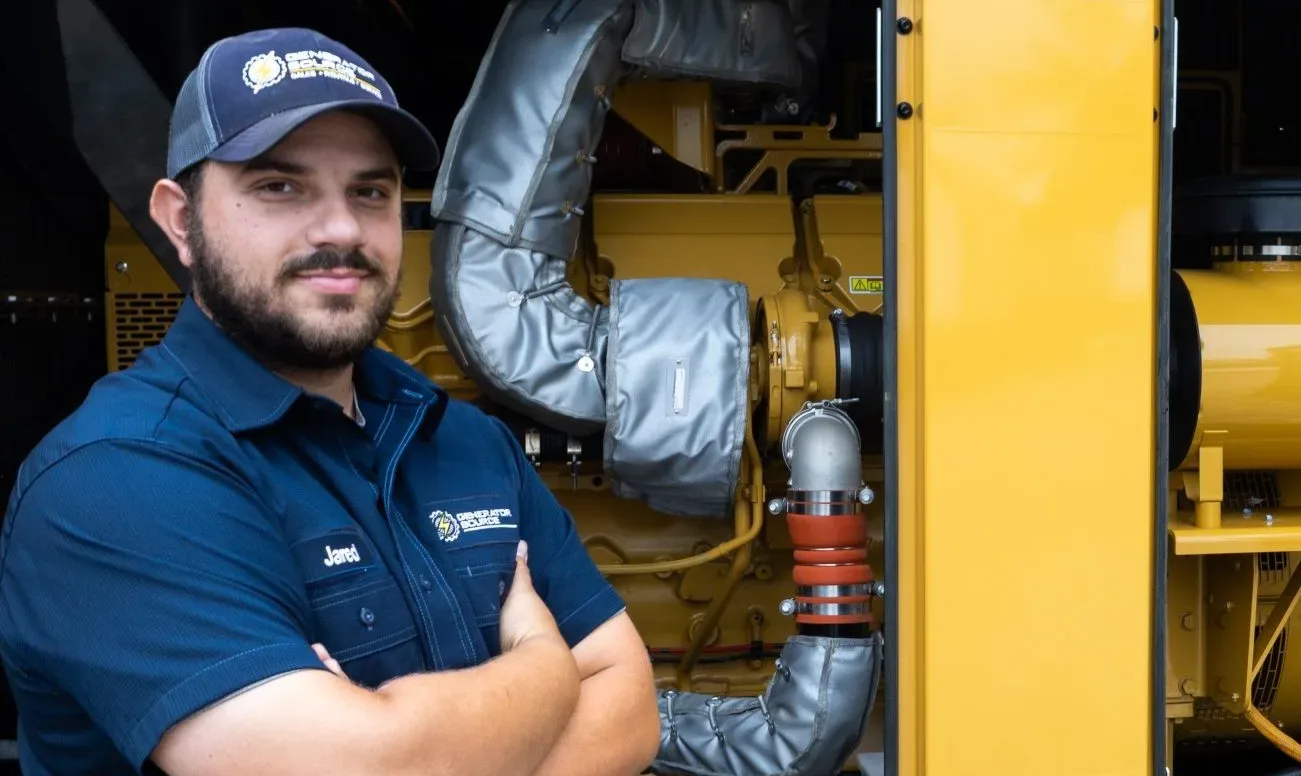
Chad Roland, Regional Manager for Generator Source’s Florida operations, is one of the people whose teams kept those units running through the recovery period. Fuel deliveries scheduled against road conditions that changed daily. Service trucks navigating routes that weren’t roads anymore, to keep telecommunications infrastructure online in a town that had been erased.
The storm itself is usually the shortest phase of the event. Recovery is the longest. And the customers who plan well for the storm are often the same customers who haven’t thought through what happens after it passes.
This is what comes after.
The storm is the shortest phase
Most hurricane preparedness end users focus on the days leading up to landfall. Top off your fuel. Confirm your service is current. Stage your rental if you need one. Make sure your unit is in AUTO.
“You can have a storm as big as the Gulf of Mexico,” Chad says. “It could hit at Tampa Bay, but it’ll affect all the way up to Jacksonville and down to Miami with high waters and flood zones. Florida as a whole, a lot of times the storm is bigger than the entire state. So no matter where it hits, it’ll affect everybody over a couple-day period. And then it’s gone. So then you have to deal with what comes after.”

The storm passes in roughly 24 to 72 hours, depending on forward speed and the geography of where it makes landfall. For most affected areas, the most intense impact period is a single day. The wind drops, the rain stops, and the recovery phase begins.
That phase can last weeks. In severe events, it can last months. In the Mexico Beach scenario, it lasted close to a year for some infrastructure.
A standby generator that was sized, serviced, and staged for a 48-hour outage is operating under fundamentally different conditions when it has to run for 30 days, 90 days, or longer. The fuel logistics change. The service intervals change. The wear pattern on the engine changes. The customer’s tolerance for any kind of intervention or downtime changes, because there’s no alternative power coming online any time soon.
Operators who plan only for the storm are planning for the wrong duration.
The fuel problem nobody anticipates
The first crisis in most hurricane recoveries isn’t generator-related. It’s fuel-related.
Before a named storm hits, every gas station within the impact zone runs out of fuel as residents top off their cars and personal generators. After the storm hits, the fuel trucks that would normally resupply those stations can’t reach them. Highways are blocked by downed trees and debris. Bridges are closed for safety inspections. Local roads are flooded or impassable.
For a commercial standby generator running on diesel, the fuel pre-stage matters less than most people assume. The fuel in the tank, however much that is, is the fuel you have to work with for the immediate aftermath. The bigger question is when the next delivery can reach your site.
“You’ll have trees down and interstates blocked, roads are blocked, and you can’t move service vehicles through the area,” Chad says. “That’s when the challenges come. Just to simply get fuel. And that’s the very, well, it’s a simple thing that you need. Even service vehicles for that matter, us trying to run the roads.”
The customers who weather extended outages best are usually the ones who have done two things in advance: they’ve negotiated priority fuel delivery contracts with their suppliers, and they’ve sized their on-site fuel storage for longer runtime than they think they’ll need. A 24-hour fuel supply at full load is a planning baseline, not a recovery plan. For sites that genuinely need to run through an extended outage, 72 hours of on-site fuel is a more defensible minimum, and 7 days is not unreasonable for critical infrastructure.
Generator Source provides fuel delivery coordination as part of extended outage support, but the priority order is determined by service relationships, contract structure, and site criticality. The customer who shows up looking for fuel support after the storm is in a different queue than the customer who set up the relationship six months earlier.
The service surge problem
The second crisis is service capacity.
Under normal operating conditions, Chad’s Florida branches handle a fairly predictable volume of service calls and rental dispatches.
When a storm gets named, that pattern collapses immediately.
“Then when a storm’s coming, it’s named, and we go into a state of emergency, people freak out a little bit. All the rentals are off the yard, they’re gone. Service calls go from normal to, you might have a 10-man crew, and now you need a 100-man crew.”
The demand surge is on the order of 10x. The available labor pool is, at most, slightly elastic. Generator service technicians are not interchangeable with general contractors. You can’t hire 90 more of them in 48 hours.
What you can do is what Chad’s teams have actually done in the field: bring every available resource to the problem, including resources that aren’t on the org chart.

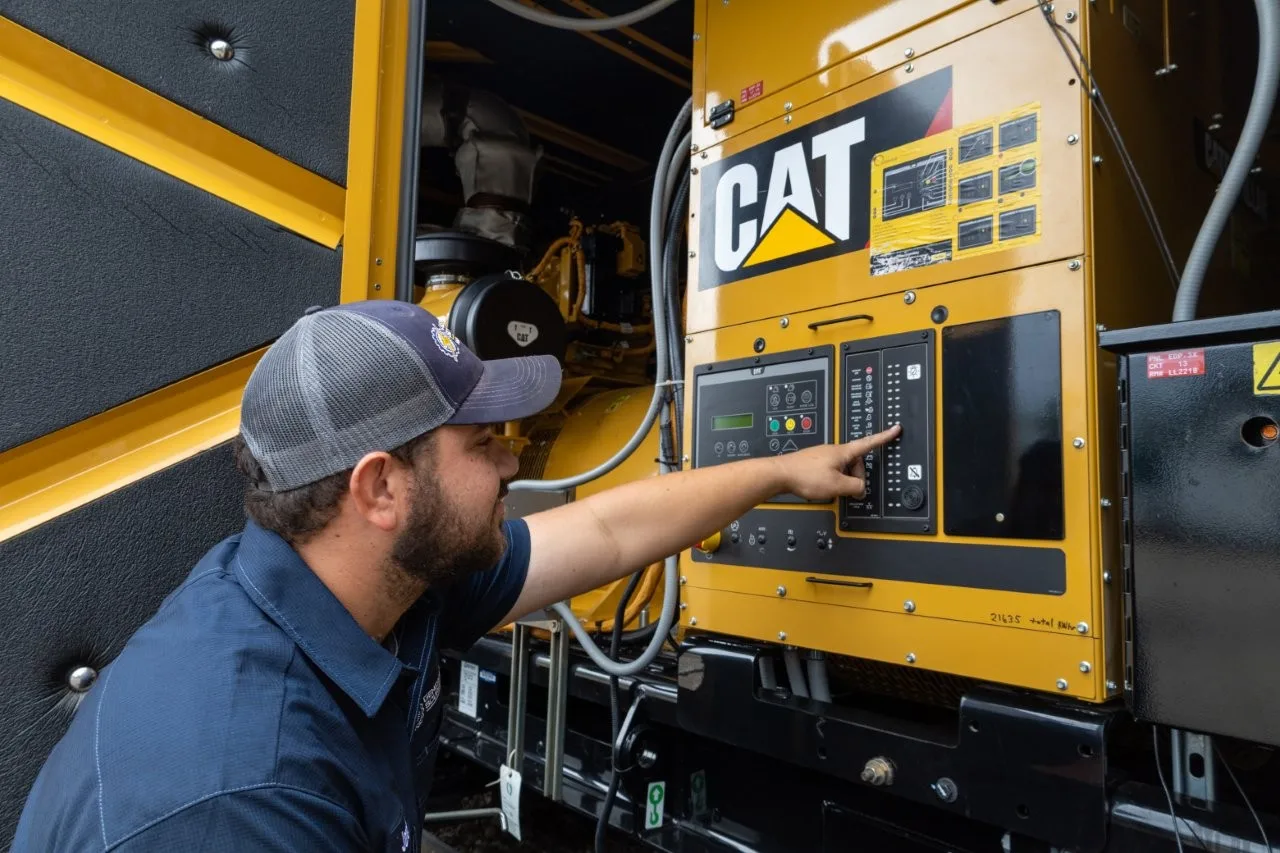
“I’ve had friends and even my dad for that matter haul stuff for us,” Chad says. “Anybody that’s got a dually and willing to hook up to a rental and go, you pay them for the ride. You just think out of the box and bring all your tools to the table and try to help your customers out.”
That’s the reality of recovery operations. It’s improvisational. It’s relationship-driven. It’s “all hands on deck” in the most literal sense. And it has a triage logic that determines who gets help first.
Triage: who gets help first, and why
When service capacity is the constraint, the work gets prioritized by criticality. Chad’s order of operations during a major event is clear:
First priority: life safety. Hospitals, nursing homes, dialysis centers, assisted living facilities, any location where a sustained power outage threatens human life. These customers move to the front of the queue regardless of contract status, because the alternative is unacceptable.
Second priority: critical infrastructure. Cell towers, water treatment, food storage at scale, fuel infrastructure itself. Sites whose failure cascades into broader community impact.
Third priority: commercial customers with active service contracts and rental agreements. Existing relationships, units already on the schedule, sites with documented service histories. These customers get the next available technician, and they get them faster because their unit configuration, contact information, and site access details are already in the system.
Fourth priority: everyone else. Walk-up requests. Customers calling for emergency rental availability for the first time. Sites where the technician will arrive with no information and have to work the problem cold.
That priority order reflects the reality that during a recovery operation, every minute spent gathering information about an unfamiliar site is a minute not spent restoring power somewhere else. The customer who is already in the system gets faster help because helping them is faster.
For commercial and industrial operators who aren’t life-safety classified but who absolutely cannot afford an extended outage, the takeaway is direct: the time to establish a service relationship with a generator provider is not during the recovery. It’s months before.
Force majeure service intervals
For units that have to run through an extended outage, the standard maintenance schedule doesn’t apply.
A standby generator under normal operating conditions runs for its weekly exercise cycle and maybe a few hours per year during actual outages. Annual oil changes are sufficient. Filters get replaced on schedule. The unit accumulates run hours slowly.
A generator running continuously through hurricane recovery accumulates run hours at a fundamentally different rate. 24 hours per day. 168 hours per week. At that pace, the unit will hit major service intervals on a timeline measured in days, not years.
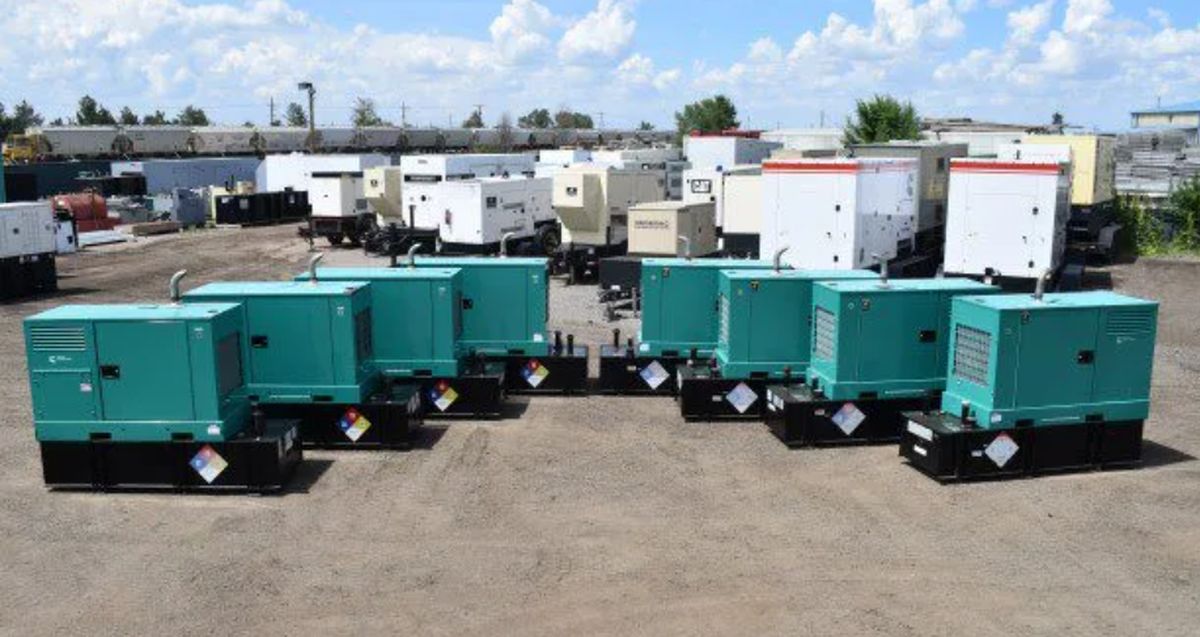
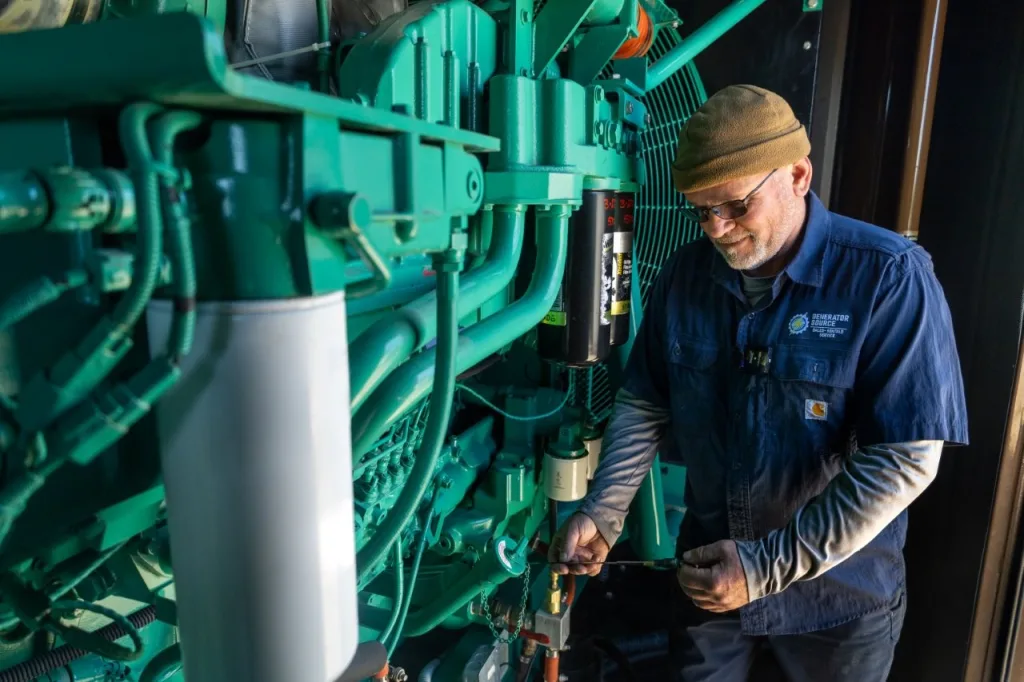
In the Mexico Beach scenario, that’s exactly what Generator Source ran into. Cell tower rental units operating continuously needed force majeure service every 250 hours, which is roughly every 10 days of continuous operation. Oil and filter changes. Coolant checks. Fuel sampling and polishing as needed. Belt and hose inspections. Any consumable that can be evaluated on a 250-hour interval needs to be evaluated.
That’s a service workload that nobody plans for in the abstract. It only becomes visible when you’re three weeks into a recovery and the rental unit you put on-site for “a few days” is still the primary power source, and the technician now needs to come back, with parts, on a route that may or may not still be open.
For customers planning rental support during hurricane season, the right question to ask is not just “can you deliver a unit?” but “can you service it on a 10-day rotation if recovery extends?” The answer determines whether the rental is a short-term solution or a viable long-term bridge.
The argument for pre-season planning, restated
Everything in this article is an argument for how hurricane recovery is operationally distinct from hurricane preparation, and both require advance planning.
Pre-season preparation is what gets your unit through the storm. Pre-season planning is what positions you to be supported during the recovery that follows. These are different things. They require different conversations with your generator provider. They require different commitments on both sides.
The customers who fare best during extended outages tend to share a few characteristics:
- They have an active service contract that establishes the relationship before the emergency.
- They have rental capacity reserved or contracted for in advance, with clear terms for extended-duration deployment.
- They have fuel supply arrangements that include priority delivery during regional emergencies.
- They have on-site fuel storage sized for longer runtime than the minimum-case planning scenario.
- They have a documented service history that allows incoming technicians to work the unit efficiently, not cold.
- They have direct contact information for the regional branch, not just the corporate switchboard.
Talk to the Florida team about recovery, not just preparation
Generator Source’s Jacksonville and Pensacola branches handle service, rental, and emergency response across the entire state of Florida, the Florida Panhandle, and into southern Georgia and Alabama. Chad and his teams have worked recovery operations through Michael, Helene, Milton, and a long list of named storms before them.
The conversation that matters right now is not just “how do I prepare for the storm.” It’s “how do I plan for what comes after.”
If you operate a commercial or industrial facility anywhere in the Florida service territory, the right time to have that conversation is now, while the schedule still has capacity and the rental fleet is still on the yard.
Schedule a pre-season planning conversation →
Reserve a hurricane season rental unit →
Talk to the Florida service team about extended outage support →