
Building a Road Legal 800kW Portable Out of a Stationary Generator
At a glance
| Project | Stationary generator converted to a trailer mounted mobile unit |
| Base unit | Enclosed set rated at 800kW |
| Starting condition | Built to sit on a pad next to a building, on a fuel tank, permanently |
| Trailer | Lowboy, acquired separately, rotted wood deck |
| Build target | 108 inch overall width for road travel |
| Major work | Frame narrowing, I-beam replacement, enclosure modification, deck replacement, fluid containment, 500 gallon fuel system, access ladder |
| Shop time | About five months |
| Blueprint | None. There is no drawing for a build like this. |
The project
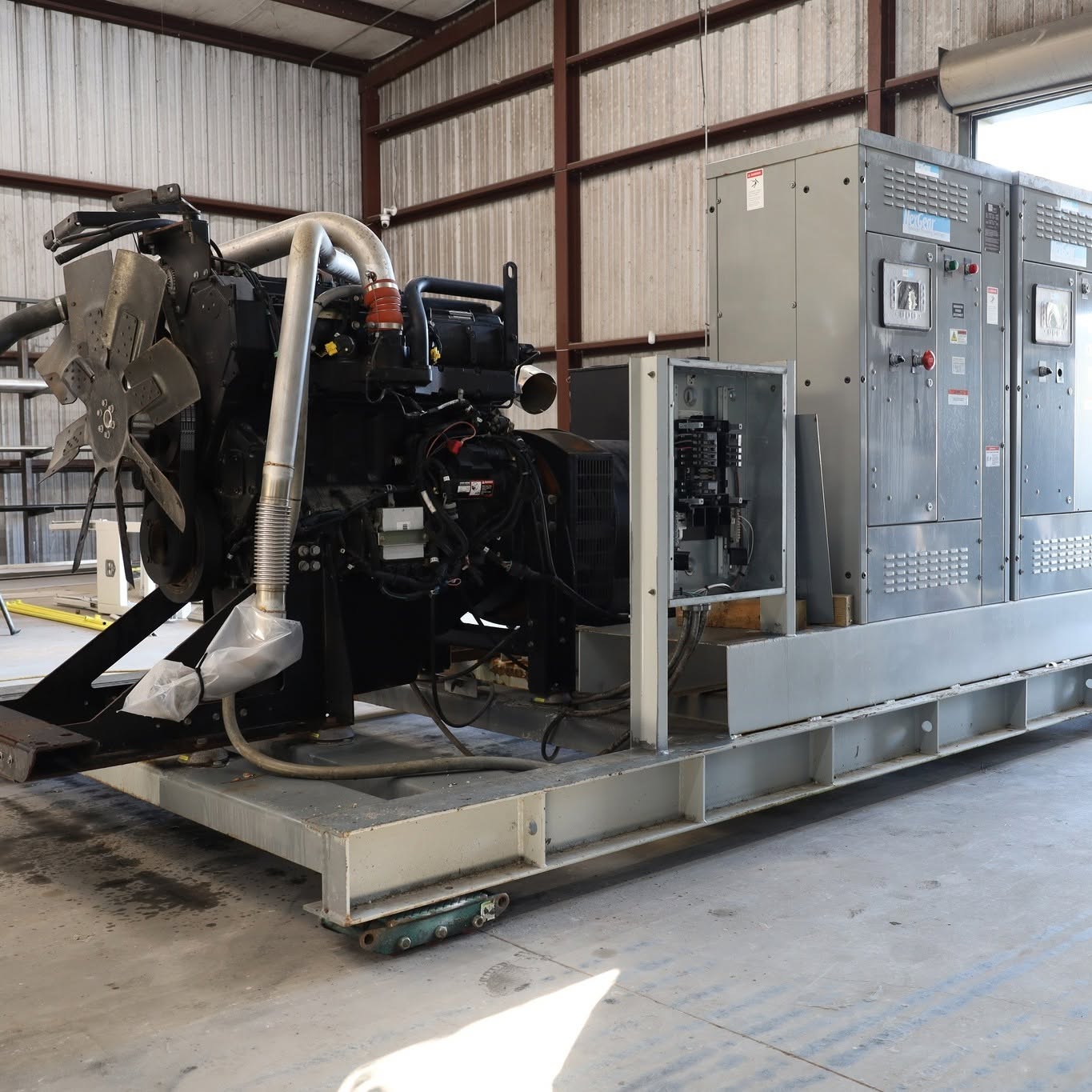
A generator was sitting on the property when Scott Robbins started here. It was a stationary set, enclosed, rated at 800kW, and built for exactly one life: bolted down on a pad, sitting on a fuel tank, next to a building, not moving again.
Scott has been doing fabrication at Generator Source for a little over three years. Enclosures, exhaust work, tanks, frames, anything on a generator that needs welding or repair. He looked at that unit and saw a portable.
That is the whole origin of this project. Nobody ordered it. There was no customer print and no spec. There was a machine that could be more useful than it was, a trailer that could be bought, and a shop that could put the two together.
His own description of the job is the best summary of it anyone has given: three different items that do not go together, made to go together.
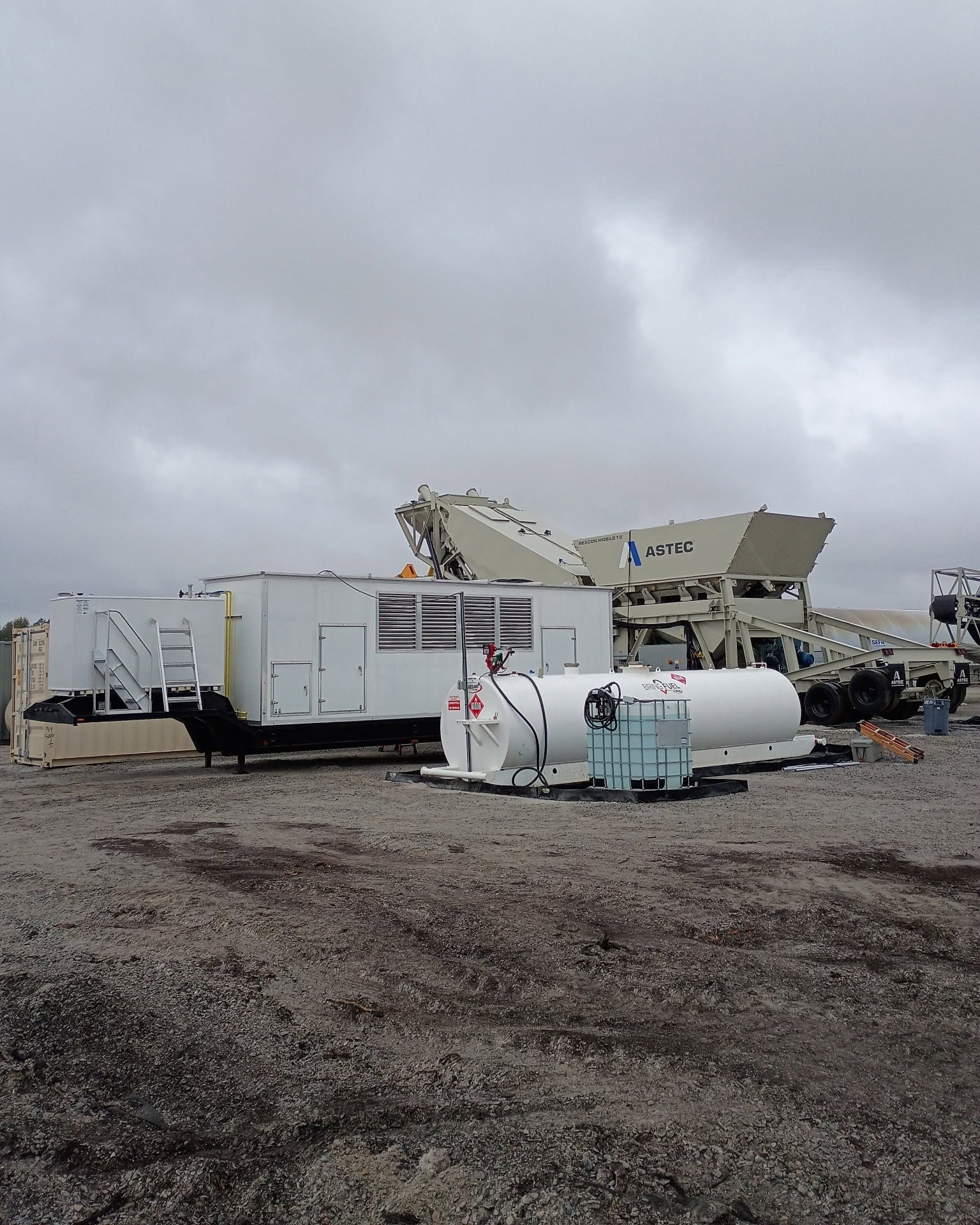
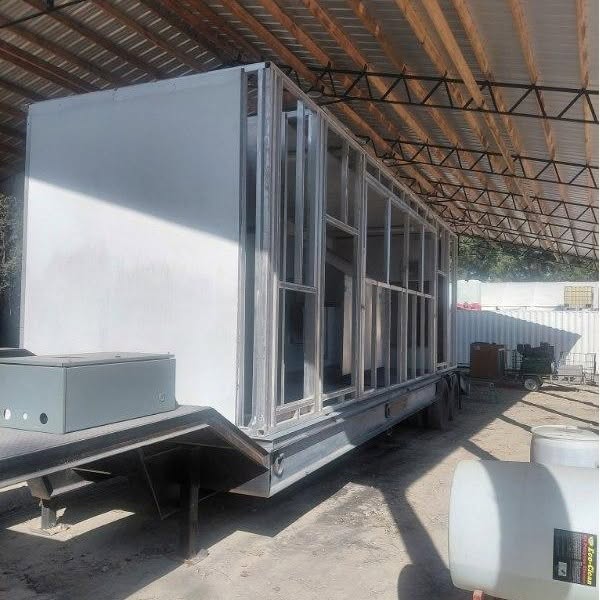
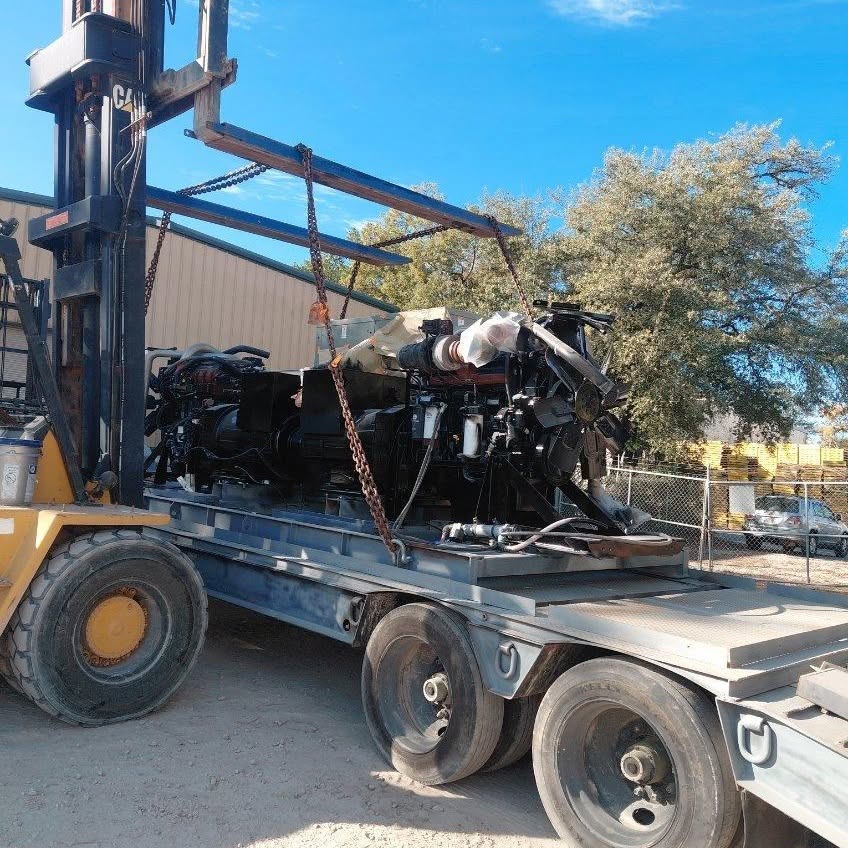
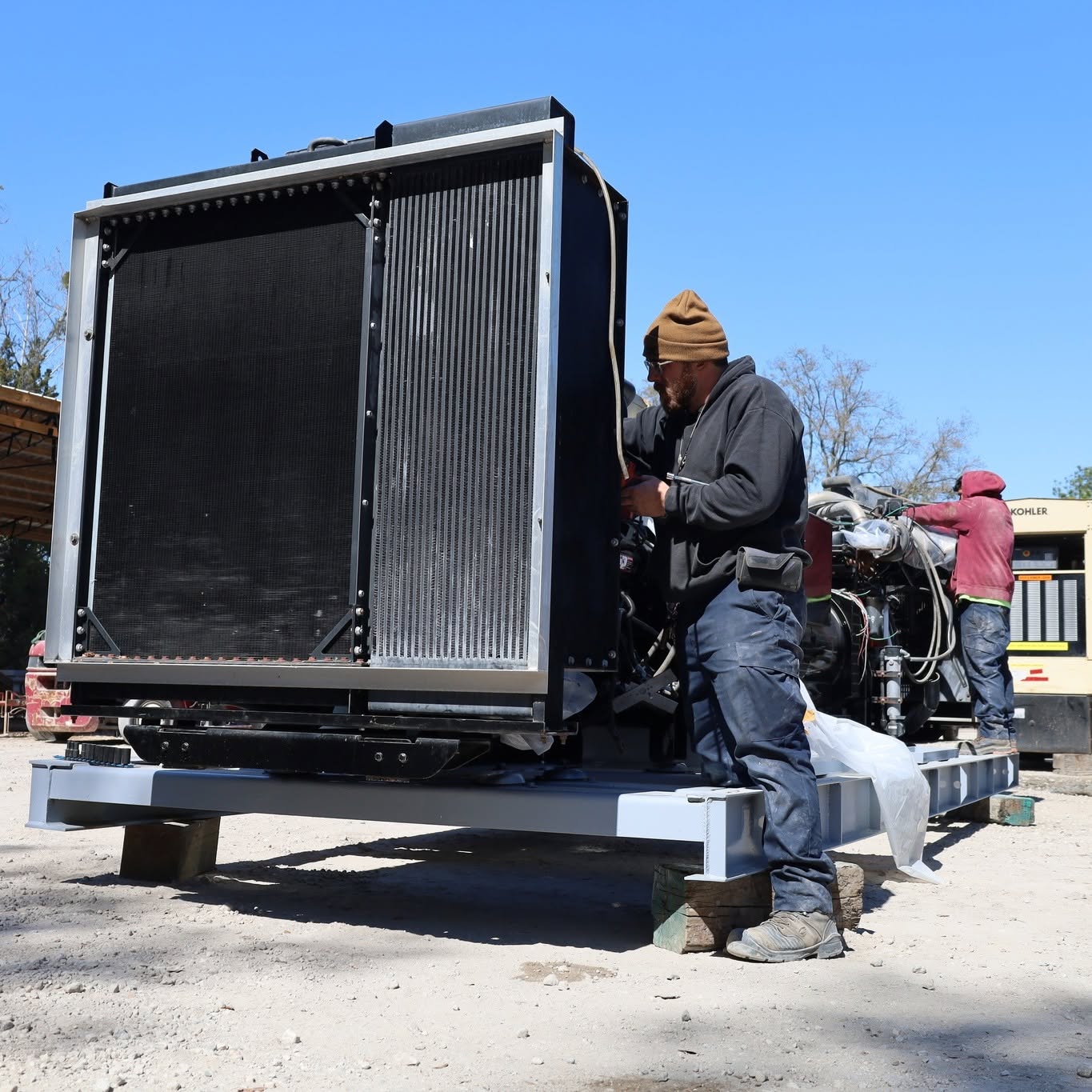
Why a stationary set does not simply get set on a trailer
This is the part buyers underestimate, and it is worth being specific about, because “put it on a trailer” sounds like a rigging problem and it is not. It is a fabrication problem.
A stationary generator is designed around the assumption that it will be placed once. The frame is sized for a pad. The enclosure is built to the frame. Nothing about the package is dimensioned against a highway. The moment the unit has to travel, three things that were never considered become the entire scope of work.
Width becomes a hard limit. A pad does not care how wide the machine is. A road does.
The frame becomes structural in a new direction. A frame sitting on concrete carries static load straight down. A frame on a trailer carries dynamic load, road inputs, and flex, and it carries them through a different set of points.
Everything that was allowed to leak onto a pad now leaks onto a deck. On a stationary install, fluids land on concrete with containment designed around them. On a trailer, there is no containment unless somebody builds it.
Each of those is a separate build problem. None of them is solved by lifting.
The width problem, and why it drove the whole build
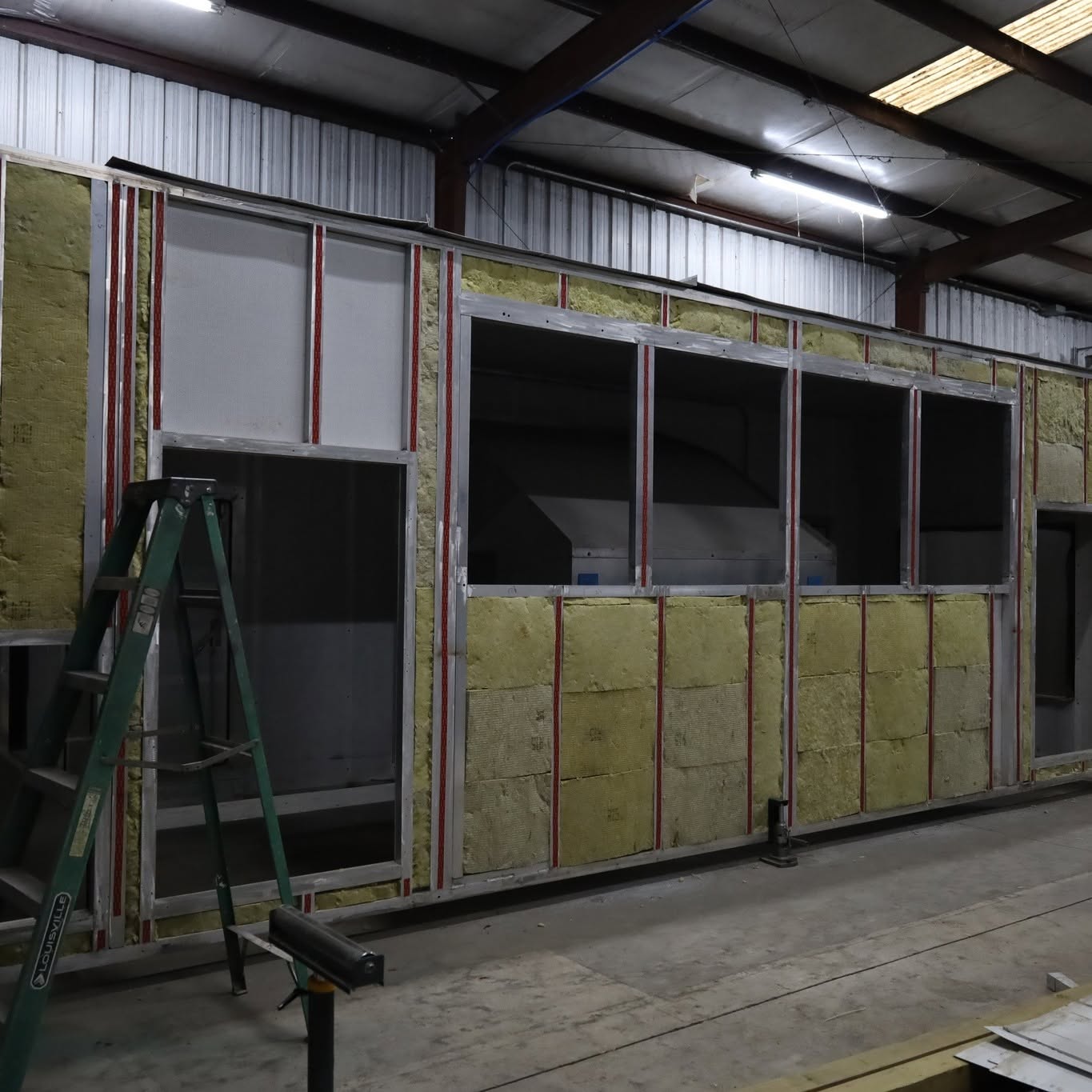
The constraint that shaped this project was overall width. The target was 108 inches, and both the generator frame and the enclosure had to come in under it.
Not trimmed. Narrowed. The frame was cut down and rebuilt to the dimension, and the enclosure was modified to match, which means the box that was built around the original frame no longer fit the new one and had to be reworked to suit it.
Worth being precise here, because width rules are where mobile generator projects get expensive after the fact. The federal baseline on the National Network is 102 inches, or 8 feet 6 inches. States set their own allowances on routes outside that network, and oversize loads move wider than the baseline every day under permit. What that means practically is that there is no single number that makes a unit legal everywhere.
So the number to build to is not a general number, it is your number. Before anyone cuts a frame, the questions are which states the unit will travel in, which routes, whether it will move regularly or once, and whether the owner is willing to run permits every time it rolls. A unit built to the common baseline travels freely. A unit built wider travels with paperwork. Both are legitimate choices and they cost very different amounts over the life of the machine.
The frame, and the rust nobody planned for
One side of the frame had an I-beam that had rusted significantly.
On a job with a drawing and a fixed quote, that is a change order. On this one it turned into an advantage, because the beam had to come off that side anyway to make the width adjustment. Rather than patching a compromised beam and welding a narrowed frame to it, Scott fabricated a new I-beam, welded it in, and made the adjustment from the new steel.
That decision is the one most worth understanding about custom fabrication work generally. The cheapest path through a repair is almost never the path that ends with the best machine. Taking the corroded beam out and building a new one was more labor than working around it. It produced a frame that is straight, sound, and going to outlast the alternative, on a unit that is now going to spend its life being vibrated down highways.
A frame that sat still for years and a frame that travels are held to different standards. If a stationary unit is going mobile, the frame deserves a real inspection, not a glance.
The trailer was its own project
The lowboy came in with a wood deck, because it had been hauling heavy equipment. The wood was rotted through.
All of it came off. A diamond plate deck went down in its place, measured against the enclosure footprint and the position the generator would sit in rather than built generically and then fitted.
Then the part that separates a trailer with a generator strapped to it from an actual portable generator unit: fluid containment built into the deck.
Three reservoirs went into the floor. One in the middle under the generator, and one at each end under the radiators. Anything the unit drops, oil, coolant, water, has somewhere to collect and a defined way to exit, rather than running across a steel deck and off the side of a trailer onto whatever the trailer is parked on.
That is not a nice-to-have on a mobile unit. A portable generator gets parked on customer property, job sites, parking lots, and gravel. Containment is the difference between a routine leak and a conversation with somebody about their asphalt.
Fuel, access, and the parts that came out of our own yard
A 500 gallon fuel tank went on the front of the trailer, and a ladder went on for access to both the generator and the tank.
The runtime that buys depends entirely on how hard the unit is working. An 800kW diesel at full load is burning somewhere around 57 gallons an hour, and roughly half that at half load, so a 500 gallon tank is a working shift at full output and most of a day at lighter load. For a portable unit that is a reasonable place to land. The machine is going to be refueled on a schedule wherever it is working, and a bigger tank is weight and width that have to come from somewhere.
Some of what went onto this build came off units that had moved through the shop previously. Pieces were pulled out of the yard, cleaned up, prepared, and fitted.
That is worth saying plainly because it is a real structural advantage and not a cost-cutting story. A shop attached to a yard full of industrial generators has access to components that a shop without one has to order, wait for, and mark up. On custom work, where half the parts list does not exist as a catalog number, that access is frequently the difference between a job that is possible and a job that is not.
Five months, and why custom work does not quote like a catalog item
Scott estimated about five months on this build, and he was straightforward about why it is an estimate: on a full custom build, you cannot see everything the job contains when you start it.
The box was the clearest example. Dissecting an enclosure somebody else built means working out how it was assembled before you can take it apart intelligently, and only then working out how to put it back together narrower than it was. That is discovery work, and discovery work does not schedule.
Scott had not taken a unit apart to this degree and reassembled it before. There is no blueprint for these builds. The reference material is other units, seen over years, and the judgment that comes from having been inside a lot of them.
Which is the honest frame for anyone considering custom fabrication on a generator: every unit that comes through is different. Different makes, different models, different vintages, different previous lives. Nothing arrives matching anything else. A repair quote or a custom build quote on an industrial generator is the output of somebody physically looking at that specific machine and making a judgment about what it will take. Anyone giving you a confident number without that look is guessing.
What this build demonstrates, and why we did it
We did not take this project because somebody ordered it. We took it because the capability is real and most buyers do not know it exists.
The assumption about a used generator dealer is that the business is a yard, a listing page, and a truck. A unit either matches your requirement or it does not, and if it does not, you keep shopping.
A shop changes that. A machine that is 90 percent right can be made right. A stationary set can become a portable. An enclosure can be cut, a frame can be rebuilt, a fuel system can be added, an exhaust can be reworked, a tank can be repaired. New units, field service, rental equipment, and custom builds are not separate businesses here, and this project is the clearest available proof of that.
The practical version for a buyer: before you reject a unit because it is not configured the way you need it, ask what it would cost to configure it. The answer is frequently a line item, not a dead end.
What buyers should take from this
- Putting a stationary generator on a trailer is a fabrication project, not a rigging job. Frame, enclosure, deck, containment, and fuel system are all in scope.
- Decide your width before anything gets cut. 102 inches is the federal baseline on the National Network, states vary beyond it, and permits are available for wider loads. Build to the routes the unit will actually travel.
- Inspect the frame before you commit to the conversion. A frame that has sat still for years goes into a very different duty cycle on a trailer, and corrosion in a structural member changes the scope.
- Build fluid containment into the deck. A portable unit parks on other people’s property. Containment is cheaper than the alternative.
- Size the fuel tank against the duty, not the maximum. Tank capacity costs weight and width, both of which are constrained on a road legal build.
- Expect a custom build to be quoted after an inspection, not before. Every used industrial generator is different, and no two conversions carry the same scope.
- Ask whether a unit can be modified before you pass on it. Enclosure work, frame work, exhaust, tanks, voltage, and breakers are all shop work on a machine that already exists.
Frequently asked questions
Can a stationary generator be converted to a trailer mounted portable? Yes, and it is routine fabrication work for a shop that does it, but it is a build rather than a modification. The frame typically has to be narrowed to a road legal width, the enclosure has to be reworked to match, a trailer deck has to be prepared and fitted to the unit’s actual footprint, fluid containment has to be built in, and a fuel system and access have to be added. It is not a matter of setting the generator on a trailer and securing it.
How wide can a trailer mounted generator be? The federal maximum width on the National Network is 102 inches, or 8 feet 6 inches. Individual states set their own allowances for routes outside that network, and wider loads can be moved under permit. Because of that, there is no single width that is legal everywhere. A unit built to the baseline travels without permits, and a wider unit travels with them, so the routes the generator will actually use should determine the build dimension before any frame work starts.
What does it take to make a generator road legal? At minimum, an overall width and height that suit the routes the unit will travel, a frame and mounting arrangement that handle dynamic road loads rather than static pad loads, a trailer rated for the actual weight, and lighting and road equipment appropriate to the trailer. Fluid containment and secure access are not legal requirements in the same sense but are practical necessities on a unit that will be parked on customer property.
Why does a generator frame need to be narrowed for a trailer? Because stationary sets are dimensioned for a concrete pad, where overall width is unconstrained. A unit built for a pad is frequently wider than road limits allow once it sits on a trailer. Narrowing means cutting and rebuilding the frame to the target dimension and then modifying the enclosure to suit the new frame, since the enclosure was built around the original one.
How long does a custom generator build take? It depends entirely on the scope, and the honest answer is that it cannot be known precisely at the start. A full stationary to portable conversion involving frame narrowing, enclosure modification, deck replacement, and a new fuel system ran about five months in the shop. Smaller modifications, such as cutting a conduit entry, adding a distribution panel, or reworking an exhaust, are measured in days.
Why does fluid containment matter on a mobile generator? Because a portable unit is parked on surfaces that nobody wants diesel, oil, or coolant on. Building reservoirs into the trailer deck, typically beneath the engine and beneath each radiator, gives any leak a place to collect and a controlled way to exit rather than running off the deck onto the ground.
How long will a 500 gallon tank run an 800kW generator? Roughly eight to nine hours at full load and close to double that at half load, based on typical consumption of around 57 gallons per hour at full output. Portable units are generally refueled on a schedule at the site, and tank capacity on a trailer mounted build is constrained by the weight and width the road limits allow.
Do you do custom fabrication on generators you did not sell? Yes. Enclosure modifications, frame and structural repair, exhaust work, tank repair and replacement, and full custom builds are all shop work. Because every used industrial generator is different in make, model, vintage, and condition, custom and repair work is quoted after a physical inspection of the specific machine rather than from a catalog.
Tell us what the machine needs to be
Generator Source is the largest buyer and seller of new and used industrial generators in North America, with inventory from 20kW to 4MW+ and branches in Brighton CO, Jacksonville FL, Pensacola FL, and Austin TX. We run our own fabrication shops, which means a unit that is close to what you need can usually be made into what you need.
Browse industrial generators in stock or call and tell us what has to change.