
At a glance
| Customer | Facilities manager overseeing critical operations at a Colorado water district |
| Fleet | 10 standby generators backing up pump houses |
| What they protect | Pump houses that supply drinking water |
| Condition when inherited | 1 of 10 generators permitted, in 2014 |
| The fault | Overspeed limit shutdown on a critical Cummins unit serving a full pump house footprint |
| Before Generator Source | Two service companies each replaced a sensor. Neither fixed it. |
| Time to diagnose | About seven minutes after arrival, by David’s own timing |
| Repair | Check valve added to the fuel line. Unit running in under an hour. |
| Since then | David says the problem hasn’t come back |
Watch the full video interview on Youtube
The fuel line behind the overspeed fault
A critical Cummins generator at a Colorado water district kept shutting down on an overspeed fault. Two service companies each replaced a sensor, and the generator still wouldn’t run. Greg, a Generator Source technician, traced the problem to a fuel line within seven minutes of showing up, according to the facilities manager who timed him.
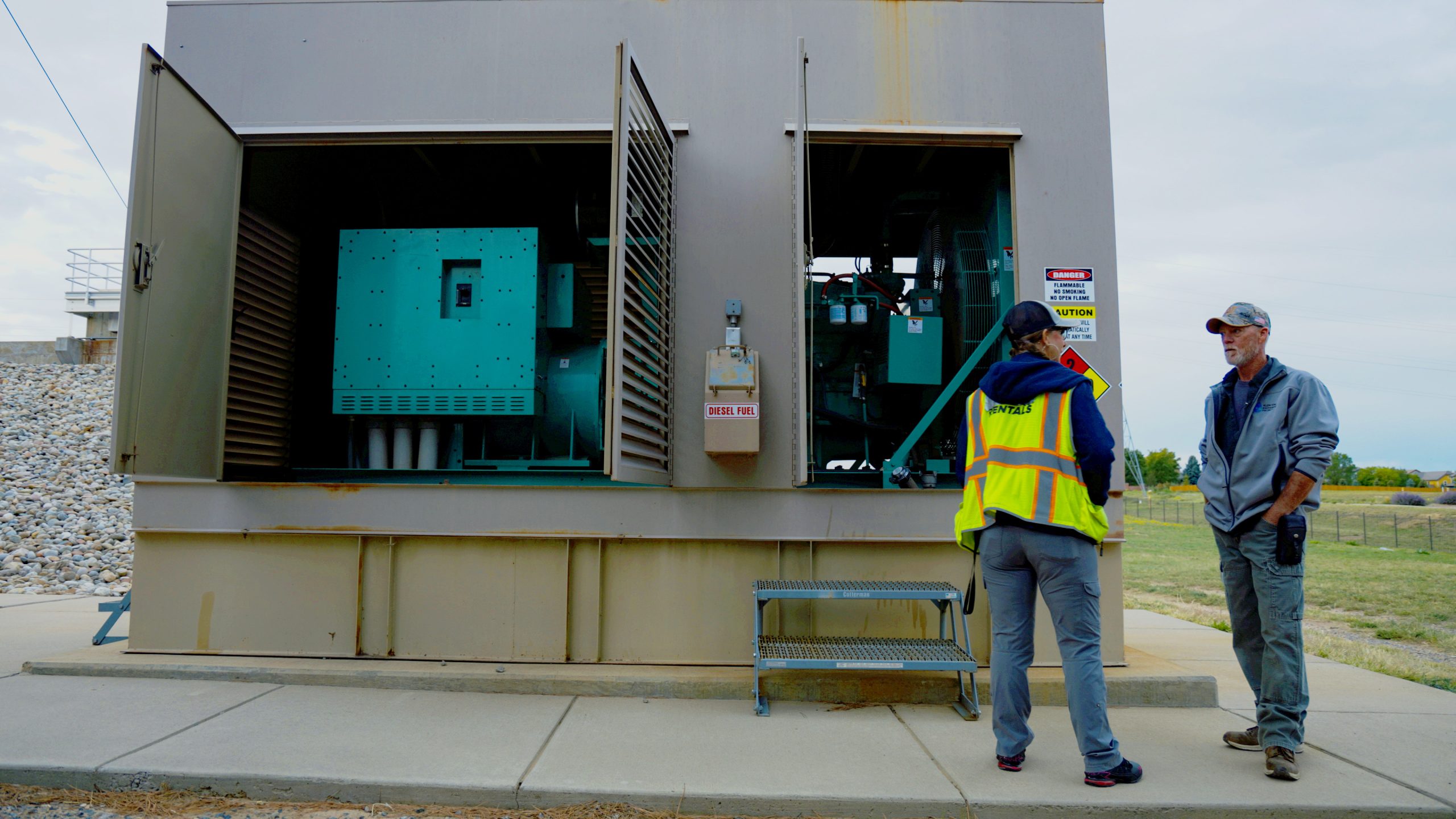
Standing at that generator with the enclosure doors open, David points at the fuel line on the filter bank.
“Anybody could have missed that.”
David is a facilities manager overseeing critical operations at a Colorado water district. He sat down with Generator Source in October 2026 to talk about the fleet he inherited and what it has taken to keep it ready to start. Everything below is his account unless another speaker is named.
Ten generators backing up the drinking water supply
David’s fleet is 10 generators that back up the district’s pump houses. He calls them critical because those pump houses supply drinking water. Without backup power, David says, the pump houses would shut down and customers would get no water.
That’s the context for every decision in this story, from how he picked a service company to how often his team checks the units in winter. For more on standby power at this kind of site, see our page on water and wastewater lift station standby power.
Inheriting 10 generators with one permit
When David took over the fleet, only one of the 10 generators was permitted, and that permit dated back to 2014. The other nine needed permits from the fire department and the state.
According to David, permitting is a one-time process after installation, plus an annual fee for each generator. He also learned which part of the installation the state focuses on.
“…the state really concerns, only is concerned about the fuel tank, not the generator itself.”
For the state, he needed commissioning paperwork from the installer, then site plans sent to the state.
Morgan, who took David’s first call at Generator Source, traces the whole thing back to new construction at one site. That project included a new generator, which put the state inspector’s attention on every generator David oversees. David agreed with that read.
“…then they just decided to start asking questions, which then opened up a whole can of worms.” (Morgan, Generator Source)
Morgan says Generator Source is finding that a lot with generator permitting. A new unit at one site can draw scrutiny to an entire fleet that nobody had looked at in years.
David says the story behind the inspections could fill an afternoon.
“We could discuss this for three hours on how this all came about.”
He describes the result in a sentence. He passed his inspections 100%.
“…the state came back out and they were like, oh. Oh, nice. Okay, good. Yeah. And matter of fact, because of that, the [county] that I work for, all of our fines were released.”
David credits Generator Source, Morgan and Greg for their part in getting there. If you’re facing the same question on your own fleet, our guides to air quality permits for generators and generator installation engineering and permitting cover the general process. Requirements vary by state and local jurisdiction, so confirm with your fire department and state agency.
Choosing a generator service company: the start button test
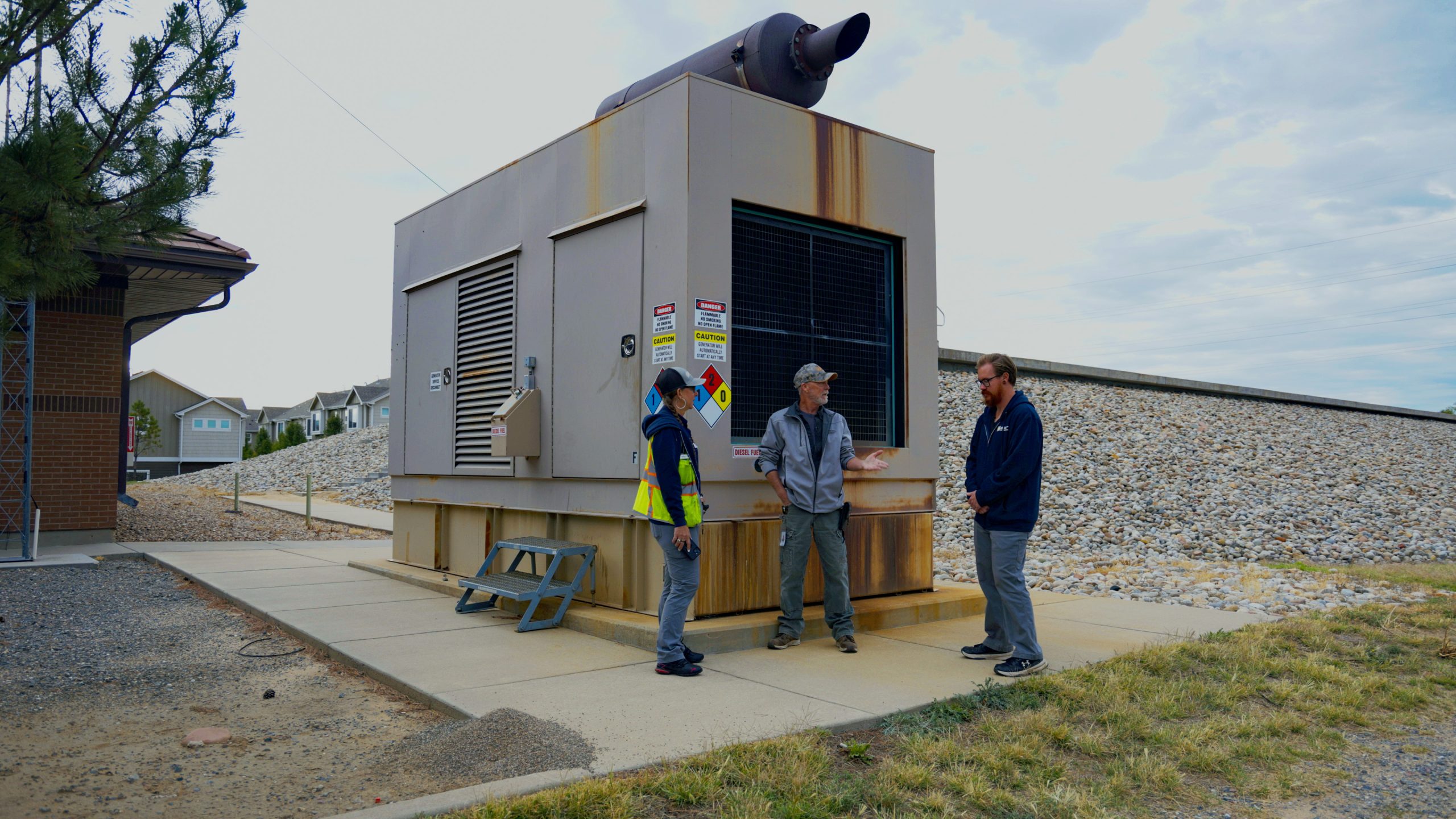
David interviewed four service companies and asked each of them the same questions. With drinking water depending on these units, he wanted to see what each company actually knew in front of the equipment.
Morgan brought Greg out to the site. David’s reaction:
“And blew me away, actually.”
According to David, Greg was the only one of the four who could walk up to a unit, look at it and diagnose it on the spot. He pressed the start button, nothing happened, and he told David the battery was dead.
“I said the same questions to all four companies, and Greg was the only one that could literally walk over, look and was like, your battery’s dead.”
“He literally put his finger on the button. Hit the button. It didn’t work. He goes, your battery’s dead.”
“Greg was the deciding factor. It really was.”
When a generator won’t start, a dead battery is one of the most common reasons. We cover why in generator failure to start: why your battery is the most likely culprit and in our page on battery testing and replacement for generator sets.
The generator overspeed fault two sensor replacements didn’t fix
The first job Generator Source did for David was a Cummins generator overspeed fault on a unit he describes as critical for an entire pump house footprint.
“This specific generator had a overspeed limit kick on. Now, when you have an over speed limit kick on, it literally will not allow the generator to run.”
How a missed weekly exercise flagged the problem
The unit runs an exercise every Wednesday. One week it didn’t, and the district’s monitoring system flagged it.
“…an exercise that comes on every Wednesday didn’t come on. Our system told us, didn’t come on. I came out to find out why.”
When he came back later for his weekly check, the generator wouldn’t start.
“I came back out to do a weekly and it wouldn’t start. That’s when I called.”
Before that call, two other companies had already worked on the unit.
“…the company came in, replaced a sensor, said they fixed it, they didn’t fix it. Another company came in, replaced another sensor, didn’t fix it.”
Seven minutes on David’s clock
David timed Greg from the moment he arrived.
“…this was the first job that Gen Source actually did, and me being who I was or am, I literally timed Greg on how long it took him to figure out what was wrong.”
“I called him on the phone. He shows up. I looked at my phone. Literally within seven minutes he had the problem figured out. Less than an hour it was fixed.”
What caused the overspeed, according to David
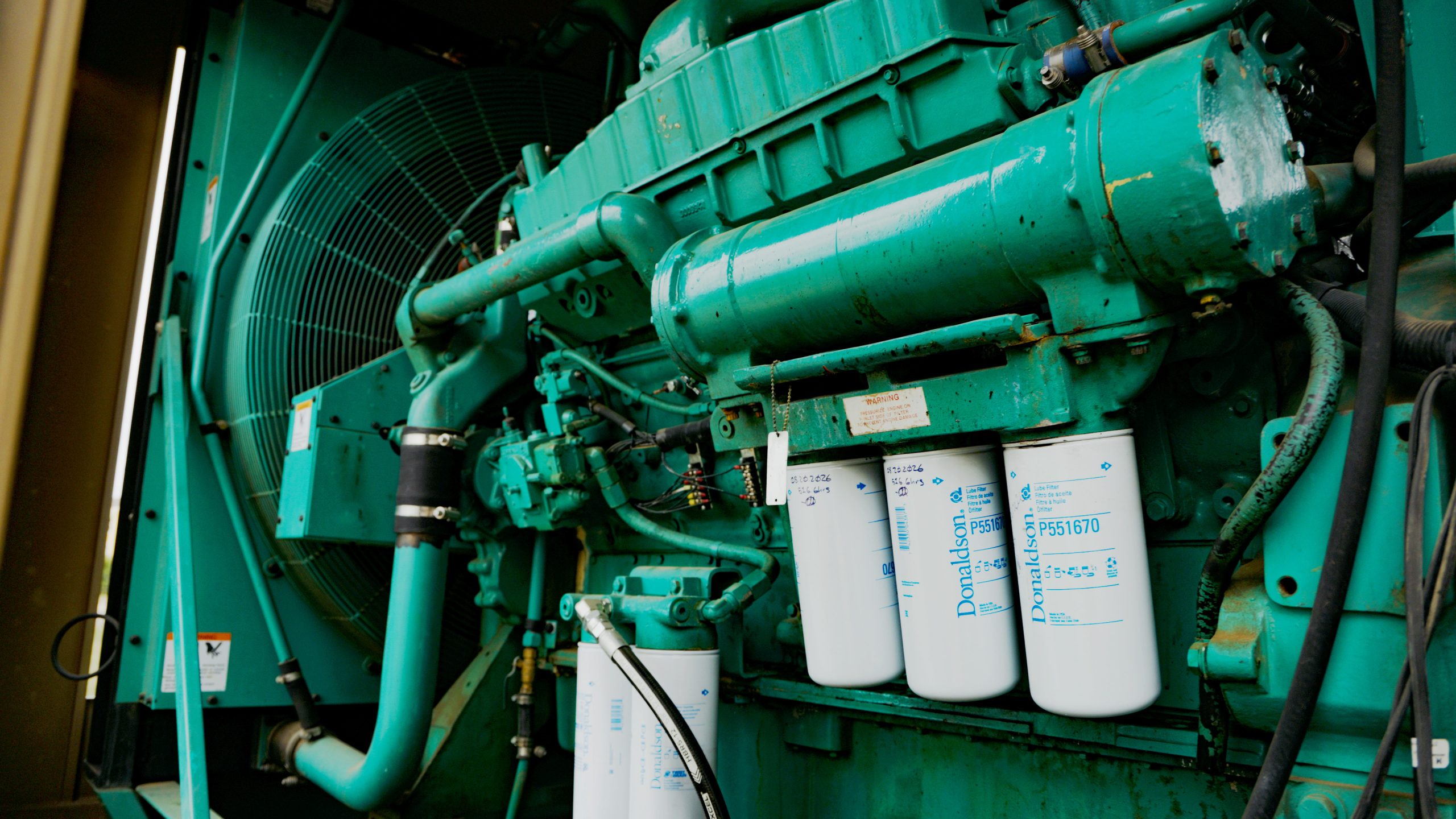
On camera, David walks through the cause at the unit. According to David, this Cummins unit has a loop in the fuel line so the fuel doesn’t siphon out. The line had weakened and folded over. Fuel drained back to the tank, the fuel filters had air in them, and air in the system made the engine overspeed and shut down.
“The problem is this fuel line right here … the [Cummins] puts a loop in a, in the the fuel line itself so it doesn’t siphon itself out.”
“Fold it over and it would literally drain back into the tank. And the fuel the fuel filters had air. And so when there’s air in the system it over speeds.”
The fuel system and the engine’s protective shutdowns are both part of routine service. See our maintenance pages on primary and secondary fuel filters and safety controls testing for what a technician checks on each.
How the overspeed fault was fixed
Greg added a check valve to the fuel line.
“Puts a check valve in. Within an hour. My generator is up and running and I have not had that problem since. And that was the very first job that Gen Source really did. And ever since, that’s who I call period. Period.”
Block heaters and diesel fuel gelling in a Colorado winter
Cold weather changes how David’s team works. The main concern is diesel fuel gelling.
“…the fuel has the tendency to gel. And so when it gels, diesel fuel doesn’t like to to move.”
His winter prep covers block heaters, battery pads and fuel additive, and his team does more weekly inspections in winter than in summer.
“…we do more weekly inspections and the wintertime than we do during the summer because it’s once again everything’s cold. We need the generators to run. … Regardless.”
Asked what fails most, David put the generator block heater first.
“The block heaters actually fail quite often. They do battery pads because you got to keep the batteries warm.”
The fuel additive comes out with his deliveries.
“…additive to the fuel that, our fuel trucks bring out.”
For a deeper checklist, see our 2026 guide to winterizing industrial generators in Colorado, Florida and Texas and our article on starting a diesel generator in the cold.
Wireless tank monitoring, checked by hand every month
David tracks fuel levels with a wireless tank monitor he calls “smart tank.” The monitor on the unit is labeled as an ST90 LTE wireless tank monitor powered by SMARTank.
“I actually have an app on my phone that lets me know when we are low. I can look at that at any time of the day. I have it on my computer and it will tell me the the percentage that I’m at, and I can order fuel accordingly.”
“They come out, I order fuel, they come out, they [fill] it, and then we move on.”
He doesn’t rely on the app alone.
“…I do have to come out once a month to make sure that I stick the tanks … because computer systems fail.”
Morgan asked whether that was manual redundancy, confirming both that the alarms work and that the tank matches what the monitor reports. David’s answer:
“Absolutely. Yes.”
Our overview of remote monitoring for generators covers what these systems report, and our guide to generator fuel tanks covers the tanks themselves.
What facilities managers can take from David’s account
- When troubleshooting a generator overspeed fault, look past the sensor. Two sensor replacements didn’t fix David’s overspeed shutdown. A check valve on the fuel line did.
- Watch the scheduled exercise. A missed Wednesday exercise, flagged by David’s monitoring system, was the first sign of the problem.
- Audit permits on every unit you inherit. David took over 10 generators with one permit on file. In his experience, the state focused on the fuel tank and wanted commissioning paperwork and site plans.
- Expect new construction to bring inspectors to the rest of the fleet. Per Morgan, one new generator at one site put every unit David oversees on the state inspector’s radar.
- Ask service companies to diagnose at the unit. David asked four companies the same questions. The deciding moment came when a technician pressed the start button and named the problem.
- Plan winter around the parts that fail. David’s list is block heaters, battery pads and fuel additive, backed by more weekly inspections than in summer.
- Verify remote fuel readings by hand. David sticks his tanks monthly because computer systems fail.
Generator still tripping on overspeed after a part swap?
If your standby unit keeps shutting down on overspeed or another fault after parts have been replaced, call Generator Source at 877-866-6895. You can also review our preventative maintenance programs or meet Morgan, who took David’s first call.
Frequently asked questions
What does overspeed mean on a generator? Overspeed is a protective shutdown that trips when the engine’s control system detects speed above its set limit. As the facilities manager in this case study put it, once an overspeed limit kicks on, it will not allow the generator to run. The cause has to be found and corrected before the unit can return to service.
What causes a generator overspeed fault? Causes vary by unit, so diagnosis has to happen at the generator. In this case, according to the facilities manager, a fuel line on a Cummins unit had weakened and folded over. Fuel drained back to the tank, the fuel filters took on air, and the unit tripped on overspeed. Sensors were suspected first, and two sensor replacements did not clear the fault.
How do you fix a generator overspeed fault? By finding and correcting whatever is making the engine trip. In this case a Generator Source technician traced the fault to a folded fuel line and added a check valve. The facilities manager says the problem was found within seven minutes, the unit was running in under an hour, and the fault has not returned.
Why didn’t replacing the sensor fix the overspeed fault? According to the facilities manager, the sensors weren’t the cause. Two service companies each replaced a sensor and the generator still wouldn’t run. The fault cleared after a Generator Source technician traced it to the fuel line and installed a check valve.
How did the water district find out the generator had a problem? The generator’s weekly Wednesday exercise didn’t run, and the district’s monitoring system flagged it. When the facilities manager returned later for his weekly check, the unit wouldn’t start, and he called for service.
Do Colorado generator permits focus on the generator or the fuel tank? In this facilities manager’s experience, the state was concerned with the fuel tank rather than the generator. He needed commissioning paperwork from the installer, then site plans sent to the state, and the fire department was also involved. Requirements vary by jurisdiction, so confirm with your local fire department and state agency.
What fails most often on standby generators in winter? This facilities manager names block heaters, which he says fail quite often, along with battery pads that keep batteries warm and the fuel additive that keeps diesel from gelling. His team runs more weekly inspections in winter than in summer.
Is remote fuel tank monitoring enough on its own? This facilities manager uses a wireless tank monitor with a phone and computer app that shows tank percentage, and he orders fuel from those readings. He still sticks the tanks by hand once a month to confirm the readings, because computer systems fail.
How did this water district choose a generator service company? The facilities manager interviewed four companies and asked each the same questions. He says the deciding factor was a Generator Source technician who pressed a unit’s start button during a site walkthrough and diagnosed a dead battery on the spot.