Skip to content

The Complete Guide to Commercial Generator Load Bank Testing

A megawatt-class generator can run well into seven figures. It sits quietly for months, maybe years, waiting for the one day the utility drops and it has to carry your whole facility. The question worth asking is simple. When that day comes, will it actually perform, or does it just start?

Starting and performing aren’t the same thing, and mistaking one for the other is where expensive surprises come from.

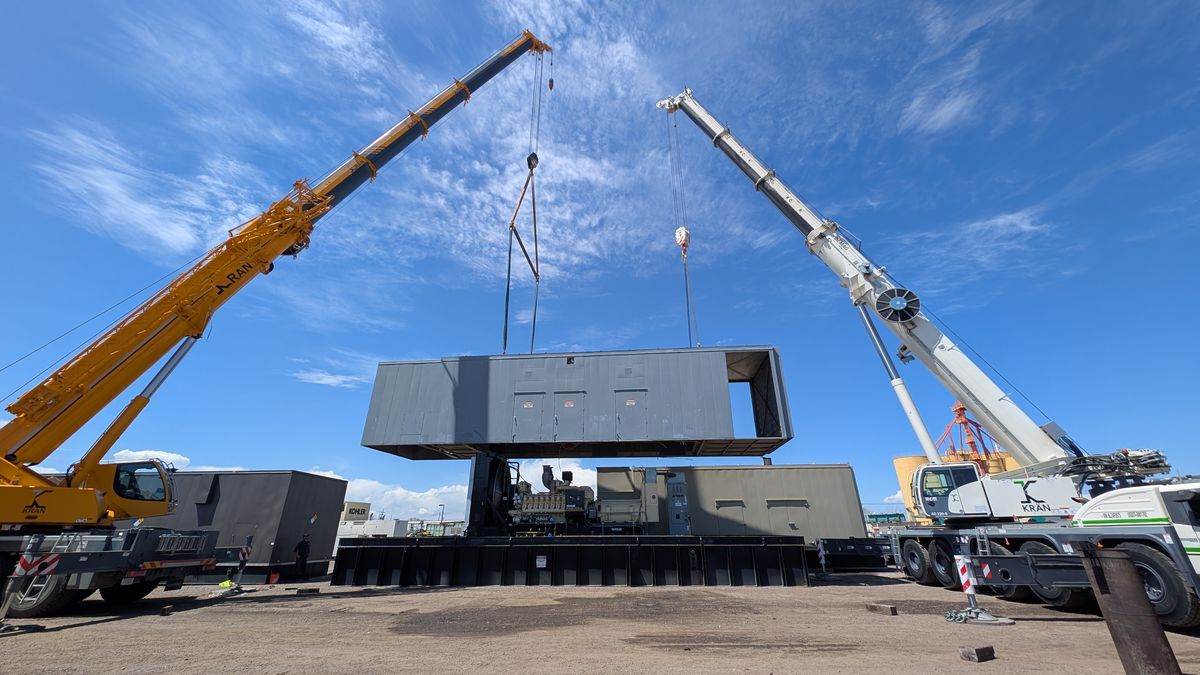
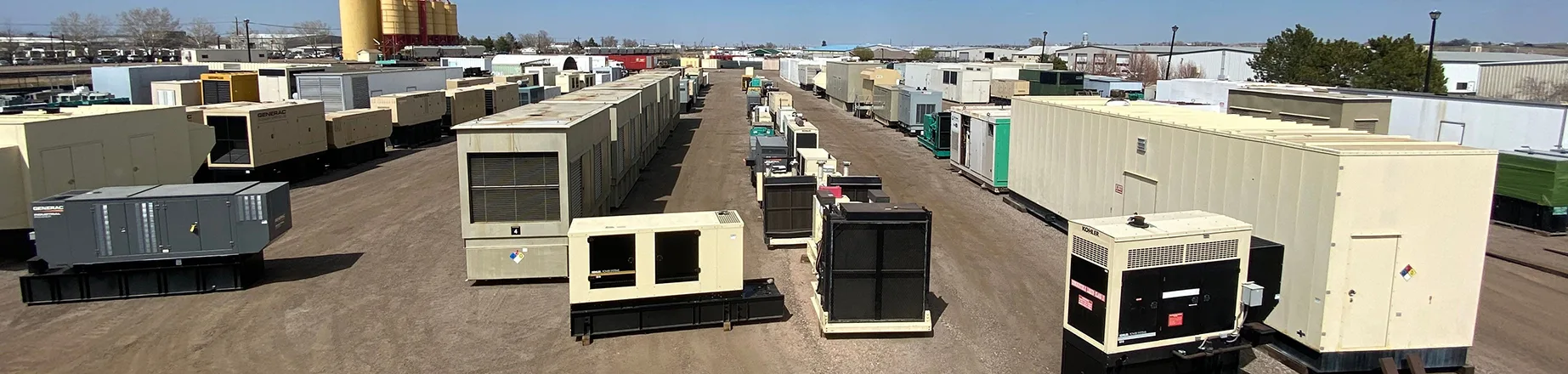
Rigging a large Caterpillar generator for transport at Generator Source’s Brighton facility.

“We’ve had customers call in and say their engine is leaking oil out the side of it. Upon arrival, we realize it’s not oil. It’s literally raw diesel fuel just dripping out of the exhaust manifold. That’s a pretty telltale sign it hasn’t been load banked.”  — Emett Grazier, Director of Service

It ran every month like clockwork. It just couldn’t carry the building when it mattered. A load bank test is how you find that out on your schedule instead of the utility’s. This guide covers what a load bank test is, how it works, what it catches, and what the standards actually require, without the jargon.

https://youtu.be/muIHM4Z81dk

What Is a Load Bank Test?

A Generator Source technician connecting load bank cables to a generator output.

A load bank is a piece of equipment that simulates the electrical load your generator would carry during a real outage, applied in controlled steps so a technician can measure how the unit responds at each one. If you want a mental model, a resistive load bank is basically a giant toaster. It converts electrical output into heat through banks of resistors, which lets it draw real power off the generator without connecting to your building.

The point is to make the generator produce real kilowatts under real strain, the way it would during an outage, so you find out what it does under load before an outage finds out for you.

Why Starting Isn’t the Same as Performing

Most standby generators live on an exercise program. The unit kicks on for maybe 20 minutes, once a month, and runs with little or no load against the building. That proves one thing: the generator starts and runs. It proves nothing about whether it can carry your facility under strain, and it does nothing for the longevity of the machine.

Here’s the part that catches people. A light-load exercise schedule can actively work against you. If the engine never reaches full operating temperature, it never gets hot enough to burn off the excess fuel and carbon that build up inside the exhaust and combustion system. Run that way long enough and the exercise routine you thought was protecting the unit is quietly degrading it. The only way to know where your maintenance plan is falling short is to put the unit under real strain and see what moves. For the broader program this fits into, see our preventative maintenance services.

Wet Stacking: What Low-Load Running Does to a Diesel

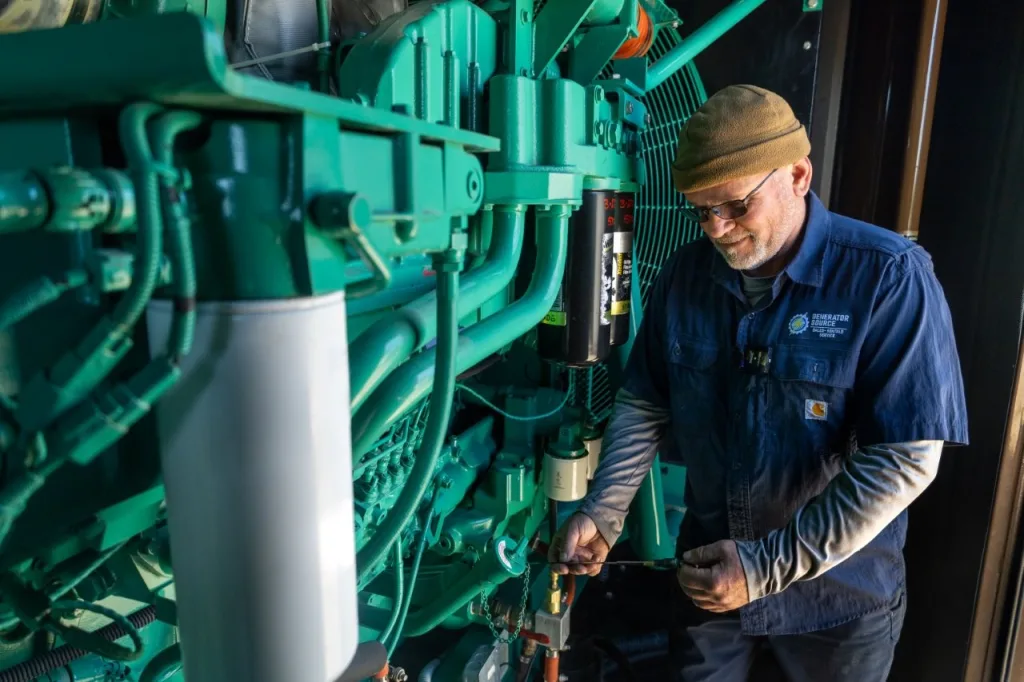
A generator under applied load, working hard enough to burn off what light running leaves behind.

Wet stacking is the buildup of unburned fuel, carbon, and moisture in a diesel engine’s exhaust system, and it comes from exactly the low-load running an exercise-only schedule encourages. When combustion temperatures stay too low, fuel doesn’t fully burn. It collects as a wet, sooty residue, glazes cylinders, fouls turbochargers, and robs the engine of the output you’re counting on.

“With light-loaded units, the exhaust loads up with fuel and carbon builds up. The engine temperatures are lower, so it’s not going to burn off the exhaust correctly.”  — Cole, Service Technician

The reason a load bank fixes this is temperature. Pushing the engine to real load raises combustion temperatures enough to burn the deposits off and restore healthy operation. It’s also why we finish a test with a hot oil change, pulling the loosened carbon and gunk out of the system while everything is still warm.

The Test Types, and What You Actually Need

Not every load test is the same, and the differences matter when you’re deciding what your facility needs.

“Heating elements pull the most amperage. That’s basically what a load bank is. There are two kinds, resistive and reactive. Resistive tests the engine, reactive tests the generator end components.”  — Cole, Service Technician

A standard stepped load bank test, the kind this guide focuses on, applies load in stages and holds each one, giving the engine time to stabilize while a technician logs readings. It proves the unit is healthy and can hold load over time.

A block load test works differently. Instead of ramping up in steps, it applies the full demand all at once, drops it, and reapplies it. That tests load acceptance, sometimes called transient response, which is the generator’s ability to take a sudden hit without sagging voltage or frequency or shutting down. A unit can pass a smooth stepped test and still stumble on a block load if its governor or fuel system can’t keep up with a sudden inrush. If your generator has to pick up a large load the instant an automatic transfer switch fires, that behavior is worth proving directly. We cover it in depth in our guide to block load testing.

How a Load Bank Test Works, Step by Step

The test follows a consistent sequence. It starts with a full inspection of the unit, our 31-point inspection, to confirm it’s sound before any load goes on. Then the cables get connected to the breaker, sized to the unit. On a 2000kW Caterpillar rated for 3,007 amps, for example, we calculate the target kW, work out how many cables the test needs, and set the load bank to match the unit’s voltage. Get the voltage setting wrong and you’ll blow a fuse on the load bank itself.

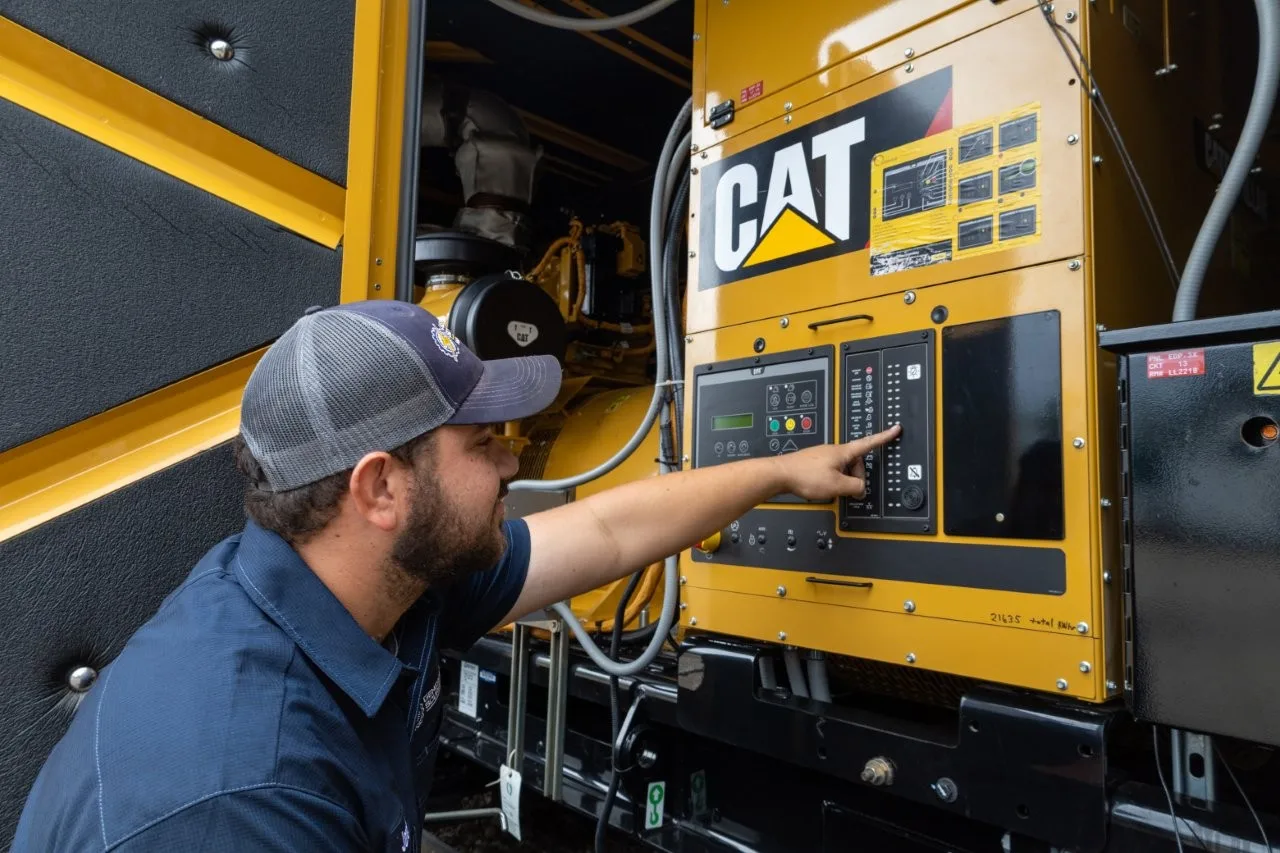
A Generator Source technician monitoring a Caterpillar generator control panel for temperature, voltage, and pressure during a load bank test.

“Due to the altitude where we’re at, we load bank the units up to 80 percent. If you pushed it to 100 percent here, you’d see a drop in frequency and fuel pressure.”  — Cole, Service Technician

From there the load comes on in stages. We run at roughly 25 to 30 percent for 10 to 15 minutes, step up to 50 percent, then to a sustained run held for 30 minutes to an hour. Here at our Brighton yard, near 5,000 feet, we cap the test around 80 percent of nameplate to account for altitude derating, which is normal and expected at elevation. Throughout, we record pressures and temperatures, confirm the unit is putting out correct and stable voltage at 60Hz, and watch that coolant temperature isn’t climbing. If something moves, we diagnose and fix it on the spot. The test closes with a signed report of every reading.

What the Test Catches Before an Outage Does

The whole point is to surface problems on your schedule instead of during an emergency. The recurring culprits we see under load are overheating from leaking radiators or bad thermostats, unstable voltage that points to a regulator issue, fuel starvation from clogged filters or contaminated fuel, control panels reading incorrect voltage or amperage, and wet stacking from chronic light running.

Finding one of these on a load bank is the good outcome, even when it’s dramatic. A breaker that fails during a test is close to a best-case scenario, because qualified technicians are already on site to diagnose and repair it in real time, rather than discovering it the hard way during an outage.

That’s the real math. The same fault costs very differently depending on when you find it. Catch it on a scheduled test and it’s a planned repair. Miss it and you’re looking at an emergency call, downtime, and the losses that ride along with it. We’ve seen businesses lose not just revenue during an outage but spoiled inventory, and then have insurance claims denied because the outage was planned and the equipment hadn’t been properly tested.

“It’s definitely better to have us do it on the front end rather than a service call.”  — Emett Grazier, National Director of Service, Generator Source

For a megawatt-scale example of a clean run, see our 4MW Caterpillar load bank test.

Load Bank Testing and NFPA 110 Compliance

A signed load bank test report, the documentation your compliance program is actually built on.

If your facility answers to NFPA 110, the standard for emergency and standby power systems, here’s what it actually requires, because a lot of what’s written online gets this wrong.

NFPA 110 requires a monthly exercise of at least 30 continuous minutes, run at either the manufacturer’s minimum exhaust gas temperature or at least 30 percent of the unit’s nameplate kW rating. Running at no load does not satisfy the requirement.

The annual load bank test is conditional, not automatic. It’s required only when your monthly runs can’t reach that 30 percent threshold, which is the case for most standby units sitting on light building load. Under the 2025 edition, the supplemental protocol is 50 percent of nameplate for 30 minutes followed by 75 percent for 60 minutes, a 1.5-hour test. Older editions used a stepped 25/50/75 profile, so which one applies depends on the edition your authority having jurisdiction has adopted. Separately, Level 1 systems require a full-capacity test every 36 months regardless of monthly load levels.

One thing to be clear about: we document your generator’s performance and give you the signed report, but the compliance obligation itself stays with you as the owner. For a deeper look at compliance for critical facilities like hospitals and data centers, see our guide to professional load bank testing for NFPA 110 compliance.

How Often Should You Load Bank Test?

Even setting compliance aside, an annual load bank test is a sound baseline for any commercial standby unit, with semi-annual testing worth considering for mission-critical sites or harsh environments.

“Once a year is our baseline recommendation. But if a customer is in health care or operating critical infrastructure, we recommend they contact their regulatory body, because they may have stricter requirements.”  — Mark Marar, Outside Service Sales

A common objection is that a unit which just sits doesn’t need it. The opposite is true. The more an engine sits, the more its fluids settle and break down, and the more a real test earns its keep. Testing also makes sense after major repairs, control retrofits, or long idle periods, and ahead of hurricane or winter season before you’re depending on the unit for real.

Getting Your Generator Load Bank Tested

The principle is short: test, don’t guess. An exercise schedule won’t push your unit hard enough to know it’ll be there when you need it. A load bank will.

If you’re not sure when your unit was last load bank tested, or you want it proven before the next high-risk season, Generator Source performs stepped and block load testing across Colorado, Florida, and Texas with EGSA-certified technicians and full documentation.

Call 877-866-6895 or schedule a load bank test.

Frequently Asked Questions

Is a load bank test the same as exercising my generator?
No. Exercising runs the unit briefly at little or no load and only proves it starts. A load bank test applies real, controlled load so the generator has to perform the way it would in an outage.

How long does a load bank test take?
A typical stepped test runs a few hours on site, including setup, the staged run held at each step, cool-down, and documentation. Larger units and full-capacity compliance tests take longer.

Is load bank testing required by NFPA 110?
It’s conditional. If your monthly exercise can’t reach 30 percent of nameplate kW, NFPA 110 requires an annual supplemental load bank test. Level 1 systems also require a full-capacity test every 36 months.

What load percentage is used in a test?
A comprehensive test steps up toward full rated load. At our Brighton facility we cap around 80 percent of nameplate to account for altitude. NFPA 110’s 2025 supplemental protocol calls for 50 percent then 75 percent.

Still have questions or looking for more information?

Generator Source specializes in low-hour, used, new, and surplus generator sets. We have a wide variety of generator sizes and models to fit any project. We are not a broker, we own what we sell.
Call us today (877-866-6895) or click Contact Us to be connected with one of our experienced sales reps. 
We have 350+ generators in stock and ready to ship!
Still have questions or looking for more information?