
At a glance
| Operation | Dairy farm, Colorado |
| Project | New milking and milk cooling facility |
| Original request | Two 1500kW generators, paralleled, matched set |
| What they bought | One Cummins 2250kW standby generator |
| Investment | $367,500 |
| Duty | Standby only, exercise cycles plus outage response |
| Critical loads | Milking center, milk cooling |
| Timeline | Buyer had runway and chose to source deliberately rather than under deadline |
The situation
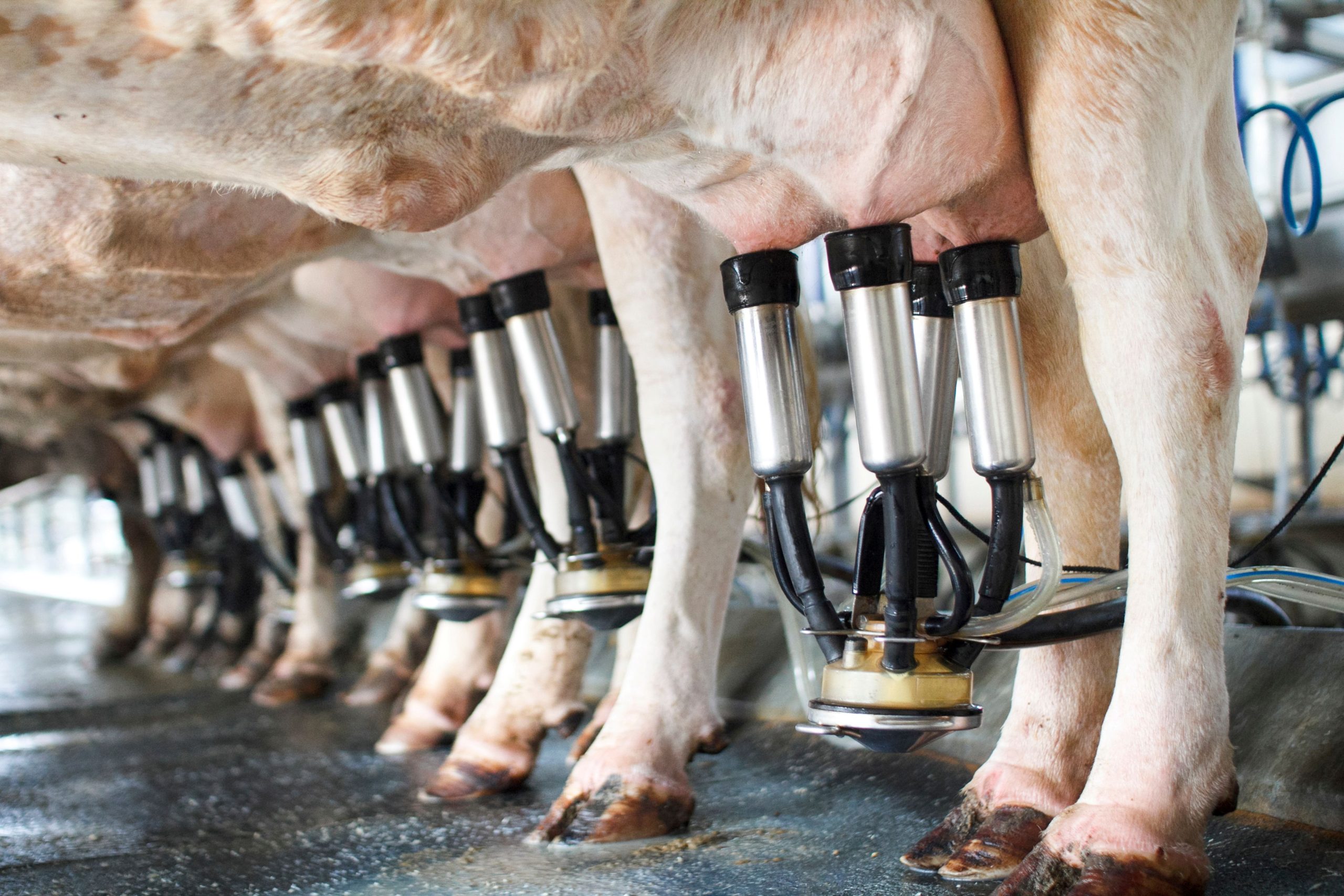
A Colorado dairy was building a new facility and had reached the point where backup power stopped being a line item and started being a decision. One of the owners called Generator Source directly after a business partner had spent several weeks working the same question from the other end.
Their position was unusually healthy. They were not in an emergency. They had construction runway, they wanted to source carefully, and they were explicit that they did not want to be forced into whatever was available in a narrow window. That is the best condition a buyer can be in when shopping used industrial equipment, and it is worth saying plainly: the buyers who get the best outcomes on large gensets are almost always the ones who started early.
What they were less certain about was size. They had a number in mind. They did not yet have confidence in it.
What they originally asked for, and why
The request was two 1500kW generators, paralleled, ideally a matched set from the same manufacturer.
The logic behind it was sound and it was not really about total capacity. It was about redundancy. If one machine had a problem during an outage, the owner wanted to run the other at 1500kW, keep the milking center running, keep the milk cooling, and operate at a reduced but functional level rather than not at all.
Milk that does not get cooled is milk that does not get sold. A herd that does not get milked on schedule is a welfare and production problem within hours, not days. Redundancy on a dairy is closer in character to a hospital than to a warehouse.
So the pair was not an arbitrary preference. It was an answer to a question about failure, not an answer to a question about load.
What the sizing conversation actually turned up
The first useful thing the conversation established was that 3000kW was not the requirement. It was the byproduct of the redundancy plan.
Asked directly what the minimum was, the owner put the whole facility running at somewhere under 3000kW, in the neighborhood of 2500kW, with the caveat that he would not want to size to that number because of motor starting loads. That caveat is the correct instinct. On a dairy, vacuum pumps, compressors, chillers, and well pumps all draw significant inrush at start, and a generator sized to steady-state running load will trip or drag voltage when those motors hit.
The second thing the conversation established was that a pair of 1500kW units and a single larger unit are not two versions of the same purchase. They are different projects with different cost structures. Once that was on the table, the pair stopped looking like the obvious answer.
Why paralleling two generators costs more than two generators
This is the part most buyers do not price correctly, so it is worth breaking down.
Two generators sitting next to each other do not share a load. Making them share a load requires specific hardware:
- Electronic breakers. Manual breakers cannot do this. If the units on the lot have manual breakers, they have to be changed.
- Controllers that can talk to each other. On Cummins equipment that means a paralleling-capable control, which is built specifically for synchronizing and load sharing. A basic standby controller will not do it.
- Or switchgear, if the controllers cannot handle it. This is where budgets break. Paralleling switchgear is expensive, it is engineered per project, and the lead times are long enough to affect a construction schedule.
None of that is exotic. All of it is money and calendar that a single-unit installation simply does not spend. When Generator Source quotes a paralleled pair, that conversion work is inside the number, which is why a paralleled pair of used 1500kW units does not cost what two used 1500kW units cost.
Why a matched set is harder to find than buyers expect
The dairy wanted both units from the same manufacturer. That preference is reasonable: common filters, common parts, one service relationship, one set of spares on the shelf.
The problem is inventory reality. At any given moment the used market has what it has. In this case the strongest 1500kW units available were a 2019 Cat and a 2014 Cummins. Both were good machines and both were young by industrial genset standards, where a unit from the mid-2010s is genuinely modern. They just were not a pair.
Buyers holding out for a matched set at a specific rating are usually paying for that requirement in one of three currencies: a price premium, a longer wait, or a compromise on age and hours. Sometimes the matched set is worth all three. Often the honest answer is that the parts commonality argument is worth less than the money it costs, particularly on a standby machine that runs a few dozen hours a year.
The hours question: is 2000 hours too many?
One of the units under discussion had roughly 2000 hours on it. Another had over 500. For a standby application, 2000 hours on a Cummins of that size is not a concern.
A standby generator runs at a constant 1800 RPM under a relatively stable load. It is not accelerating, decelerating, lugging, or cycling the way an over-the-road or off-road engine does. Hours on a genset are gentler hours.
The owner made this point himself from the agricultural side: on large diesel tractors, nobody worries about 2000 or 3000 hours. You start planning real work somewhere north of 10,000. Industrial standby gensets of this class are built to the same logic.
The one condition worth stating clearly, because it was stated clearly on the call: this holds for standby duty. If a buyer says standby but actually intends to run the machine as a prime power source, feeding load continuously, the hours calculus changes completely and a 2000 hour unit deserves a much harder look. That distinction matters more than the number on the meter.
Why the alternator end deserves as much attention as the engine
Hours accumulate on the whole package, not just the engine, and buyers who only interrogate the engine are only doing half the inspection.
This is one of the specific reasons Cummins equipment earns preference at this size. Cummins owns Stamford, through Cummins Generator Technologies, so the alternator end is not a third-party component bolted on at the end of the line. Stamford industrial alternators in this class are typically continuous rated, built with Class H insulation systems, and frequently oversized relative to the genset’s standby rating, because they are engineered to run continuously at that output without cooking the windings.
For a standby buyer, that means the alternator is operating well inside its design envelope every time the machine runs. It is the part of a used genset that a buyer has the least ability to inspect from a photo, so knowing the manufacturer builds margin into it is worth real money.
Why one larger unit beat a matched pair
The dairy bought a single Cummins 2250kW standby generator for $367,500.
The economics behind that shift are worth understanding because they recur constantly at this size:
- 3000kW-class equipment is priced disproportionately. It is not twice a 1500kW unit. The market thins out fast at the top of the range and pricing reflects scarcity, which is exactly why so many buyers arrive asking for two 1500kW units in the first place.
- A paralleled pair carries conversion cost. Breakers, controllers, and potentially switchgear, plus the engineering and lead time attached to all of it.
- A matched set carries a scarcity cost. Either in price, in wait, or in accepting older equipment.
- A single 2250kW unit carries none of those. No synchronization hardware, no paralleling controls, no switchgear lead time, one machine to commission, one machine to service, one set of spares.
The tradeoff is honest and it should be stated as one: a single unit does not deliver N+1 redundancy. A buyer choosing this path is accepting single-point-of-failure risk on the generator itself in exchange for meaningful capital savings and a substantially simpler installation. That is a legitimate decision, and for many operations it is the right one. It is not a decision that should be made by accident.
What agricultural and rural buyers should take from this
- Separate the capacity question from the redundancy question. They produce very different numbers. Solve them one at a time.
- Size to starting loads, not to running loads. Motor inrush is what actually determines the rating you need.
- Price paralleling before you commit to a pair. Breakers, controllers, and switchgear can move the total more than the difference between two used units and one.
- Do not let a matched set become a religion. Weigh the parts-commonality benefit against what the requirement actually costs you in price and wait.
- Judge hours against duty. 2000 hours on a standby machine at 1800 RPM is not 2000 hours on a working engine.
- Start early. This dairy got a better outcome specifically because it was not shopping under a deadline.
Frequently asked questions
How big a generator does a dairy farm need? It depends entirely on connected load and, more importantly, on motor starting loads. Vacuum pumps, milk chillers, compressors, and well pumps draw heavy inrush at startup, so a generator sized to steady-state running load will be undersized in practice. A facility of the scale in this case study landed at 2250kW. A load study is the only way to get a real number.
Can you parallel two used generators? Yes, but it requires electronic breakers and paralleling-capable controllers such as the Cummins PowerCommand 3201, or dedicated paralleling switchgear if the controllers cannot handle it. That conversion work is a real cost and a real lead time, and it needs to be in the budget before you compare a pair against a single larger unit.
Do two generators have to be the same brand to be paralleled? No. Mixed-manufacturer paralleling is done routinely. Buyers generally prefer matched sets for parts and service commonality, but that preference costs money and wait time on the used market, and on a standby machine it is often worth less than it costs.
Is 2000 hours a lot for a used generator? Not for standby duty. Standby gensets run at a constant 1800 RPM under stable load, which is far less demanding than variable-load duty. Units in this class are commonly serviceable well beyond 10,000 hours. The critical question is whether the machine will actually be used as standby or run as prime power, because the answer changes entirely.
Is it better to buy one large generator or two smaller ones? One larger unit is usually cheaper and simpler: no synchronization hardware, no paralleling controls, no switchgear lead time, one commissioning, one service relationship. Two smaller units buy redundancy, which matters when partial operation during a failure has real value, as it does on a dairy. Decide which of those you are actually buying before you compare prices.
Talk to us about sizing
Generator Source is the largest buyer and seller of new and used industrial generators in North America, with inventory from 20kW to 4MW+ and branches in Brighton CO, Jacksonville FL, Pensacola FL, and Austin TX. If you are sizing backup power for a new facility, the conversation is free and it is better to have it early.
Browse used industrial generators or call to talk through your load.